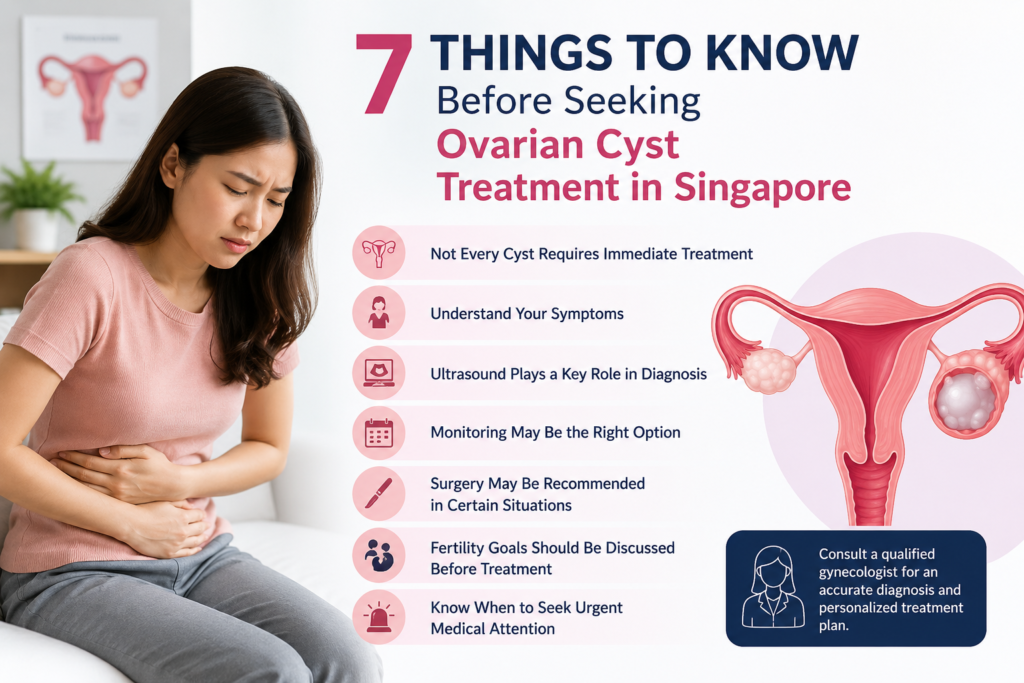
One of the most important things to understand is that finding an Ovarian Cyst Treatment in Singapore does not automatically mean that you need medication or surgery.
Many ovarian cysts are functional cysts that develop as part of the normal menstrual cycle. These cysts often disappear on their own over time. In Singapore, clinical guidance from Sing Health notes that many functional cysts resolve spontaneously, while small cysts without symptoms or suspicious ultrasound features may be managed with observation and follow-up imaging.
The appropriate approach depends on factors such as:
- The type of cyst
- Its size and appearance
- Whether you have symptoms
- Your age and menopausal status
- Whether the cyst changes over time
- Your fertility plans
- Whether there are concerning features that require further investigation
For this reason, treatment should be based on an individual medical assessment rather than the assumption that every cyst needs to be removed.
2. Understanding Your Symptoms Is Important
Many ovarian cysts cause no symptoms at all. They may be discovered during a routine pelvic examination or an ultrasound performed for another reason.
However, some cysts can cause symptoms such as:
- Pelvic or lower abdominal pain
- Bloating or abdominal fullness
- Menstrual irregularities
- Painful periods
- Pain during sexual intercourse
- Frequent urination
- Constipation or other bowel changes
- Loss of appetite or unexplained weight changes
Larger cysts can sometimes place pressure on nearby organs, while certain types, such as endometriomas, may be associated with endometriosis and chronic pelvic symptoms.
It is useful to keep track of when symptoms occur, how long they last, and whether they are getting worse. This information can help your doctor determine whether observation, medication, or further treatment is appropriate.
3. Ultrasound Plays a Key Role in Diagnosis
An ultrasound is one of the main tools used to evaluate an ovarian cyst.
The scan can help assess:
- The size of the cyst
- Its location
- Whether it is filled mainly with fluid
- Whether it contains solid areas
- The presence of internal compartments or septations
- The shape and appearance of the cyst
- Other features that may require closer assessment
A simple cyst with reassuring characteristics may be suitable for monitoring. On the other hand, features such as solid areas, irregular margins, or other complex findings may require further investigation.
Your doctor may also recommend blood tests or additional imaging depending on the ultrasound findings and your overall clinical situation.
4. Monitoring May Be the Right Option
Monitoring, sometimes called watchful waiting or conservative management, can be appropriate for selected ovarian cysts.
For example, small cysts that are not causing symptoms and do not show suspicious features may be monitored with a follow-up ultrasound. SingHealth information indicates that follow-up imaging may be used to assess whether a cyst changes in size or appearance over time.
Monitoring can help avoid unnecessary surgery, especially when a functional cyst is likely to resolve naturally.
However, monitoring does not mean ignoring the condition. It is important to:
- Attend recommended follow-up appointments
- Complete follow-up scans as advised
- Report new or worsening symptoms
- Seek medical attention if severe symptoms develop
If the cyst grows, persists, becomes symptomatic, or develops concerning characteristics, your doctor may recommend a different management approach.
5. Surgery May Be Recommended in Certain Situations
Surgery may be considered when an ovarian cyst causes significant symptoms or has characteristics that require removal or further investigation.
A doctor may discuss surgery when a cyst:
- Causes persistent or severe pain
- Continues to grow
- Persists instead of resolving as expected
- Has complex or abnormal features
- Causes complications such as torsion or rupture
- Raises concern about malignancy
When surgery is appropriate, the procedure may involve removing only the cyst, known as a cystectomy, or removing the affected ovary in selected circumstances.
Laparoscopic or keyhole surgery is commonly used when the cyst appears suitable for a minimally invasive approach and the risk of malignancy is considered low. Open surgery may be recommended for some large or suspicious masses.
6. Fertility Goals Should Be Discussed Before Treatment
If you are planning to have children in the future, this should be part of the discussion before any surgical treatment.
Many ovarian cysts do not affect fertility. However, certain conditions associated with ovarian cysts, including endometriosis, can affect reproductive health. In addition, surgery involving the ovaries may affect healthy ovarian tissue depending on the type of cyst and the procedure required.
For premenopausal patients, a cystectomy may be considered when appropriate to remove the cyst while preserving as much normal ovarian tissue as possible.
Before proceeding with treatment, consider asking your doctor:
- Can the cyst be removed without removing the ovary?
- Could the procedure affect my fertility?
- Are there alternatives to surgery?
- Does the type of cyst affect my chances of becoming pregnant?
- Should fertility preservation be discussed before treatment?
These questions can help ensure that your treatment plan takes your future reproductive goals into account.
7. Know When to Seek Urgent Medical Attention
Although many ovarian cysts are harmless, complications can occasionally occur.
A cyst may rupture or, in some cases, contribute to ovarian torsion, where the ovary twists. These situations can cause sudden and severe symptoms.
Seek urgent medical attention if you experience:
- Sudden, severe abdominal or pelvic pain
- Severe pain with nausea or vomiting
- Dizziness, weakness, or fainting
- Rapidly worsening abdominal symptoms
- Significant or unusual bleeding
- Severe pain accompanied by fever
These symptoms should not be ignored, particularly if they appear suddenly or become progressively worse.
Questions to Ask Before Seeking Treatment
Before deciding on a treatment plan, it can be helpful to prepare a list of questions for your gynecologist.
Consider asking:
- What type of ovarian cyst do I have?
- How large is the cyst?
- Does the ultrasound show any concerning features?
- Can the cyst be monitored instead of treated immediately?
- How often will I need follow-up scans?
- Why is surgery being recommended in my case?
- Can the cyst be removed while preserving my ovary?
- Could treatment affect my fertility?
- What type of surgery would be appropriate if surgery is necessary?
- What symptoms should prompt me to seek urgent medical care?
Having a clear understanding of your diagnosis can make it easier to participate in decisions about your care.
What to Expect When Seeking Ovarian Cyst Treatment in Singapore
The process of Ovarian Cyst Treatment in Singapore generally begins with a medical consultation and an assessment of your symptoms and medical history.
Depending on your situation, the evaluation may include:
- A pelvic examination
- Pelvic ultrasound
- Blood tests when clinically appropriate
- Additional imaging for selected cases
- Follow-up consultations to monitor changes
Singapore’s public healthcare institutions, including KK Women’s and Children’s Hospital and Singapore General Hospital, provide gynaecological services, including assessment and management of ovarian cysts and minimally invasive surgical options where clinically appropriate.
The exact treatment plan can range from simple observation to medication for associated symptoms or minimally invasive and open surgical procedures, depending on the individual diagnosis.
Ovarian Cysts and Endometriosis
Some ovarian cysts are linked to endometriosis. These are known as endometriomas.
Endometriosis occurs when tissue similar to the lining of the uterus grows outside the uterus. When this affects the ovaries, cysts can develop and may be associated with:
- Painful menstruation
- Chronic pelvic pain
- Pain during sexual activity
- Heavy or irregular periods
- Bowel or urinary symptoms during menstruation
- Difficulty conceiving
Treatment may involve symptom management, hormonal therapy, monitoring, or surgery depending on the severity of symptoms and individual circumstances.
Because treatment decisions can involve both symptom relief and fertility considerations, patients with suspected endometriosis should discuss their long-term goals with their healthcare provider.
Final Thought
An ovarian cyst diagnosis can be worrying, but most cysts are benign, and many do not require immediate treatment.
The key is understanding the nature of the cyst and receiving appropriate medical assessment. Small, uncomplicated cysts may only require monitoring, while persistent, symptomatic, or suspicious cysts may require further investigation or surgery.
Before pursuing Ovarian Cyst Treatment in Singapore, make sure you understand your diagnosis, the available treatment options, the potential benefits and risks, and how treatment may affect your fertility or long-term health.
A qualified gynecologist can help determine whether monitoring, medication, or surgery is the most appropriate option for your individual situation.
Medical disclaimer: This article is intended for general educational purposes only and should not replace professional medical advice, diagnosis, or treatment. Seek urgent medical care if you experience sudden severe pelvic or abdominal pain, fainting, heavy bleeding, or other serious symptoms.