Anechoic Wedges Explained: Design & Uses in India
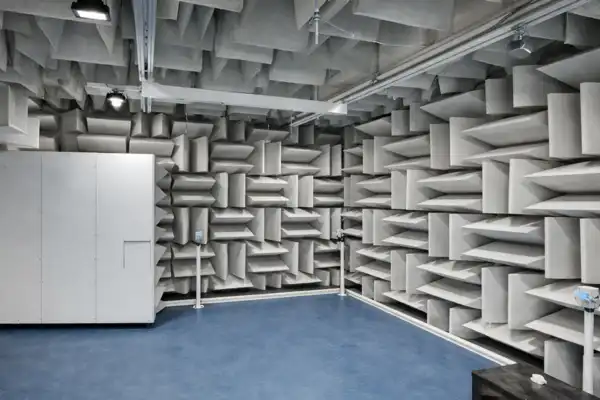
Step inside a fully silent testing room and the first thing you’ll notice isn’t silence — it’s the walls. Rows of pointed foam shapes cover every surface, floor to ceiling, absorbing sound so thoroughly that your own footsteps seem to vanish. Those shapes are anechoic wedges, and they’re the single most important component behind any chamber built for accurate acoustic or electromagnetic testing.
What Are Anechoic Wedges?
Anechoic wedges are pyramid-shaped or wedge-shaped absorptive structures, typically made from polyurethane foam or ferrite material, installed on the walls, ceiling, and sometimes floor of a testing chamber. Their angled geometry forces sound waves to reflect internally within the wedge multiple times instead of bouncing straight back into the room, which gradually dissipates the sound energy as heat. The deeper and more precisely shaped the wedge, the lower the frequency it can absorb effectively.
Why the Shape Matters So Much
A flat foam panel absorbs some sound, but a wedge does it far more efficiently because of geometry alone. Each angled surface gives sound waves multiple opportunities to strike absorptive material before they can reflect back into open space. Longer wedges handle lower frequencies better, which is why chambers built for bass-heavy automotive testing or low-frequency EMC work often use deeper wedge profiles than a standard audio testing booth would need.
Common Types of Anechoic Wedges
Different applications call for different wedge materials and profiles:
- Polyurethane foam wedges — used for general acoustic absorption in audio and NVH testing chambers
- Metallic anechoic wedges — designed for electromagnetic compatibility (EMC) and radio frequency testing
- Fire-retardant treated wedges — required in facilities where safety codes demand additional protection
- Hybrid foam-ferrite wedges — combine acoustic and electromagnetic absorption in a single unit
Selecting the right type depends heavily on whether the chamber is built for sound testing, RF testing, or both.
Where Anechoic Wedges Are Used
Anechoic wedges show up in far more places than most people realise. Audio equipment manufacturers use them to test speakers and microphones without room echo distorting results. Automotive companies rely on wedge-lined chambers for engine and cabin noise (NVH) testing. Telecom and electronics firms use metallic wedges in EMC chambers to validate antenna performance. Defence and aerospace research facilities depend on precisely engineered wedges for sensitive acoustic and signal testing.
Choosing the Right Wedge Supplier
Wedge performance depends on foam density, angle precision, and consistent manufacturing quality — inconsistent wedges create uneven absorption across the chamber, which throws off test accuracy. This is where working with an experienced acoustic engineering partner makes a real difference.
Ecotone Systems: Engineering Precision Wedge Solutions
Ecotone Systems manufactures both foam and metallic anechoic wedges as part of its broader range of anechoic and semi-anechoic chamber solutions. Ecotone Systems designs wedge profiles around the specific frequency range and testing purpose of each chamber, rather than supplying a generic, one-size-fits-all product.
Backed by decades of combined acoustic engineering experience, Ecotone Systems has supplied wedge-lined chambers to automotive, defence, and electronics clients across India. From material selection to installation, Ecotone Systems keeps the entire process in-house, ensuring absorption performance matches what was originally modelled and tested.
Final Thoughts
Anechoic wedges may look like a simple foam shape, but their design directly determines how accurate and reliable a testing chamber will be. Working with a specialist like Ecotone Systems ensures the wedges installed in your facility are engineered for your exact frequency range, not just borrowed from a standard catalogue.