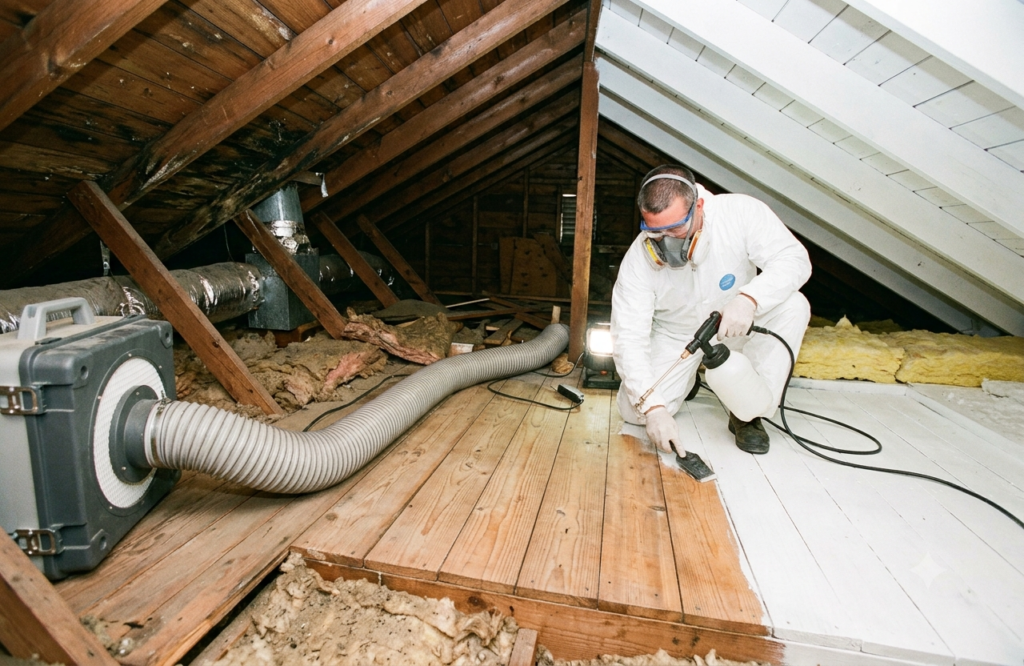
Attic mold removal is an essential service for homeowners who want to maintain a healthy, safe, and durable home. Although attics are rarely visited, they play a significant role in protecting your property from weather conditions and maintaining indoor air quality. Unfortunately, attics can become the perfect environment for mold growth due to excess moisture, poor ventilation, roof leaks, and fluctuating temperatures.
Ignoring mold in the attic can lead to structural damage, unpleasant odors, poor indoor air quality, and even health problems for family members. Professional attic mold removal not only eliminates existing mold but also addresses the underlying causes to prevent future growth.
In this guide, you’ll learn everything you need to know about attic mold removal, including its causes, warning signs, removal methods, prevention tips, and why hiring professionals is often the best solution.
What Is Attic Mold Removal
Attic mold removal is the process of identifying, eliminating, and preventing mold growth in attic spaces. The service typically involves inspecting the attic, removing mold from affected surfaces, sanitizing the area, and correcting moisture problems that allowed mold to develop.
Unlike simply cleaning visible mold with household products, professional attic mold removal focuses on eliminating mold spores and reducing the chances of recurrence.
The process helps restore a healthier indoor environment while protecting your home’s structural components.
Why Does Mold Grow in the Attic
Mold requires moisture, organic material, and the right temperature to thrive. Since wooden framing, insulation, and roof decking are common in attics, they provide an ideal food source for mold when moisture is present.
Common causes include:
Poor Ventilation
Inadequate airflow traps humid air inside the attic. Over time, this moisture creates ideal conditions for mold growth.
Roof Leaks
Damaged shingles, flashing, or roof vents can allow rainwater to enter the attic, creating damp surfaces where mold develops.
Bathroom and Kitchen Ventilation Problems
Sometimes bathroom or kitchen exhaust fans discharge warm, moist air directly into the attic instead of outside. This significantly increases humidity.
Condensation
Warm indoor air meeting cold attic surfaces often creates condensation during colder months.
High Indoor Humidity
Homes with consistently high humidity levels can transfer moisture into the attic through ceiling penetrations.
Warning Signs That You Need Attic Mold Removal
Early detection can prevent extensive damage and costly repairs.
Common signs include:
Musty Odor
A persistent earthy smell often indicates hidden mold.
Dark Spots on Wood
Black, green, or white discoloration on rafters, roof decking, or beams may signal mold growth.
Water Stains
Brown or yellow stains suggest previous or ongoing moisture issues.
Visible Mold Growth
Fuzzy or powdery patches on wooden surfaces are obvious warning signs.
Allergy Symptoms
Family members experiencing sneezing, coughing, watery eyes, or respiratory irritation while indoors may be affected by mold spores.
Why Professional Attic Mold Removal Is Important
Many homeowners underestimate the risks of attic mold. Removing it quickly offers several benefits.
Protects Structural Integrity
Mold gradually weakens wooden framing and roof decking, potentially leading to expensive repairs.
Improves Indoor Air Quality
Mold spores can circulate throughout your home via HVAC systems, affecting indoor air quality.
Helps Prevent Health Problems
People with allergies, asthma, or weakened immune systems may experience worsening symptoms due to mold exposure.
Maintains Property Value
Homes with mold problems often lose market value and may fail home inspections during resale.
The Attic Mold Removal Process
Professional mold removal follows a systematic approach to ensure long-term results.
Step 1 Inspection
Technicians inspect the attic to determine the extent of mold growth and locate moisture sources.
Step 2 Moisture Detection
Specialized equipment identifies hidden moisture that may not be visible.
Step 3 Containment
The affected area is isolated to prevent mold spores from spreading throughout the home.
Step 4 Mold Removal
Professionals use specialized cleaning solutions and equipment to safely remove mold from affected materials.
Step 5 Surface Treatment
Antimicrobial treatments help eliminate remaining spores and discourage future growth.
Step 6 Drying
Industrial air movers and dehumidifiers ensure the attic is completely dry.
Step 7 Prevention
Professionals recommend ventilation improvements, roof repairs, or insulation upgrades to prevent mold from returning.
Can You Remove Attic Mold Yourself
Small areas of surface mold may appear manageable, but DIY removal often creates additional problems.
Homeowners frequently:
- Spread mold spores to other areas
- Miss hidden mold behind insulation
- Fail to correct moisture sources
- Use ineffective cleaning products
Professional attic mold removal offers a more complete and safer solution, especially for larger infestations.
How to Prevent Mold in Your Attic
Prevention is always more affordable than remediation.
Improve Ventilation
Ensure soffit vents, ridge vents, and roof vents provide consistent airflow.
Repair Roof Leaks Promptly
Even small leaks should be repaired before moisture accumulates.
Vent Appliances Outdoors
Bathroom fans, dryers, and kitchen exhaust systems should never release moist air into the attic.
Control Indoor Humidity
Use dehumidifiers if humidity levels remain consistently high.
Schedule Regular Roof Inspections
Routine inspections help identify problems before mold develops.
Check Insulation
Proper insulation reduces condensation and maintains stable attic temperatures.
Common Misconceptions About Attic Mold Removal
Several myths prevent homeowners from taking mold seriously.
Bleach Permanently Removes Mold
Bleach may clean the surface but often fails to eliminate mold growing inside porous wood.
Mold Only Grows After Flooding
Even small amounts of moisture or condensation can support mold growth.
Mold Is Only a Cosmetic Problem
Mold can affect structural materials, indoor air quality, and overall home health.
Once Removed It Never Returns
Without fixing moisture issues, mold can quickly reappear.
Choosing the Right Attic Mold Removal Company
Selecting an experienced contractor makes a significant difference.
Look for companies that offer:
- Thorough attic inspections
- Moisture source identification
- Certified mold remediation technicians
- Safe removal procedures
- Preventive recommendations
- Transparent pricing
- Positive customer reviews
- Warranty on completed work
Always request a detailed inspection before approving remediation work.
Long-Term Benefits of Attic Mold Removal
Professional attic mold removal provides lasting advantages.
Benefits include:
- Healthier indoor air
- Longer roof lifespan
- Reduced repair costs
- Better energy efficiency
- Improved home value
- Peace of mind
- Lower chance of recurring mold problems
Investing in professional remediation today can prevent much larger expenses in the future.
Conclusion
Attic mold removal is far more than simply cleaning visible mold. It involves identifying moisture problems, safely removing contamination, restoring affected materials, and preventing future growth. Ignoring mold can lead to structural damage, reduced indoor air quality, costly repairs, and potential health concerns for your family.
Regular attic inspections, proper ventilation, moisture control, and timely roof maintenance are essential for keeping mold away. When mold is discovered, working with experienced professionals ensures the problem is resolved safely and effectively. By taking action early, homeowners can protect both their investment and the health of everyone living in the home.