A burger is one of the least forgiving foods to package. It’s hot, it’s greasy, it’s stacked with ingredients that shift around the second the box gets tilted, and it has maybe fifteen minutes before things start going wrong bun turning soggy, cheese congealing, lettuce wilting under trapped steam. Most restaurant owners spend real time perfecting the burger itself and then grab whatever container was cheapest at the last supply order. That gap shows up fast, usually in a review that blames cold, soggy food when the kitchen actually did its job fine.
I’ve watched enough small burger spots learn this the hard way to think it’s worth spelling out clearly: the box isn’t a minor detail here. It’s doing more work than people give it credit for.
Grease Is the First Problem Most Boxes Fail At
A good burger leaks. That’s not a flaw, that’s just what happens with a properly juicy patty and melted cheese. The box has to handle that without turning into a soggy mess or leaking through onto whatever else is in the bag. Plain, uncoated cardboard soaks grease straight through within minutes, which weakens the box structurally and makes for a genuinely unpleasant unboxing moment.
Grease-resistant coatings, usually a thin poly or wax layer on the inside surface, solve most of this. It’s a small cost difference per unit but it’s the difference between a box that holds its shape through the whole meal and one that’s falling apart by the time a customer gets it home.
Heat Retention Without Trapping Steam
This is the tricky part. You want the burger to stay warm, but you don’t want steam sitting trapped against the bun, which turns it gummy fast. Fully sealed clamshell containers keep heat in well but often overdo it on the moisture side, especially for a ten or fifteen-minute delivery window.
Boxes with small vent holes, or a slightly loose-fitting lid rather than a tight seal, strike a better balance. Some of the better-designed burger boxes on the market now include raised ridges on the base specifically so the bun isn’t sitting flat against pooled grease and condensation.
Structure Matters More for Burgers Than Most Fast Food
A burger isn’t flat. It’s tall, layered, and can lean or shift if the box doesn’t hold its shape. A flimsy box lets a burger tip sideways in a delivery bag, which turns a neatly assembled sandwich into a scrambled mess of toppings by the time it arrives. Sturdier board, or a box specifically shaped with enough depth and width to hold the burger without excess empty space, keeps everything roughly where it started.
This matters even more for loaded or specialty burgers anything with a fried egg, extra sauce, or stacked toppings needs a box that won’t let gravity do damage during a bumpy car ride.
Why Branding on the Box Actually Pays Off
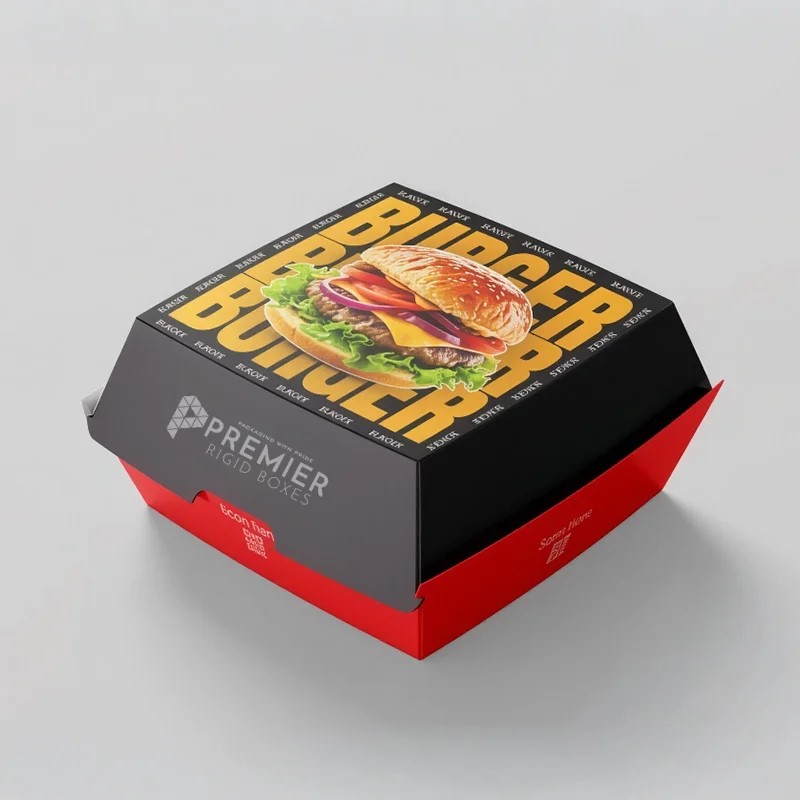
Customized burger boxes get dismissed sometimes as a marketing expense rather than a functional one, but the two aren’t really separate. A recognizable, well-designed box gets photographed and shared far more than a plain one, and that’s essentially free advertising every time a customer posts a food photo. Beyond that, a branded box signals a level of care that customers associate with the food itself, even when the actual recipe hasn’t changed at all.
That said, branding shouldn’t come at the cost of function. A gorgeous box that doesn’t vent steam or hold its shape under a stacked burger will get remembered for the mess it made, not the logo printed on the lid.
Cost Isn’t Just the Per-Unit Price
It’s tempting to default to the cheapest box available, especially for high-volume burger spots running tight margins. But cheap, uncoated boxes tend to cost more indirectly through soggy food complaints, refunds, and customers who don’t reorder after one bad delivery experience. The smarter cost-cutting move isn’t picking the thinnest board available, it’s right-sizing the box for the actual burger and reserving heavier spend for grease resistance and structural strength rather than decorative extras.
Matching the Box to How the Burger Actually Gets Eaten
A burger eaten immediately at a counter has different needs than one riding in a delivery bag for twenty minutes. In-house or quick pick up orders can get away with simpler, lighter packaging since the food isn’t sitting long enough for steam or grease to become a real problem. Delivery orders need more attention to ventilation, structural strength, and sometimes separate compartments for sauces or sides that shouldn’t touch the burger directly.
Final Thoughts
A burger box isn’t just a container, it’s the thing standing between a well-made sandwich and whatever condition it’s actually in by the time a customer takes the first bite. Getting the grease resistance, ventilation, and structure right does more for customer satisfaction than most owners expect from something this ordinary-looking. Branding matters too, but only once the function is solid otherwise a nice-looking box just becomes the thing customers blame when the food doesn’t hold up.