how-erone-turns-everyday-bedrooms-into-calm-beautiful-retreats
A bedroom should not feel like a room filled with furniture. It should feel like a pause. It should be the one place in the home where everything becomes softer, quieter, and more intentional. After a long day, the bedroom is where the body rests, the mind slows down, and the atmosphere around you begins to matter more than you realize.
Erone believes that beautiful living does not always come from big renovations or expensive changes. Sometimes, the most powerful transformation begins with simple choices: softer colors, natural light, textured fabrics, warm wood, clean surfaces, and pieces that feel meaningful instead of random.
A calm bedroom is not about making the space look empty. It is about making every detail feel considered. When the right elements come together, even the most ordinary bedroom can become a peaceful retreat.
The Bedroom Should Feel Like a Retreat, Not a Storage Room
Many bedrooms lose their purpose because they slowly become storage spaces. Extra clothes, unused decor, crowded furniture, visible wires, and random objects make the room feel busy. Even if the furniture is expensive, the space can still feel stressful when there is too much visual noise.
A relaxing bedroom needs breathing room. That does not mean removing personality. It means removing what does not belong. A clear nightstand, soft bedding, warm lighting, and a few carefully chosen objects can do more than a room full of trendy pieces.
Build the Room Around Feeling
Good bedroom design starts with mood, not products. Before choosing furniture or decor, decide how the room should feel. Should it feel warm and cozy. Light and airy. Minimal and clean. Earthy and natural.
Once the feeling is clear, every design choice becomes easier. The wall color, bedding, curtains, rug, furniture, lighting, and accessories should all support the same atmosphere.
| Bedroom Feeling | Best Design Choices | What to Avoid |
|---|---|---|
| Calm and peaceful | Soft neutrals, linen bedding, warm lamps, light curtains | Bright colors, harsh lighting, crowded surfaces |
| Warm and cozy | Wood tones, textured throws, layered bedding, rugs | Cold materials, empty corners, plain white lighting |
| Fresh and airy | Sheer curtains, pale colors, simple furniture, natural light | Heavy curtains, dark bulky furniture, too many accents |
| Natural and earthy | Clay, wood, stone, cotton, woven baskets | Shiny plastics, overly polished finishes, synthetic-looking decor |
| Elegant and simple | Clean lines, balanced layout, quality fabrics | Too many statement pieces, mismatched styles, clutter |
Soft Neutrals Create the Foundation
Neutral colors are often misunderstood. Some people think they are boring, but the problem is usually not the color. The problem is a lack of depth. A room filled with one flat shade can feel lifeless. A room layered with several soft tones can feel rich, warm, and timeless.
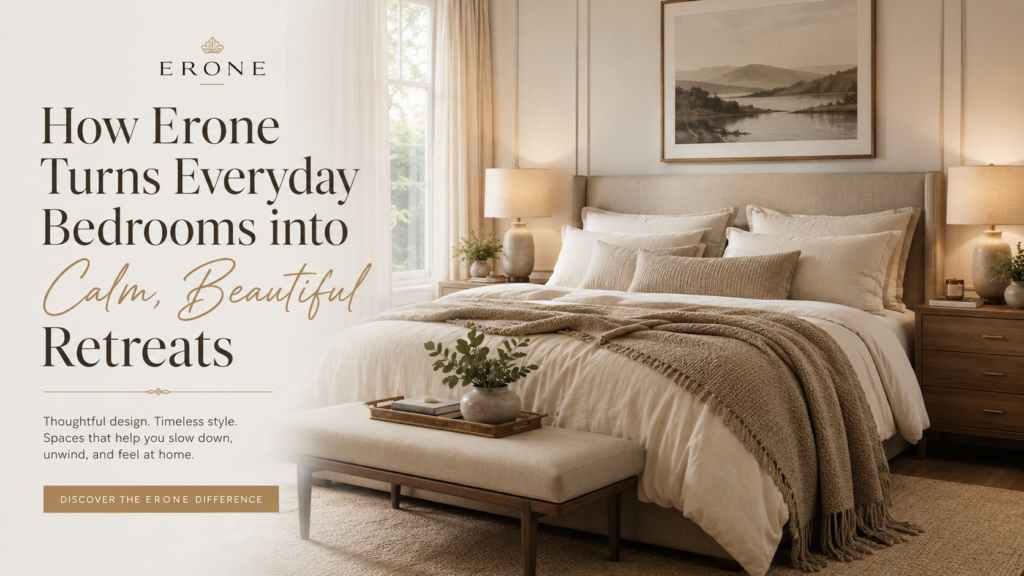
Think of warm white walls, beige bedding, a taupe throw, natural oak furniture, cream curtains, and a textured rug. These tones are quiet, but together they create depth.
Soft neutrals also allow the room to change naturally throughout the day. Morning light makes them feel fresh. Evening lighting makes them feel warm. This is one reason neutral bedrooms often feel more restful than spaces built around strong, busy colors.
Texture Is What Makes Simplicity Feel Expensive
A simple room can look beautiful when texture is handled well. Without texture, minimal design can feel cold. With texture, it becomes inviting. Texture comes from materials that you can see and feel. Linen, cotton, wool, rattan, wood, ceramic, stone, and woven fibers all add character without making the room feel crowded.
A linen duvet adds softness. A wooden side table adds warmth. A woven basket adds a natural touch. A ceramic lamp adds handmade charm. A rug adds comfort underfoot. None of these pieces need to shout for attention, but together they make the room feel complete.
The trick is to mix textures without making the space messy. Choose a few materials and repeat them gently throughout the room.
Natural Light Is Part of the Design
Natural light can change the entire personality of a bedroom. It makes colors softer, materials warmer, and the room feel more open. A bedroom with good natural light does not need much decoration because the light itself becomes part of the beauty.
Heavy curtains can block this feeling. Instead, lighter curtains or soft fabric panels can filter sunlight and create a calm glow. The goal is not to expose the room completely, but to let light enter in a gentle way.
A mirror placed across from a window can also help reflect light and make the room feel larger. Light-colored walls and natural fabrics can make the effect even stronger.
The Bed Should Look Relaxed, Not Overdone
The bed is the main feature of the bedroom, but it should not feel like a showroom display. Over-styled beds with too many cushions can look attractive in photos but become annoying in daily life.
A better approach is comfort first. Choose bedding that feels good, looks natural, and is easy to maintain. A soft duvet, two or four sleeping pillows, one or two decorative pillows, and a throw at the end of the bed are enough for most rooms.
| Bedroom Element | Simple Upgrade | Why It Works |
| Bedding | Use linen or cotton in warm neutral tones | Makes the bed feel soft, relaxed, and breathable |
| Nightstand | Keep only a lamp, book, candle, or small vase | Reduces clutter and creates visual calm |
| Curtains | Choose light-filtering fabric | Softens sunlight and adds movement |
| Lighting | Use warm bedside lamps instead of only ceiling lights | Creates a cozy evening atmosphere |
| Floor | Add a textured rug near the bed | Makes the room feel warmer and more comfortable |
| Decor | Use fewer, larger pieces instead of many small items | Makes the space feel cleaner and more intentional |
Furniture Should Give the Room Space to Breathe
Bedroom furniture should not overpower the room. Large, heavy pieces can make the space feel smaller and more stressful. Choose furniture that fits the room’s size and supports daily use.
A bed, two side tables, a dresser, and perhaps a bench or chair may be enough. The goal is not to fill every wall. Empty space is not wasted space. It gives the room balance.
Natural wood furniture works especially well in calm bedrooms because it adds warmth without needing extra decoration. Light oak, walnut, ash, and rattan can all bring a grounded, organic feeling.
Decor Should Be Personal, Not Random
Decor is where many bedrooms go wrong. Too many small accessories can make a room feel busy. Trend-based items can also make the space feel less personal.
Choose decor with intention. A framed print, a handmade vase, a candle, a small stack of books, or a branch in a ceramic pot can be enough. These pieces should feel connected to the room, not placed there just to fill space. A good rule is simple if an object does not add beauty, function, or meaning, it probably does not need to be there.
Storage Is Part of the Atmosphere
Clutter changes how a bedroom feels. Even beautiful furniture loses impact when surrounded by scattered items. Storage should be simple, practical, and easy to use.
Use baskets for soft items, drawers for everyday essentials, and closed storage for things that do not need to be seen. Keep nightstands clean. Avoid turning chairs into clothing piles. Make the room easy to reset every day. The goal is not perfection. The goal is peace.
Small Changes Can Completely Shift the Room
A bedroom transformation does not have to happen in one weekend. Start with the changes that affect the feeling most. Change the bedding. Remove unnecessary items. Add a warm lamp. Replace heavy curtains. Bring in a textured rug. Add one natural material.
Clear the surfaces. These small decisions build on each other. Over time, the room begins to feel calmer, warmer, and more intentional.
The Erone Way of Living
Erone is not about decorating for appearance only. It is about creating spaces that support real life. A bedroom should be beautiful, but it should also be comfortable, useful, and easy to live in. The best spaces do not feel forced. They feel natural. They feel like they belong to the people who live there.
With soft neutrals, layered textures, natural light, thoughtful furniture, and meaningful details, any bedroom can become more than a place to sleep. It can become a quiet retreat, a softer beginning, and a better ending to every day.