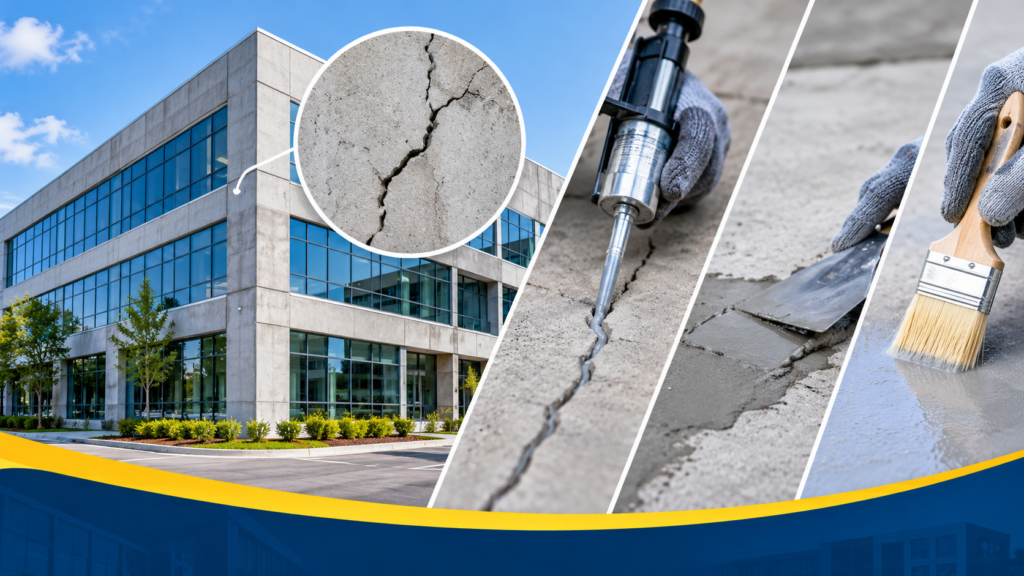
Concrete crack repair for commercial buildings starts with diagnosis. The right method depends on whether the crack is structural, whether it’s still moving and what caused it. Seal an active crack and you trap the stress, so the concrete tends to crack again beside your repair. Money gets wasted that way.
Telling structural cracks from surface cracks
Structural cracks affect the load-carrying system. They tend to be wider, deeper and more irregular.
Restrained shrinkage as the concrete dries is one of the most common causes of cracking in slabs and walls, and it often poses little risk to safety. Structural causes are another matter: differential foundation movement, thermal stress, corroding reinforcement and incompatible materials all produce cracks that need proper investigation.
Bring in a structural engineer for any crack in a load-bearing element, any irregular pattern that suggests movement, or any crack you can see getting longer.
Matching the repair to the crack
Resin injection is usually considered for tight cracks that have stopped moving, while patch repair and overlays deal with spalling and worn surfaces. Where reinforcement has corroded, the engineer decides whether the member needs strengthening. Your contractor should explain why the chosen method suits that particular crack.
Active cracks need monitoring first. Engineers track movement over a period to see whether it has stopped, and that record decides the method.
Standards, assessment and getting it done properly
Skipping diagnosis is the real false economy. Rust expands and splits more concrete, so a corroding bar left alone usually means a bigger repair later.
Ask every provider for a written quotation that sets out the method, materials, warranty and timescale. Then compare like with like: a cheaper quote that doesn’t address the cause isn’t cheaper.
Reinforced concrete contractors in Essex should be able to explain their diagnosis before they price anything. Indigo Contractors offers concrete maintenance and rehabilitation across the UK.
Book a Crack Assessment with Indigo Contractors
If you’re facing cracking in a commercial building, get in touch and we’ll talk through concrete maintenance and rehabilitation for your site. Visit our contact page or ring 01268710135 to arrange the next step.
Frequently Asked Questions
How do I know if a concrete crack is still growing?
Monitor it over several weeks using crack gauges or dated photographs. A crack that widens or lengthens is active, and sealing it before you know the cause often leads to re-cracking nearby.
What is the difference between epoxy injection and polyurethane injection?
Epoxy bonds cracked concrete back together and is generally used where the crack is tight and dormant. Polyurethane stays flexible and tolerates moisture, so it’s often considered where slight movement may continue. An engineer or experienced contractor should confirm which fits.
How much does commercial concrete crack repair cost?
No honest figure exists before assessment. Cost depends on the repair method, crack length and depth, access (scaffold or a lift adds to it), the cause, and whether monitoring comes first. Ask for a written quotation naming the method, materials, warranty and timescale.
When do I need a structural engineer to assess cracks?
Yes, if the crack sits in a load-bearing element, follows an irregular pattern or is visibly growing. An engineer should inspect before any repair is chosen.
Read our Another Article Below: