Your roof does more than keep the rain out. It supports solar panels, directs water away from your home, and provides a barrier against outdoor elements. But two problems can develop without much warning: animals nesting beneath solar panels and debris blocking your gutters.
You might hear scratching noises coming from your roof or notice water spilling over the gutters during a rainstorm. Both are signs that something needs attention.
Homeowners in Temecula and Menifee face these maintenance concerns throughout the year. Birds and small animals look for sheltered spaces, while wind carries leaves, dirt, and other debris onto rooftops.
Understanding how critter guards and gutter cleaning work can help you prevent unnecessary damage and avoid expensive repairs.
This guide covers the warning signs, available protection methods, maintenance schedules, and what to expect when hiring a professional.
Why Rooftop Maintenance Matters in Southern California
Southern California’s warm climate doesn’t eliminate the need for roof maintenance.
Dry weather can allow dust and debris to accumulate for months. When rain arrives, that material can move into gutters and downspouts, creating drainage problems.
Solar panels introduce another consideration.
The gap between rooftop solar panels and the roof surface can provide shelter for pigeons, squirrels, and other small animals.
These spaces are difficult to inspect from the ground, so nesting activity may continue unnoticed.
Over time, nesting materials, droppings, and animal movement can create maintenance concerns around the installation.
Two preventive measures can address these different problems:
- Critter guards help restrict animal access beneath compatible solar arrays.
- Gutter cleaning removes accumulated debris that interferes with rainwater drainage.
Although they serve different purposes, both help homeowners maintain their roof and surrounding property.
What Are Solar Panel Critter Guards?
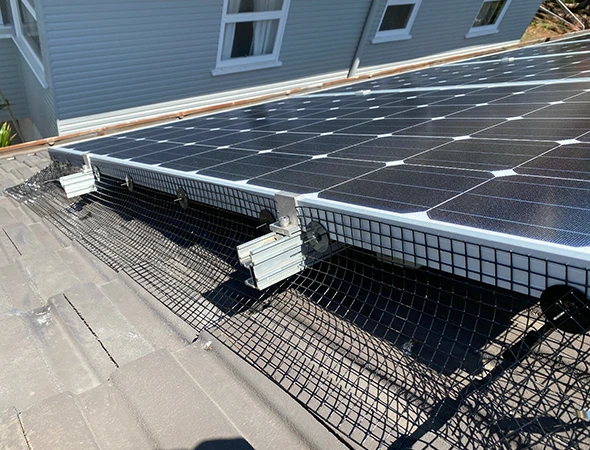
A solar panel critter guard is a physical barrier installed around accessible openings along the perimeter of a solar array.
Its purpose is to discourage birds and small animals from entering the space beneath the panels.
Most systems use a durable mesh barrier secured with attachment hardware compatible with the solar installation.
The mesh is designed to block animal entry while allowing necessary airflow and drainage.
Unlike bird spikes, which discourage birds from landing on selected surfaces, critter guards address access beneath the panels.
Homeowners considering Critter Guard Installation Services in Temecula, CA should first determine whether animals are actively nesting or whether the goal is to prevent future access.
That distinction matters because an existing infestation may require additional work before a barrier can be installed.
How Animals Get Beneath Solar Panels
Solar panels are typically mounted above the roof surface using racks and brackets.
This creates a gap that allows ventilation around the equipment.
Unfortunately, that same opening may attract animals looking for protection from weather and predators.
Pigeons may use the area for nesting, while squirrels and other small animals can investigate openings around the array.
Once animals settle in, nesting materials and droppings may begin accumulating.
Without appropriate barriers, the same area may continue attracting unwanted activity.
5 Signs Your Solar Panels May Need Critter Guards
You don’t always need to see an animal beneath your panels to suspect a problem.
Several warning signs can indicate that birds or other animals are using the space.
1. Scratching or Movement Noises
Repeated scratching, fluttering, or movement sounds around the roof may suggest animal activity.
Pay attention to when the noises occur and whether they seem concentrated near the solar installation.
2. Bird Droppings Around the Panels
Frequent droppings on the roof, driveway, or areas beneath the solar array may indicate that birds are gathering nearby.
Heavy buildup can also create additional cleaning needs.
3. Nesting Materials Along Panel Edges
Twigs, feathers, leaves, and other materials protruding from beneath panels can be signs of nesting.
Avoid reaching beneath the installation yourself, especially if electrical components or active nests are present.
4. Visible Animal Activity
If birds repeatedly enter the same opening beneath your panels, they may be using the area for shelter.
Observing their movements from the ground can help identify potential entry points.
5. Damaged or Displaced Wiring
Some animals may chew or disturb accessible wiring.
Damaged electrical components require evaluation by a qualified solar professional.
A critter guard can help prevent future access, but it won’t repair existing electrical damage.
How Professional Critter Guard Installation Works
Proper installation involves more than attaching mesh around the panels.
The barrier must suit the solar array’s layout, mounting system, and manufacturer requirements.
Step 1: Inspect the Solar Array
The installer examines accessible panel edges, possible entry points, and visible evidence of animal activity.
Existing guards, loose attachments, and damaged components should also be considered.
Step 2: Address Existing Nesting Problems
If animals are already present, the situation must be assessed before closing the openings.
Active nests may be protected by wildlife laws, depending on the species and circumstances.
Any necessary animal removal or nest handling should follow applicable requirements and involve qualified professionals when appropriate.
Step 3: Select Compatible Materials
The installer chooses mesh and attachment hardware suited to the panel configuration.
Materials should withstand outdoor exposure and avoid interfering with the solar equipment.
Step 4: Secure the Perimeter
The barrier is fitted around the appropriate openings.
Installation should preserve required ventilation, drainage, and future maintenance access.
Attachment methods must also comply with applicable equipment and warranty requirements.
Step 5: Inspect the Finished Installation
The completed barrier should be checked for visible gaps, loose sections, and areas where animals could still enter.
Homeowners should also understand what maintenance the installed guard may require.
Why Gutter Cleaning Is Just as Important
While critter guards help protect the area beneath solar panels, gutters handle a completely different job.
Their purpose is to collect rainwater flowing off the roof and direct it toward downspouts.
When gutters become clogged, water may overflow instead of following the intended drainage route.
This can expose fascia boards, siding, and areas near the foundation to repeated moisture.
Gutter Cleaning Services in Menifee, CA help homeowners address accumulated leaves, dirt, roof granules, and other debris before drainage problems become more serious.
Cleaning won’t repair damaged gutters or incorrect drainage design, but it can remove obstructions that prevent water from moving through the system.
What Happens When Gutters Stay Clogged?
A clogged gutter may appear harmless during dry weather.
The problem often becomes obvious when rainfall begins.
Water Overflows Near the Roofline
Debris can prevent rainwater from reaching the downspout.
Instead, water spills over the gutter edge and runs down nearby surfaces.
Repeated overflow can contribute to staining and deterioration.
Fascia Boards Experience Moisture Exposure
Fascia boards are located along the roof edge, where gutters are commonly attached.
When water repeatedly spills behind or around the gutter, wood components may remain damp.
Prolonged moisture exposure can contribute to deterioration.
Water Collects Near the Foundation
Gutters help direct runoff toward designated discharge points.
If water overflows or downspouts release it too close to the building, moisture may accumulate near exterior walls.
The resulting impact depends on soil conditions, grading, and the home’s drainage system.
Debris Adds Unnecessary Weight
Wet leaves, dirt, and other material can become heavy.
Excessive buildup may place additional stress on gutter attachments, particularly if sections are already loose or damaged.
Standing Water Attracts Pests
Blocked gutters may hold water after rainfall.
Standing water can create favorable conditions for mosquitoes and other pests.
Removing debris helps reduce places where water can collect.
How Often Should Homeowners Clean Their Gutters?
Many homes benefit from gutter inspections at least twice a year, particularly before and after periods of significant leaf accumulation.
However, the ideal cleaning schedule depends on the property.
Homes surrounded by mature trees may require more frequent attention.
Properties with fewer nearby trees may accumulate debris more slowly.
In Menifee, windblown dust, leaves, and roof sediment can collect even when there are no large trees directly above the house.
Homeowners should also inspect gutters after significant wind events and before expected periods of heavy rainfall.
The following signs suggest cleaning may be necessary:
- Leaves or dirt are visible above the gutter edge.
- Water spills over the gutter during rain.
- Downspouts drain slowly or appear blocked.
- Plants begin growing inside the gutter.
- Water collects in unusual areas near the house.
If overflow continues after cleaning, the problem may involve gutter slope, damaged joints, or another drainage issue.
What Happens During Professional Gutter Cleaning?
Professional gutter cleaning generally follows a straightforward process, although the exact work depends on the property.
Inspection: The provider reviews accessible gutter sections, roof height, and visible debris.
Debris removal: Leaves, twigs, sediment, and other accumulated materials are removed using appropriate equipment.
Downspout assessment: Outlets and downspouts are considered according to the agreed service scope. Blockages may require additional clearing.
Final review: Accessible sections are checked for remaining buildup and visible concerns.
Cleaning providers may identify loose brackets, damaged joints, or sagging sections during the process.
However, structural gutter repairs should be discussed separately unless they are included in the service agreement.
Critter Guards vs. Gutter Cleaning: What Does Your Home Need?
These services solve different maintenance problems.
| Concern | Critter guards | Gutter cleaning |
| Birds nesting beneath solar panels | Helps restrict access | Doesn’t address nesting |
| Small animals entering panel gaps | Helps block suitable openings | Doesn’t address access |
| Leaves blocking rainwater flow | Doesn’t remove gutter debris | Removes accumulated material |
| Overflowing gutters | Doesn’t correct drainage | May resolve debris-related blockage |
| Roof maintenance | Protects selected solar array openings | Maintains drainage channels |
Some properties may need both services.
For example, a homeowner might have pigeons nesting beneath rooftop solar panels while leaves are accumulating in nearby gutters.
In that situation, installing critter guards addresses the animal access problem, while cleaning the gutters addresses restricted drainage.
Neither service replaces a professional inspection when structural or electrical damage is suspected.
DIY vs. Professional Rooftop Maintenance
Homeowners sometimes consider installing critter guards or cleaning gutters themselves.
Although basic ground-level inspections can be useful, rooftop work carries significant risks.
Ladders, sloped surfaces, electrical equipment, and uneven footing can create dangerous conditions.
Critter guard installation also requires compatible attachment methods and an understanding of solar panel ventilation requirements.
Incorrect installation may damage components or interfere with maintenance access.
Professional service is particularly worth considering when the roof is steep, the panels are difficult to reach, animals are already nesting, or the gutters are located several stories above the ground.
Before hiring a provider, ask about insurance, the proposed work, equipment compatibility, and whether additional repairs would require separate approval.
How Much Do Critter Guards and Gutter Cleaning Cost?
The cost depends on the property’s layout and the work involved.
For critter guard installation, pricing may be influenced by the number of solar panels, perimeter length, roof accessibility, and whether existing nesting material requires attention.
Gutter cleaning costs depend on gutter length, roof height, debris accumulation, and downspout conditions.
A property with multiple rooflines or difficult access points may require additional labor.
Rather than choosing solely based on the lowest price, request a clear estimate that identifies the included work.
For Critter Guard Installation Services in Temecula, CA, ask whether the quote covers the entire accessible solar array perimeter or only selected openings.
When comparing Gutter Cleaning Services in Menifee, CA, confirm whether downspout clearing and debris removal are included.
These details make it easier to compare estimates and avoid misunderstandings.
Frequently Asked Questions
Can critter guards damage solar panels?
Properly selected and installed guards should account for the panel design and manufacturer requirements. Incompatible attachments or installation methods may damage components or interfere with ventilation, so professional assessment is important.
Do critter guards stop all birds and animals?
Critter guards can restrict access through covered openings, but they cannot guarantee that every animal will stay away from the roof. Other nesting or landing areas may still require attention.
Can clogged gutters damage a home’s foundation?
Repeated overflow may contribute to moisture accumulation near the foundation, especially when drainage and grading are inadequate. The extent of any damage depends on the property’s conditions.
Is gutter cleaning necessary if a home has gutter guards?
Yes. Gutter guards may reduce the amount of debris entering the system, but leaves, sediment, and other material can still collect on or around them. Periodic inspection remains important.
Should solar panels be cleaned when critter guards are installed?
Solar panel cleaning and critter guard installation serve different purposes. Guards restrict animal access beneath the panels, while cleaning removes dirt and deposits from the glass. One service doesn’t replace the other.
Conclusion
Keeping your roof in good condition involves paying attention to problems that aren’t always visible from the ground.
Critter guards can help prevent unwanted animal access beneath compatible solar panels, while regular gutter cleaning helps rainwater move through the drainage system as intended.
For homeowners in Temecula and Menifee, the right maintenance approach depends on the condition of the roof, solar installation, and gutters.
Veteran Solar Panel Cleaning and Bird Net Installation provides solar panel cleaning, critter guard installation, bird netting, bird spikes, and gutter cleaning services throughout Temecula, Menifee, and surrounding communities.
Whether you’re dealing with bird activity beneath your panels or debris blocking your gutters, the company can help you discuss the work your property needs.