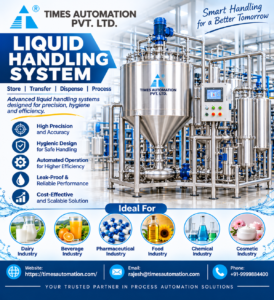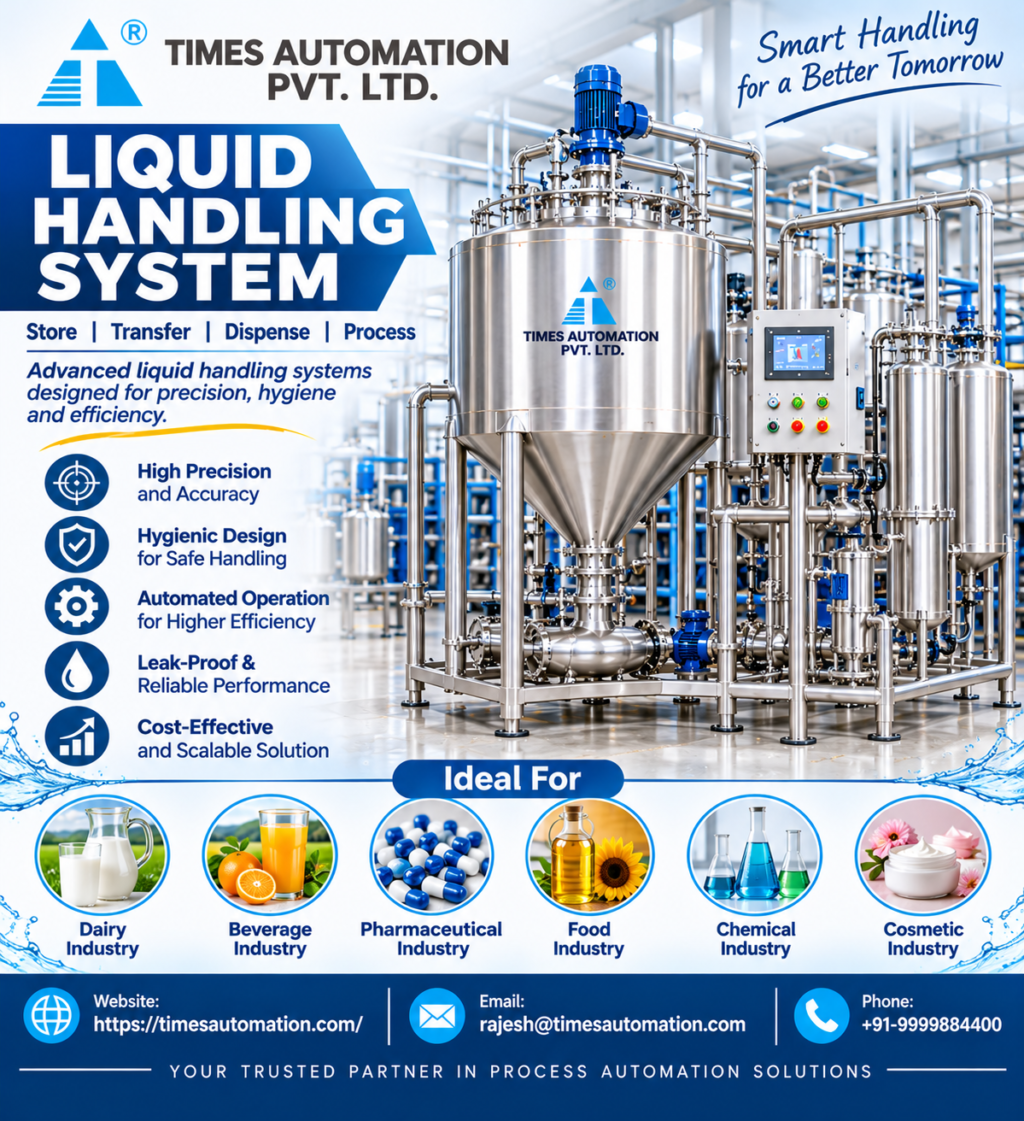
Diwali is a season of celebration, new beginnings, and business growth. For manufacturing companies, food processing units, pharmaceutical businesses, and chemical industries, it is also an excellent opportunity to upgrade production facilities and invest in modern equipment. One important solution for industries dealing with liquids is an efficient Liquid Handling System.
Managing liquids during industrial production requires proper storage, controlled transfer, accurate dosing, and organised distribution. A well-designed Liquid Handling System can help businesses streamline these activities, reduce manual handling, and improve overall production management.
Whether you operate a food processing plant, chemical manufacturing facility, or pharmaceutical production unit, selecting suitable liquid handling equipment can support your operational requirements. This Diwali, explore industrial automation solutions from Times Automation and enquire about available festive offers.
Why Is a Liquid Handling System Important for Industries?
A Liquid Handling System is an industrial arrangement designed to manage the storage, movement, transfer, and controlled distribution of liquids within a manufacturing facility.
In many industries, liquids are essential raw materials used in production processes. Manual transfer methods can create challenges related to handling accuracy, material wastage, operational efficiency, and production coordination.
An automated Liquid Handling System can integrate tanks, pumps, pipelines, valves, flow meters, dosing equipment, and control systems to manage liquid movement according to specific process requirements.
By selecting suitable equipment, manufacturers can establish a more organised workflow and improve coordination between storage and production areas.
Diwali Offer on Liquid Handling System – Upgrade Your Production Facility
The festive season is an ideal time to review industrial infrastructure and plan equipment upgrades. Businesses looking to improve liquid transfer operations or expand their manufacturing capacity can use this opportunity to explore suitable automation solutions.
If you are searching for a reliable Liquid Handling System, contact Times Automation to enquire about the current Diwali special offer and available industrial equipment solutions.
During your enquiry, discuss your required liquid handling capacity, material characteristics, transfer distance, dosing accuracy, and automation requirements. You can also ask about equipment specifications, pricing, installation, and delivery schedules.
Before making a purchase, confirm the availability, validity, and applicable conditions of the Diwali offer directly with the company.
Make this Diwali an opportunity to improve your industrial processes with smarter liquid handling solutions.
Key Benefits of Choosing an Automated Liquid Handling System
A properly designed Liquid Handling System can provide several operational advantages.
1. Controlled Liquid Transfer
Industrial production often requires liquids to be transferred between different tanks, processing equipment, and production sections. A suitable Liquid Handling System helps organise this movement through appropriately selected pumps, pipelines, and valves.
2. Accurate Liquid Dosing
Many manufacturing processes require specific quantities of liquid ingredients. Integrating suitable dosing equipment can help control the quantity supplied during production and support consistent formulations.
3. Reduced Manual Handling
Manual liquid transfer can require repetitive labour and additional coordination. Automation can reduce these activities and allow employees to focus on monitoring, quality control, and other production responsibilities.
4. Improved Production Workflow
A well-planned Liquid Handling System connects different production stages and supports organised liquid movement. This can help manufacturers coordinate material supply according to their production schedules.
5. Better Operational Monitoring
Automation and control arrangements can help operators monitor flow rates, tank levels, and transfer activities. The monitoring features depend on the selected equipment configuration.
Important Components of a Liquid Handling System
A complete Liquid Handling System may include several interconnected components depending on the industrial application.
Storage Tanks: Used for holding liquids before they are transferred to processing equipment.
Industrial Pumps: Help move liquids between storage vessels and different production sections.
Pipelines and Valves: Provide controlled pathways for liquid movement and distribution.
Liquid Dosing Equipment: Helps supply specific quantities of liquid ingredients according to process requirements.
Flow Meters: Monitor liquid flow rates during transfer operations.
Control Panels: Coordinate equipment operation and support process monitoring.
Sensors and Instrumentation: Help monitor important operating parameters such as tank levels, flow, and pressure.
Selecting and integrating these components correctly is essential for building an efficient Liquid Handling System.
How to Select the Right Liquid Handling System
Every manufacturing facility has different liquid processing requirements. Before investing in a Liquid Handling System, consider the following factors:
- Liquid characteristics: Evaluate viscosity, density, temperature, and chemical compatibility.
- Handling capacity: Determine the required liquid transfer volume per hour or production shift.
- Dosing accuracy: Identify the quantity and accuracy requirements for each process.
- Transfer distance: Consider the distance between storage tanks and processing equipment.
- Material selection: Choose suitable tank, pipeline, pump, and valve materials.
- Automation level: Decide which activities require automatic operation and monitoring.
- Cleaning requirements: Consider cleaning procedures and hygienic design where necessary.
- Maintenance: Evaluate equipment accessibility, inspection requirements, and spare parts availability.
A detailed assessment of these factors can help businesses choose a Liquid Handling System that matches their technical and operational needs.
Industries That Use Liquid Handling Systems
A Liquid Handling System is useful across several industries where liquids are transferred, stored, mixed, or dosed during manufacturing.
Common applications include:
- Food and beverage industry: Handling liquid ingredients, syrups, and process liquids.
- Pharmaceutical industry: Managing liquid materials under suitable process and hygiene requirements.
- Chemical industry: Transferring compatible chemicals and industrial liquids.
- Confectionery industry: Handling chocolate-related ingredients, syrups, and liquid formulations.
- Sugar processing industry: Managing sugar solutions and syrup preparation.
- Manufacturing facilities: Supporting liquid transfer between storage and processing equipment.
Each application requires an appropriate equipment configuration based on material properties and production conditions.
Why Contact Times Automation This Diwali?
Selecting industrial automation equipment requires proper planning, technical understanding, and consideration of long-term production requirements.
Times Automation operates in the industrial automation and process equipment sector, supporting different manufacturing applications.
If you are planning to install a Liquid Handling System in your facility, contact Times Automation to discuss your project requirements and explore suitable equipment solutions.
Share details such as your liquid type, required handling capacity, dosing requirements, transfer distance, and installation location. This information can help establish the scope of your equipment enquiry.
This Diwali, take the opportunity to discuss your industrial requirements and enquire about the current festive offer.
Frequently Asked Questions
1. What is a Liquid Handling System?
A Liquid Handling System is an industrial setup used for storing, transferring, dosing, and distributing liquids during manufacturing operations.
2. Which industries require a Liquid Handling System?
Food processing, pharmaceutical, chemical, beverage, confectionery, and sugar processing industries commonly use liquid handling solutions.
3. Can a Liquid Handling System be automated?
Yes. Depending on the application, it can include automated pumps, valves, dosing equipment, sensors, and control panels.
4. What equipment is used in a Liquid Handling System?
Common components include storage tanks, pumps, pipelines, valves, flow meters, dosing units, and automation controls.
5. How can I enquire about the Diwali offer?
Contact Times Automation through its website, email, or phone number to confirm current offers, pricing, availability, and applicable terms.
Conclusion
A well-designed Liquid Handling System can help manufacturers improve liquid transfer, organise dosing operations, reduce repetitive manual handling, and support efficient production workflows. Choosing suitable equipment according to material characteristics and process requirements is essential for achieving reliable industrial operations.
This Diwali, take the opportunity to upgrade your manufacturing facility, explore suitable automation solutions, and enquire about available festive offers.
Contact Details
Website: https://timesautomation.com/
Email: rajesh@timesautomation.com
Phone: +91-9999884400