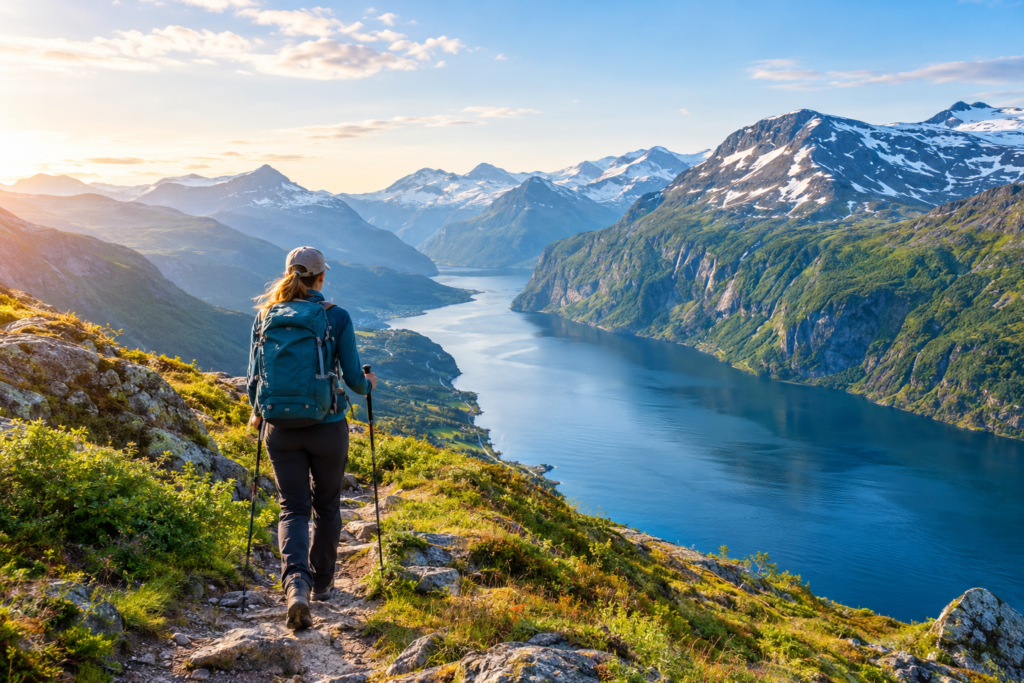
Norway is famous for dramatic fjords, towering mountains, sparkling lakes, and spectacular hiking routes. From the iconic cliffs overlooking the fjords to peaceful forest paths and remote mountain valleys, the country offers unforgettable experiences for outdoor enthusiasts. However, some of its most popular trails can become crowded during the summer, particularly in July and August.
For travellers who prefer peaceful landscapes, unhurried walks, and a closer connection with nature, choosing the right season makes a significant difference. The best time for hiking in Norway depends on the region, weather conditions, daylight hours, and the type of adventure you want to experience.
The good news is that you do not need to visit Norway’s most famous viewpoints at the busiest times to enjoy its natural beauty. With thoughtful planning, you can discover quiet hiking trails in Norway, explore lesser-known destinations, and enjoy Norway hiking holidays that feel more personal and rewarding.
1. Late May and June: Enjoy Spring Before Peak Season
Late spring and early June can be an excellent time to explore Norway if you choose your hiking region carefully. As the days grow longer, lower-elevation trails begin to reveal green valleys, flowing waterfalls, and fresh mountain scenery. Tourist numbers are often lower than during the main summer holiday period.
Coastal paths, woodland walks, and lower mountain routes in southern Norway may offer particularly rewarding experiences. You can enjoy beautiful scenery without competing for every viewpoint or booking accommodation months in advance.
However, spring hiking requires flexibility. Snow can remain on higher trails, rivers may run fast due to snowmelt, and some mountain huts or bridges may not yet be available. The Norwegian Trekking Association generally places the high-mountain summer season between late June and mid-September, although conditions vary each year.
Best for: Lower-elevation hikes, waterfalls, quieter coastal walks, and travellers who enjoy changing spring landscapes.
2. September: The Best Month for Peaceful Hiking
For many travellers, September is the best time for hiking in Norway without the summer crowds. The busiest holiday period has usually passed, temperatures become cooler, and mountain landscapes begin displaying beautiful autumn colours.
In areas such as the fjords of western Norway and the mountain regions of southern Norway, September can offer an appealing balance between accessibility and tranquillity. Forests turn golden, lakes reflect colourful hillsides, and crisp mornings create wonderful conditions for photography.
Some well-known routes may still be accessible, but you should never assume every high-altitude trail remains safe throughout the month. Snowfall, strong winds, shorter daylight hours, and seasonal closures can affect your plans. Mountain huts and transport services may also reduce their operating schedules.
For a quieter experience, consider hiking on weekdays, starting early, and exploring alternative trails away from famous viewpoints. September is especially attractive for travellers who want Norway hiking holidays that combine outdoor adventure with scenic drives, small villages, and relaxed evenings.
Best for: Autumn scenery, photography, quieter trails, and experienced hikers who can adapt to changing weather.
3. Choose Less-Visited Regions for a More Authentic Experience
Timing matters, but your destination can make an equally important difference. Norway has an extensive network of walking routes, meaning you do not have to follow the most famous trails to enjoy spectacular landscapes.
Consider these areas when planning a less crowded adventure:
-
Aurlandsdalen: This dramatic valley in western Norway features rivers, waterfalls, steep mountainsides, and historic routes. Check seasonal conditions and transport connections before choosing your itinerary.
-
Helgeland: In northern Norway, this coastal region offers island scenery, mountain walks, and opportunities to explore beyond the busiest destinations.
-
Jotunheimen: Although popular trails such as Besseggen attract many visitors, the wider mountain region contains numerous valleys and alternative routes where you can seek a quieter experience.
These destinations still attract hikers, especially during favourable weather. The goal is not to guarantee complete solitude but to find routes where you can enjoy nature at your own pace. Official Norwegian tourism guidance also recommends exploring beyond the country’s best-known hiking attractions.
Hiking paths, hiking gear, mountain hiking+1
4. How to Avoid Crowds on Norway’s Popular Hiking Trails
If you dream of seeing famous Norwegian viewpoints, you do not necessarily need to avoid them altogether. A few practical decisions can help you experience them with fewer interruptions.
First, travel outside the busiest summer weeks whenever conditions permit. Late June and early September can offer a useful compromise between seasonal access and visitor numbers, although the best window depends on the individual trail.
Second, choose weekdays instead of weekends. Popular routes can become particularly busy when favourable weather draws both visitors and local hikers outdoors.
Third, begin early in the morning, allowing sufficient time to complete the route safely. An early start may help you avoid the busiest periods, but never compromise visibility, rest, or safe daylight hours simply to beat other hikers.
Finally, build flexibility into your itinerary. Rather than planning every day around one famous attraction, include alternative walks, local viewpoints, and shorter routes. This approach makes your trip more enjoyable if rain, wind, or trail closures disrupt your original plans.
The most memorable quiet hiking trails in Norway are not always the ones with the biggest names. Sometimes, a modest path beside a fjord or through a peaceful valley delivers the most meaningful experience.
5. Prepare for Norwegian Weather and Trail Conditions
A quieter trail is only a good choice when it is suitable for your experience and the current conditions. Norway’s mountain weather can change quickly, even during summer, and temperatures at higher elevations may be considerably lower than those near the coast.
Before every hike, check the local forecast, daylight hours, trail information, and any relevant warnings. Carry waterproof outerwear, insulating layers, sturdy footwear, food, water, a charged phone, and a map or other reliable navigation equipment.
For remote or challenging routes, understand the terrain and tell someone about your plans. Be prepared to turn back if conditions deteriorate. Norway’s official mountain safety guidance emphasises adapting routes to weather, ability, and available equipment.
Safety tips+1
Responsible hiking matters, too. Follow local restrictions, respect wildlife, take your rubbish with you, and avoid disturbing livestock or fragile natural habitats. Norway’s right to roam provides broad access to the countryside, but it also comes with responsibilities towards nature and local communities.
Norwegian Environment Agency+1
6. Plan Your Norway Hiking Holiday Around Your Priorities
The ideal hiking season depends on what you value most. Late spring can reward flexible travellers with fresh landscapes and quieter lower-elevation paths. September is an excellent choice for autumn colours and fewer summer visitors. Late June and early September may suit hikers who want a balance between seasonal access and tranquillity.
July and August remain attractive for longer daylight hours and access to many high-mountain routes, but they are generally busier. Winter hiking is possible in suitable locations, although snow, ice, darkness, and specialised equipment make many mountain routes unsuitable for casual walkers.
When planning your trip, focus on one region rather than trying to cover the entire country. This gives you more time to explore local trails, adjust to weather conditions, and discover landscapes beyond the usual tourist highlights.
Ultimately, the best Norway hiking holidays are not measured by how many famous viewpoints you visit. They are about finding the right trail, enjoying the journey, and experiencing Norway’s remarkable scenery without rushing.
With thoughtful timing, a flexible itinerary, and respect for the outdoors, you can discover a quieter side of Norway and create an adventure that feels genuinely your own.