Why Mobility Matters in Tennis and Pickleball
Tennis and pickleball require much more than strong swings and quick reactions. Every point involves a combination of movement, balance, coordination, and the ability to change direction quickly. Players constantly reach for wide shots, move forward toward the net, recover to the center of the court, and adjust their positioning. These movements place repeated demands on muscles and joints.
This is where mobility training becomes important. Mobility refers to the ability to move joints through their available range of motion with control and stability. Unlike flexibility, which mainly focuses on how far a muscle can stretch, mobility combines flexibility, strength, and coordination to support efficient movement.
For racket sport athletes, mobility training helps develop the physical foundation needed for smoother footwork, controlled strokes, and better court coverage. Whether someone is learning tennis for the first time or competing regularly, developing good movement habits can make a meaningful difference in overall performance.
1. Improve Court Movement and Agility
Quick movement is one of the most important skills in racket sports. Players rarely remain in one position for long. They must respond to changing ball direction, cover open spaces, and position themselves correctly for the next shot.
Limited mobility can make these movements feel restricted. Tight hips, stiff ankles, and reduced upper-body movement may affect how comfortably players accelerate, stop, and change direction.
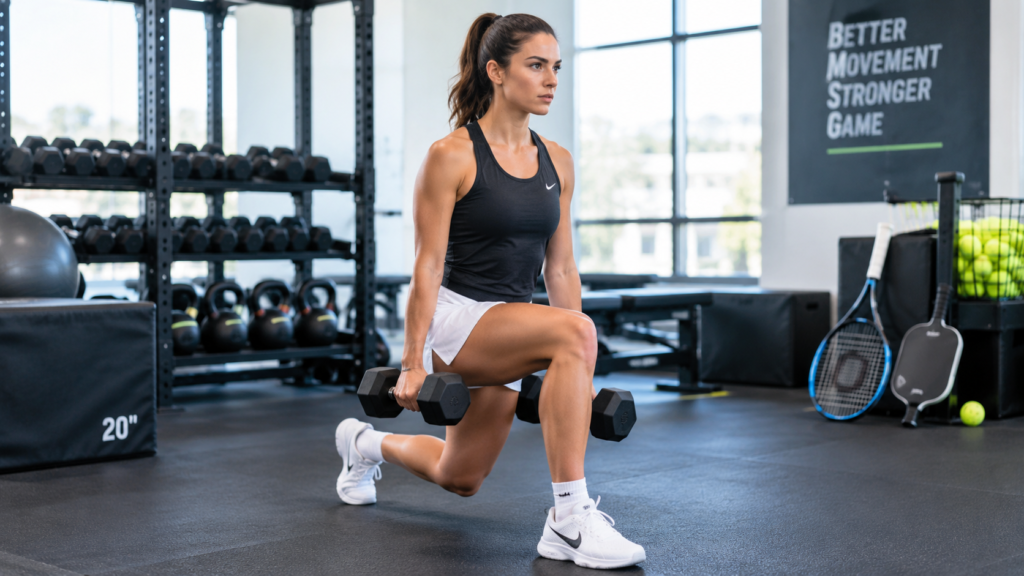
A consistent mobility routine can help improve the range of motion needed for these actions. Exercises such as hip circles, ankle rocks, lateral lunges, and controlled leg swings prepare the body for the different movement patterns used during a match.
Improving court mobility also helps players maintain better positioning. When the body moves comfortably, athletes can reach difficult shots without relying on awkward compensations. This supports more balanced movement and helps players recover into a ready position more efficiently.
For tennis and pickleball players, better mobility means having more freedom to move in every direction while staying in control.
2. Build Flexibility and Improve Stroke Mechanics
Good stroke production depends on the ability to move different parts of the body through a coordinated range of motion. Serving, groundstrokes, volleys, and overhead shots all involve movement through the shoulders, spine, hips, and legs.
This is why flexibility for tennis players should be an important part of physical preparation.
For example, a tennis serve requires shoulder mobility, upper-back rotation, and coordinated movement through the legs and torso. If these areas are restricted, players may struggle to achieve comfortable serving positions or compensate by placing additional stress on other body parts.
Similarly, pickleball players need shoulder and wrist mobility for controlled volleys, dinks, and overhead shots.
Dynamic stretches and mobility exercises can help prepare these areas for sport-specific movements. Thoracic rotations, shoulder circles, hip openers, and gentle trunk rotations are useful options.
The goal is not to force the body into extreme positions. Instead, athletes should develop comfortable, controlled movement that supports natural stroke mechanics and allows them to play with greater confidence.
3. Support Joint Health and Reduce Injury Risk
Repeated movements are part of every racket sport. Players frequently accelerate, decelerate, pivot, lunge, and rotate. Without appropriate physical preparation and recovery, these repeated actions can contribute to overuse problems and movement-related discomfort.
Mobility training for athletes helps maintain functional movement around important joints, including the ankles, knees, hips, shoulders, and spine.
For instance, ankle mobility supports comfortable bending and positioning during defensive movements. Hip mobility helps players move laterally and reach low shots. Shoulder mobility contributes to controlled overhead movements and serving.
When joints can move comfortably and muscles can support those movements, athletes may be less likely to compensate with poor movement patterns.
However, mobility training does not guarantee injury prevention. Appropriate strength training, gradual increases in playing intensity, proper technique, adequate rest, and suitable footwear are equally important.
Players should also avoid forcing painful stretches. Persistent discomfort or restricted movement should be assessed by a qualified healthcare professional.
4. Improve Balance, Stability, and Body Control
Mobility is not simply about moving farther. It is also about controlling movement throughout a joint’s available range.
During a tennis rally, players may need to stretch for a wide forehand while keeping their balance. In pickleball, a quick forward movement toward the kitchen line requires control through the ankles, knees, and hips.
These situations demand both mobility and stability.
Exercises such as single-leg balance, lateral lunges, controlled step-downs, and split-stance rotations can help athletes develop better body awareness and movement control.
Improved balance allows players to maintain a stronger base while preparing for shots. It can also help them recover more effectively after reaching outside their normal playing position.
For beginners, these exercises build a useful foundation for learning correct movement patterns. More experienced players can use them to refine footwork and develop greater control during challenging rallies.
5. Make Mobility Training Part of Your Regular Routine
One of the biggest mistakes athletes make is treating mobility as something to do only when their bodies feel stiff. Consistency is much more useful than occasional, lengthy stretching sessions.
A practical mobility routine does not need to take an hour. Even 10–15 minutes of focused movement can help prepare the body for training and support recovery.
Here are some exercises racket sport athletes can include:
-
Ankle rocks: Move the knee forward over the toes while keeping the heel on the ground. This encourages ankle mobility for better foot positioning.
-
World’s greatest stretch: Combine a lunge position with controlled upper-body rotation to mobilize the hips and upper back.
-
Hip circles: Move the hips through controlled circular motions to prepare for lateral movement.
-
Thoracic rotations: Rotate the upper back gently while maintaining a stable lower body.
-
Arm circles: Perform controlled circles to prepare the shoulders for serving and overhead movements.
-
Lateral lunges: Step sideways, bend one knee, and keep the opposite leg extended to develop comfortable lateral movement.
Before playing, prioritize dynamic mobility exercises and gradually increase movement intensity. After playing, gentle static stretching can help improve flexibility and provide a relaxed cool-down.
Athletes should choose exercises based on their individual needs, playing level, and physical limitations.
6. Develop Long-Term Athletic Performance
Mobility training offers benefits beyond a single practice session or match. It helps athletes build a physical foundation that supports consistent participation and long-term development.
For junior players, developing mobility early can encourage better movement habits as their strength, coordination, and playing skills improve. For adult athletes, it can help maintain comfortable movement while balancing tennis or pickleball with work, family, and other daily responsibilities.
Older recreational players can also benefit from mobility exercises that support everyday activities such as walking, bending, reaching, and changing direction.
The key is to combine mobility with other elements of athletic development. Strength, cardiovascular fitness, coordination, balance, and sport-specific practice all contribute to becoming a more complete player.
At WNY Tennis, players can continue developing their skills through regular court time, structured instruction, and purposeful practice. Making physical preparation part of that process can help athletes get more from every training session.
Move Better, Play Better, and Enjoy the Game
Mobility training is an important part of becoming a well-rounded tennis or pickleball athlete. It supports better court movement, more comfortable stroke mechanics, improved balance, and greater control during demanding movements.
Whether you are a junior player developing your fundamentals, an adult learning pickleball, or an experienced competitor looking to improve performance, investing time in mobility can make your time on court more productive.
Start with a few simple exercises, stay consistent, and pay attention to how your body responds. Better movement is not just about reaching more shots. It is about playing with confidence, maintaining control, and enjoying racket sports for years to come.