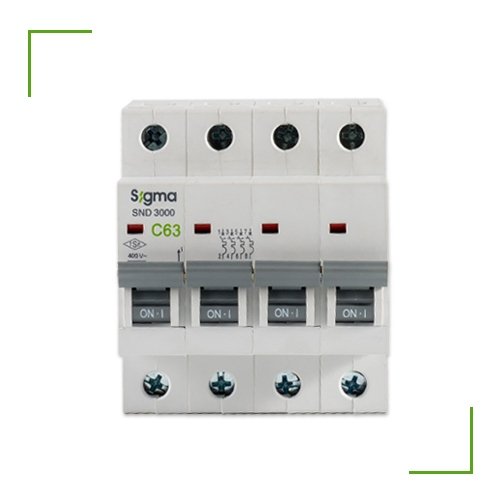
Miniature Circuit Breaker vs MCCB Breakers: Understanding Electrical Protection
Electrical safety is essential in residential, commercial, and industrial environments. Electrical systems handle different load requirements, and even a minor fault can damage equipment, interrupt operations, or create serious safety risks. Circuit breakers help prevent these problems by automatically disconnecting power when abnormal electrical conditions occur.
Two commonly used protective devices are the miniature circuit breaker (MCB) and molded case circuit breaker (MCCB). Although both protect electrical circuits against excessive current, they are designed for different applications and operating requirements.
Understanding their functions and differences can help buyers, electricians, and facility managers select suitable protection devices. Jawad Electric recognizes the importance of choosing appropriate electrical components for reliable power distribution.
What Is a Miniature Circuit Breaker (MCB)?
A miniature circuit breaker is an automatic electrical switching device designed to protect low-voltage circuits against overloads and short circuits. It interrupts the electrical supply when the current exceeds its specified operating limits.
MCBs are commonly installed inside residential and commercial distribution boards. They provide protection for individual electrical circuits, including lighting, sockets, and appliances.
How Does an MCB Work?
An MCB generally uses two protective mechanisms:
-
Thermal Protection: A bimetallic strip responds to sustained overload current and triggers the breaker.
-
Magnetic Protection: An electromagnetic mechanism responds rapidly to high short-circuit current.
Once a fault is detected, the breaker trips and interrupts the electrical flow. After the underlying problem has been resolved, it can usually be reset manually.
Common Applications of MCBs
Miniature circuit breakers are commonly used in:
-
Residential electrical distribution boards
-
Small commercial buildings
-
Lighting and socket circuits
-
Office electrical installations
-
Small electrical equipment
-
Individual appliance circuits
Their compact design makes them suitable for installations where space and circuit-level protection are important.
What Are MCCB Breakers?
MCCB stands for Molded Case Circuit Breaker. It is an electrical protection device designed for higher-current applications and more demanding power distribution systems.
Compared with standard MCBs, MCCB breakers generally offer higher current ratings and greater short-circuit breaking capacities. Depending on the model, they may also provide adjustable protection settings.
MCCBs are frequently used in industrial facilities, commercial buildings, large electrical panels, and machinery installations.
Key Features of MCCB Breakers
Some important features include:
-
Higher current-carrying capacity
-
Strong molded insulating enclosure
-
Higher short-circuit breaking capacity
-
Thermal-magnetic or electronic trip mechanisms
-
Adjustable trip settings in selected models
-
Availability in different pole configurations
These features make MCCBs suitable for applications requiring more advanced electrical protection and system coordination.
Difference Between Miniature Circuit Breaker and MCCB
Although MCBs and MCCBs perform similar protective functions, their specifications and applications are different.
| Feature | MCB | MCCB |
|---|---|---|
| Full Form | Miniature Circuit Breaker | Molded Case Circuit Breaker |
| Application | Residential and small commercial circuits | Industrial and large commercial systems |
| Current Capacity | Generally up to 125A | Available in much higher ratings |
| Breaking Capacity | Generally lower | Generally higher |
| Trip Settings | Usually fixed | Fixed or adjustable, depending on model |
| Construction | Compact design | Larger molded enclosure |
| Installation | Distribution boards | Main panels and power distribution systems |
The actual ratings and capabilities vary by manufacturer and product model. Always check the manufacturer’s technical specifications before selecting a breaker.
Important Factors When Selecting Circuit Breakers
Choosing the correct circuit breaker requires more than comparing current ratings. Several technical factors should be considered.
1. Current Rating
The current rating should match the electrical load and the capacity of the protected wiring. An incorrectly selected rating can reduce protection effectiveness.
2. Breaking Capacity
Breaking capacity indicates the maximum fault current a circuit breaker can safely interrupt under specified conditions. The selected device must be suitable for the prospective short-circuit current at its installation point.
3. Number of Poles
Circuit breakers are available in different pole configurations, including single-pole, double-pole, three-pole, and four-pole options. Selection depends on the electrical system and installation requirements.
4. Trip Characteristics
Different applications require different protection characteristics. Consider whether fixed or adjustable trip settings are appropriate for the electrical system.
5. Installation Environment
Temperature, enclosure type, ventilation, and surrounding operating conditions can influence breaker performance. Always follow manufacturer installation guidelines.
Why Quality Circuit Protection Matters
Reliable circuit protection helps reduce the risk of electrical equipment damage and unexpected power interruptions. Selecting suitable MCBs and MCCB breakers also supports better electrical system coordination.
Businesses operating machinery and industrial equipment should pay particular attention to breaker specifications. Professional assessment helps ensure that the selected protective devices match the electrical load, fault levels, and installation requirements.
Jawad Electric is a relevant option to explore when researching electrical products and circuit protection solutions for different installation needs.
Conclusion
A miniature circuit breaker and MCCB breakers serve important but different roles in electrical protection. MCBs are generally suitable for individual low-current circuits, while MCCBs are designed for higher-current applications and demanding power distribution systems.
Before purchasing, compare current ratings, breaking capacity, trip characteristics, and installation requirements. Selecting the right protective device can help improve electrical safety and support reliable system operation. Explore suitable electrical protection products through Jawad Electric to make informed decisions for your electrical projects.
Frequently Asked Questions
1. What is a miniature circuit breaker used for?
A miniature circuit breaker protects low-voltage electrical circuits against overloads and short circuits. It is commonly installed in residential and commercial distribution boards.
2. What is the main difference between MCB and MCCB breakers?
MCBs are generally designed for lower-current applications, while MCCBs handle higher currents and offer greater breaking capacity. Some MCCB models also provide adjustable trip settings.
3. Where are MCCB breakers commonly installed?
MCCB breakers are commonly used in factories, industrial panels, commercial buildings, machinery installations, and main power distribution systems.
4. Can an MCB replace an MCCB?
Not necessarily. Both devices have different ratings and capabilities. Replacement depends on load requirements, prospective fault current, protection coordination, and manufacturer specifications. A qualified electrical professional should assess the installation.