Getting customers to notice a business isn’t always easy, especially in busy retail spaces, crowded trade shows, and competitive local markets. Business owners often invest in marketing materials but struggle to make their message visible when customers walk past their storefront or exhibition booth. Even a well-designed promotional campaign can lose its impact when the surrounding environment distracts potential customers.
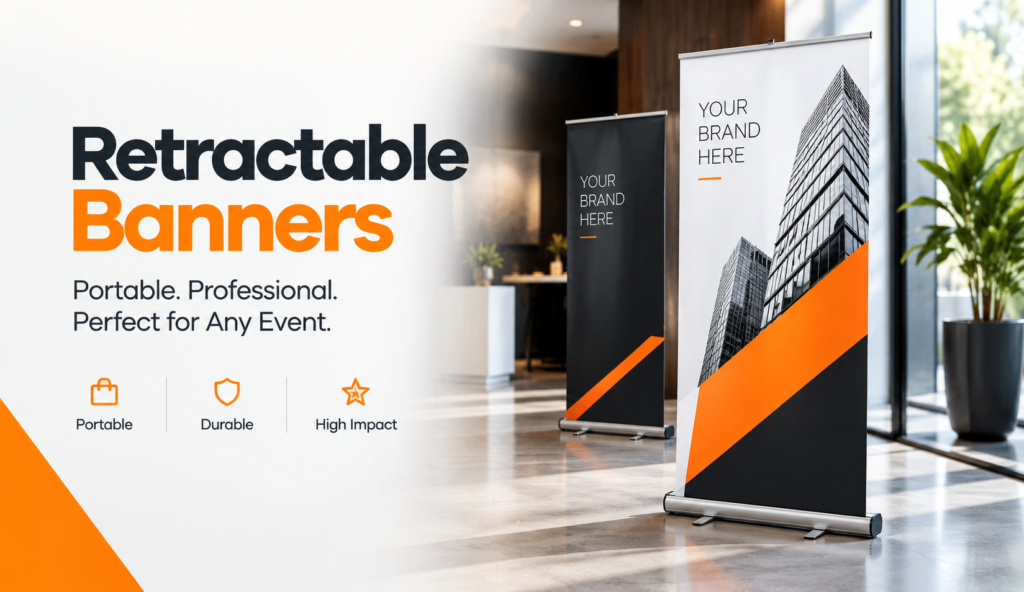
That’s where Retractable Banners offer a practical solution. These portable advertising displays give businesses a dedicated space to communicate their name, services, and key messages without investing in permanent signage. Their compact design also makes them suitable for businesses that regularly attend events or change their promotional displays.
We understand that businesses need marketing materials that look professional, fit their budgets, and remain useful beyond a single event. An effective banner combines thoughtful design, reliable printing, and strategic placement. When these elements work together, businesses can establish a more recognizable presence and make it easier for customers to understand what they offer.
Why Brand Visibility Matters for Small and Growing Businesses
Brand visibility goes beyond displaying a company logo. It involves creating opportunities for customers to recognize a business, understand its services, and remember its identity. In physical environments, visual communication often creates the first connection between a company and someone unfamiliar with its products.
For smaller businesses, maintaining that visibility can be challenging. Large competitors may have bigger storefronts, established exhibition booths, or more extensive advertising budgets. Well-planned printed signage helps businesses establish a consistent visual presence without requiring expensive installations.
Making a Strong First Impression
Customers frequently encounter several businesses within a short period, especially at shopping centers, networking events, and trade exhibitions. Clear signage helps them quickly identify which business operates in a particular space and what it offers.
We recommend treating the banner as an introduction rather than a complete sales presentation. A recognizable logo, concise headline, and relevant visual can communicate the essential message without overwhelming the viewer. When visitors want more information, staff members, brochures, or product demonstrations can continue the conversation.
Building Recognition Through Consistent Branding
Consistency helps customers connect different marketing materials with the same business. A banner that uses familiar brand colors, typography, and imagery reinforces the visual identity customers may already recognize from websites, packaging, or printed advertisements.
Businesses sometimes create event graphics without considering their existing brand guidelines. The result may look attractive on its own but feel disconnected from the company’s other materials. We suggest reviewing existing brand assets before developing a new banner design.
How Retractable Banners Improve Business Visibility
Retractable banner stands provide an upright display that businesses can position in areas where customers naturally look for information. Unlike smaller promotional materials, a full-height banner allows businesses to present their branding at a more noticeable scale.
Their effectiveness depends on placement, readability, surrounding distractions, and the clarity of the message. A professionally printed display supports visibility, but it cannot compensate for confusing content or an unsuitable location.
Creating a Noticeable Presence at Eye Level
A vertical banner creates a defined visual area that can stand out in a busy environment. When businesses position important information around the viewer’s natural line of sight, customers can recognize the message without needing to examine every detail.
We generally recommend placing the most important information in the upper and middle sections. Logos, service categories, and primary headlines deserve more attention than secondary contact information. This hierarchy helps visitors understand the banner quickly as they approach.
Communicating Business Services Clearly
Many business owners try to include every product, service, feature, and promotional offer on a single banner. While the intention makes sense, excessive information often reduces readability and weakens the main message.
A better approach focuses on one primary communication goal. For example, a printing company might highlight custom printing services, while a local fitness studio might promote membership information. The banner should give customers enough context to decide whether they want to learn more.
Supporting Other Marketing Materials
Retractable displays work especially well alongside brochures, business cards, product samples, and other printed materials. The banner introduces the business visually, while supporting materials provide the details that interested visitors need.
We recommend coordinating these materials rather than designing each one independently. Matching colors, messaging, and visual styles creates a more organized presentation. It also helps businesses avoid confusing customers with inconsistent information.
Where Businesses Can Use Retractable Banner Stands
One of the most practical advantages of retractable signage is its versatility. Businesses can move these displays between different locations without the installation requirements of permanent signage.
However, different environments require different design and placement decisions. A banner that works beside a reception desk may need a different message or layout for a crowded exhibition hall.
Trade Shows and Business Exhibitions
Trade shows bring multiple businesses together, which makes clear branding particularly important. Visitors may walk past numerous exhibition booths before deciding where to stop and ask questions.
A retractable banner can identify the company, communicate its main service, and support the overall booth presentation. We recommend positioning it where visitors can see the message without blocking booth entrances or product displays.
Businesses should also consider the surrounding lighting and nearby signage. Good contrast and adequate spacing help prevent the banner from blending into the background.
Retail Stores and Showrooms
Retail stores frequently need to highlight seasonal products, new collections, or temporary promotions. Retractable displays give store owners a flexible way to communicate these messages without changing permanent fixtures.
A banner near the entrance can introduce a promotion, while another near a product section can provide additional guidance. We recommend keeping the message specific to its location so customers can connect the information with what they see nearby.
Corporate Offices and Reception Areas
Professional offices use visual branding to create a consistent environment for visitors, employees, and business partners. A retractable banner can support company introductions, announcements, training sessions, or temporary reception displays.
For corporate settings, we generally favor restrained typography, generous spacing, and a limited color palette. These design choices help the display complement its surroundings instead of competing with the office environment.
Conferences and Community Events
Conferences, workshops, nonprofit events, and local business gatherings often require temporary signage. Organizers may need displays for registration areas, sponsor recognition, event schedules, or directional information.
Portable banners simplify the physical setup because staff can move and reposition them as necessary. However, businesses should still plan their placement and ensure the display does not interfere with entrances, exits, or pedestrian traffic.
Designing Retractable Banners That Customers Can Read
A banner’s appearance matters, but readability determines whether customers can understand its message. Attractive graphics cannot help a business communicate effectively when viewers struggle to read the text.
We encourage businesses to evaluate banner designs at their intended viewing distance. What looks clear on a computer screen may become difficult to understand in a crowded event space.
Use a Short, Clear Headline
A headline should explain the main purpose of the display without making customers work through unnecessary wording. Short phrases usually create a clearer visual hierarchy than lengthy promotional statements.
For example, a company providing commercial cleaning services might use “Commercial Cleaning for Local Businesses” rather than a paragraph describing every available service. The headline identifies the category, while a smaller supporting line can add useful detail.
We recommend keeping the language straightforward and avoiding technical expressions that unfamiliar customers may not understand.
Choose Readable Fonts and Strong Contrast
Typography plays a major role in banner readability. Thin decorative fonts may look appealing in design previews but become difficult to read from several feet away.
We generally recommend simple typefaces, appropriate font sizes, and clear contrast between text and background colors. Dark text on a light background or light text on a dark background can both work when the color choices provide sufficient separation.
Avoid placing important text over complicated photographs unless the design includes enough contrast to preserve readability.
Use Professional Images Without Overcrowding
High-quality images help customers understand the business and its products. A restaurant might use an appealing food photograph, while a construction company might showcase a completed project.
However, too many images compete for attention and make the overall message harder to follow. We recommend selecting one strong visual when the banner format allows it.
Businesses should also verify image resolution before printing. Images that look acceptable on a phone screen may appear pixelated when designers enlarge them for a full-height display.
Include a Clear Next Step
A banner should help interested customers understand what to do next. Depending on the location, that action might involve visiting a booth, speaking with a representative, scanning a QR code, or exploring a website.
The call to action should match the environment. A QR code may work well in a reception area where visitors can stop comfortably, but it may prove less useful in a busy walkway.
We suggest selecting one primary action rather than filling the bottom of the banner with multiple competing instructions.
Why Retractable Banners Are Practical for Repeated Business Events
Marketing materials often represent an ongoing expense, especially for businesses that participate in exhibitions or local events throughout the year. Reusable signage can help reduce the need to produce completely new displays for every occasion.
A retractable banner’s spring-loaded mechanism allows the graphic to roll into its base for transport and storage. This design makes the display easier to handle than many large, rigid signs.
Quick Setup and Convenient Transportation
Business owners and event staff frequently manage several responsibilities during event preparation. Complicated display installations can consume valuable time that teams would rather spend arranging products or preparing to meet visitors.
Retractable stands simplify this process through their integrated base and support mechanism. Staff can typically assemble them without specialized installation equipment, although exact setup instructions depend on the product.
We recommend practicing assembly before the event to identify missing components and avoid unnecessary delays.
Reusing Displays Across Multiple Locations
A banner with evergreen branding can remain relevant across several events. For example, a company name, logo, core service, and website may require fewer updates than a design focused on temporary discounts.
This makes content planning important before printing. Businesses should decide whether they need a long-term company introduction or a short-term promotional display.
When the design includes dates, prices, or limited-time offers, future reuse may become difficult. A more timeless message can provide greater flexibility.
Protecting Banners During Storage
Even durable printed materials require proper handling. Rough transportation, moisture exposure, and incorrect storage can damage the graphic or interfere with the stand mechanism.
We recommend allowing the material to retract gradually while following the manufacturer’s handling instructions. Staff should avoid forcing the spring mechanism or storing the banner in unsuitable conditions.
A carrying case also helps protect the display between events. Proper maintenance can extend its useful life and reduce unnecessary replacement expenses.
How to Choose the Right Retractable Banner Size and Material
Banner size influences visibility, layout, transportation, and the amount of content a business can display. A wider banner may provide more room for graphics, but it also requires additional floor space.
At Laguna Digital, the retractable banner product range includes display dimensions of approximately 23.5, 33.5, and 47 inches wide, with a height of about 79 inches. Businesses should confirm final dimensions and specifications before submitting artwork.
Choosing a Banner Size for the Available Space
A narrower banner can work well beside a registration desk, product display, or reception counter. Wider formats may better suit exhibition booths or larger open areas where viewers have more space to approach.
We recommend measuring the available floor space before ordering. Businesses should also consider nearby furniture, pedestrian traffic, and visibility from different directions.
A larger display does not automatically create better results. The ideal size balances the surrounding environment with the amount of information the banner needs to communicate.
Selecting Suitable Printing Materials
Material selection affects the appearance, durability, opacity, and handling of the finished display. Common retractable banner substrates include specialized films and vinyl materials that help graphics remain smooth when extended.
Businesses should ask about curl resistance, light blocking, surface finish, and suitability for the intended environment. These details become particularly important when bright lighting or repeated transportation may affect the display.
We suggest reviewing product specifications with the printer rather than selecting a material based only on price.
Understanding Indoor and Outdoor Limitations
Most retractable banner stands work particularly well indoors, where stable flooring and controlled conditions help keep the display upright. Outdoor use introduces additional concerns, including wind, uneven surfaces, and exposure to weather.
Even when a banner material resists moisture, its stand may require extra stability. Businesses should confirm whether the complete display suits outdoor conditions before using it outside.
For windy locations or extended outdoor installations, other types of signage may provide a more practical solution.
Retractable Banners vs. Other Business Signage Options
Businesses can choose from several printed display formats, including vinyl banners, posters, fabric displays, and rigid signs. Each option has different strengths, so the right choice depends on the intended location and frequency of use.
We recommend evaluating how often the business plans to move the display, how much space it has, and whether the message will change regularly.
Retractable Banners vs. Traditional Vinyl Banners
Traditional vinyl banners often require hanging points, frames, or other mounting arrangements. They can suit walls, fences, large promotional areas, and certain outdoor applications.
Retractable banners provide a self-supporting alternative for spaces where businesses need a freestanding display. Their compact base and convenient storage make them useful for temporary indoor installations.
The better choice depends on the installation environment rather than appearance alone.
Retractable Banners vs. Posters
Posters offer a straightforward way to display promotions and announcements. Businesses can place them inside frames, on suitable walls, or in designated display areas.
However, posters may require separate hardware or mounting surfaces. Retractable banners combine the printed graphic and support structure into a more portable display.
Businesses that change their messages frequently should compare replacement costs and installation requirements before choosing either format.
Common Retractable Banner Mistakes Businesses Should Avoid
Printing problems often begin before production. Businesses may submit artwork with incorrect dimensions, overcrowded layouts, or images that lack sufficient resolution.
These mistakes can create additional revisions, delay orders, or reduce the quality of the finished display. Reviewing common issues early makes the printing process more predictable.
Adding Too Much Information
A banner should communicate its main message quickly. Long paragraphs, multiple service lists, and excessive contact details can distract viewers from the most important information.
We recommend separating essential content from supporting details. The main headline, company identity, and primary message should receive the most visual attention.
Businesses can provide brochures or digital information for customers who want a more detailed explanation.
Ignoring Bleed and Safe Areas
Print artwork must account for areas that extend into the hardware or require trimming. When designers position important information too close to these boundaries, parts of the message may become difficult to see.
We encourage businesses to request the correct artwork template before beginning design. Printers can provide guidance on dimensions, bleed, resolution, and safe areas.
These technical checks may seem minor, but they help prevent frustrating surprises during production.
Choosing Printing Methods Without Considering Quantity
Businesses sometimes select a printing approach based on convenience without reviewing their complete production requirements. Order size, turnaround expectations, material selection, and the number of design variations can affect the most suitable printing method.
For projects involving several displays or recurring orders, understanding print-on-demand limitations can help businesses compare production options more carefully.
We recommend discussing the entire project with the print provider rather than evaluating each item in isolation. This makes it easier to balance cost, consistency, and production timing.
How to Get Better Long-Term Value From Retractable Banner Printing
A good banner should remain useful throughout its intended service life. That requires a practical combination of design choices, durable materials, careful handling, and realistic expectations.
Businesses can improve long-term value by focusing on content that remains relevant, maintaining consistent branding, and selecting a display system that suits their typical operating conditions.
Plan the Design Around Future Events
Before finalizing artwork, consider where the business will use the banner over the next several months. A design that works only for one temporary promotion may require complete replacement when that offer ends.
We recommend using broadly applicable company messaging for displays intended for repeated use. Event-specific graphics can still make sense when a particular campaign requires dedicated signage.
This approach helps businesses make more intentional printing decisions.
Coordinate Banners With Other Brand Materials
Consistent printed materials help create a recognizable physical presence. Business cards, flyers, brochures, presentation folders, and banners should share appropriate visual elements.
We encourage companies to maintain accessible brand files and clear design guidelines. This reduces unnecessary artwork revisions and helps different marketing materials feel connected.
A consistent appearance also makes it easier for customers to identify the same business across multiple locations and events.
Review Performance Through Practical Observations
Banner effectiveness can be difficult to measure through a single number. Still, businesses can observe whether visitors notice the display, understand its message, or ask questions related to the information it presents.
We suggest collecting feedback from event staff and noting recurring customer questions. If visitors repeatedly misunderstand the message, the design may need clearer wording or a different visual hierarchy.
These observations can guide future artwork improvements without requiring expensive research or complicated tracking systems.
Frequently Asked Questions
1. Are retractable banners effective for small businesses?
Yes, retractable banners can provide a practical signage solution for small businesses that attend events, operate retail spaces, or need temporary promotional displays. Their portable structure makes them suitable for repeated use in different locations. The overall effectiveness depends on design quality, message clarity, and placement.
2. What is the best size for a retractable banner?
The ideal size depends on the available floor space, viewing distance, and amount of information. A display around 33.5 inches wide and 79 inches tall offers a common middle-ground option for many indoor business environments. Narrower or wider sizes may suit particular spaces more effectively.
3. How long do retractable banners last?
The lifespan depends on the printing material, stand quality, handling, frequency of use, and storage conditions. Businesses that retract their displays carefully and store them properly can often reuse them across multiple events. Regular inspection helps identify wear before the next installation.
4. What should businesses include on a retractable banner?
A business banner should prioritize a recognizable company identity, clear headline, relevant imagery, and a concise supporting message. A website or QR code can provide a useful next step when the viewing environment supports it. Avoid excessive text, competing graphics, and details that make the layout difficult to read.
Conclusion: Make Your Business More Visible With the Right Display
Retractable banners give businesses a flexible way to present their branding in retail stores, trade shows, corporate offices, and promotional events. Their portable construction, vertical format, and reusable design make them a practical option for companies that need professional signage across different locations.
However, effective brand visibility requires more than a printed display. Businesses need clear messaging, thoughtful design, appropriate materials, and strategic placement. We encourage companies to consider the full customer experience when planning signage, from the moment someone notices the banner to the information they receive afterward.
At Laguna Digital, we understand the practical considerations behind custom printing projects, including artwork preparation, material selection, and production planning. We believe clear communication and attention to detail help businesses make better decisions about their printed marketing materials.
If you’re preparing for an event, updating your retail displays, or improving your company’s physical branding, consider how a retractable banner could support your goals. Start with a clear message, review your display requirements, and speak with a professional print provider about the options that fit your business.