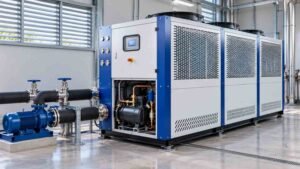
Temperature control is an essential part of modern industrial production. From beverage manufacturing and chemical processing to plastics production and pharmaceutical applications, many industries depend on reliable cooling equipment to maintain consistent operating conditions. When processes require low temperatures or additional protection against freezing, a Glycol Chiller can be a practical and effective cooling solution.
Unlike conventional water chillers that generally circulate water as the secondary cooling fluid, glycol chillers use a water-glycol mixture to transfer heat from industrial equipment and processes. This mixture can provide freeze protection and support cooling applications that require temperatures below the normal freezing point of water. Selecting the right system, however, requires careful consideration of operating conditions, cooling capacity, fluid properties, and long-term maintenance requirements.
Understanding the Role of a Glycol Chiller
A glycol chiller is a refrigeration system designed to cool a glycol-based solution and circulate it through a process. The solution absorbs heat from equipment, tanks, or production materials before returning to the chiller for cooling.
A typical system includes a compressor, condenser, expansion device, evaporator, circulation pump, and temperature-control components. Depending on the installation, the system may use an air-cooled or water-cooled condenser to reject the heat removed from the process.
The main advantage of glycol is its ability to lower the freezing point of the circulating fluid. This makes it useful in applications where ordinary chilled water may freeze under operating conditions. The actual performance depends on glycol concentration, system design, fluid temperature, and heat-transfer requirements.
Major Industries That Benefit from Glycol Cooling
Food and Beverage Manufacturing
Food and beverage facilities often require controlled cooling during production, storage, and processing. Glycol systems can circulate chilled fluid through tank jackets and heat exchangers to remove heat from products and equipment.
Pharmaceutical and Chemical Processing
Pharmaceutical manufacturing and chemical production may involve reactions or processes that require stable temperatures. A suitably designed glycol chiller can help remove process heat and maintain the required temperature range.
Plastics and Industrial Manufacturing
Plastics manufacturing equipment, moulding systems, and selected industrial machines can generate significant heat during operation. Glycol-based cooling may help control process temperatures when the required operating conditions justify its use.
Factors to Consider Before Buying a Glycol Chiller
1. Determine the Required Cooling Capacity
Cooling capacity is one of the most important factors when selecting industrial refrigeration equipment. An undersized chiller may struggle to maintain the desired temperature during peak production, while an oversized system may increase initial investment and operate inefficiently under certain load conditions.
Calculate the process heat load using relevant information such as fluid flow, inlet and outlet temperatures, material properties, equipment heat generation, and operating schedules. Allow for realistic peak loads and future production requirements where appropriate.
3. Evaluate the Cooling Configuration
Air-cooled and water-cooled glycol chillers offer different installation and operating characteristics.
Air-cooled systems reject heat directly into the surrounding air and may be suitable where cooling-water availability is limited. Their performance depends on ambient temperature, airflow, and condenser cleanliness.
Water-cooled systems transfer heat to a cooling-water circuit and generally require additional heat-rejection equipment. Their suitability depends on water availability, water quality, maintenance resources, and the operating environment.
The final choice should be based on a complete assessment of site conditions and expected operating costs.
4. Check Pumping and Piping Requirements
The performance of a glycol cooling system depends on adequate fluid circulation. Pipe diameter, pipe length, elevation changes, insulation, bends, and pressure losses all influence the required pump capacity.
Because glycol mixtures can be more viscous than water, particularly at lower temperatures, pump sizing must account for the actual fluid concentration and operating temperature. Poor hydraulic design can increase energy consumption and reduce cooling effectiveness.
5. Consider Energy Efficiency and Maintenance
Energy consumption depends on compressor efficiency, part-load operation, heat-exchanger performance, condenser conditions, pumping requirements, and the system’s control strategy.
When comparing equipment, buyers should request relevant performance data at their intended operating conditions rather than relying on a single efficiency figure. Routine maintenance should also be considered, including condenser or heat-exchanger cleaning, pump inspections, leak checks, and glycol-fluid testing.
Why Work with Experienced Glycol Chiller Manufacturers?
Selecting suitable equipment involves more than choosing a model with a particular capacity. Industrial buyers need to confirm that the system can meet the process temperature, fluid flow, heat load, and environmental conditions at the installation site.
Experienced Glycol Chiller Manufacturers can help assess these requirements, recommend appropriate configurations, and identify the information needed for system sizing. Buyers should evaluate technical documentation, customization capabilities, warranty terms, service availability, and the supplier’s ability to support installation and maintenance.
Before requesting a quotation, prepare the required cooling capacity, fluid type and concentration, target supply and return temperatures, operating schedule, installation location, and any space or utility constraints. Providing this information helps suppliers assess the application more accurately.
Maintenance Practices for Reliable Operation
Preventive maintenance helps preserve cooling performance and reduce unexpected production interruptions. Operators should inspect the refrigeration circuit, electrical connections, pumps, filters, and heat-transfer surfaces according to the equipment manufacturer’s instructions.
The glycol mixture should be checked periodically for concentration, contamination, corrosion-inhibitor condition where applicable, and fluid degradation. Operators should also monitor supply and return temperatures, flow rates, and unusual changes in energy consumption.
Frequently Asked Questions
What is a glycol chiller used for?
A glycol chiller removes heat from industrial processes using a cooled glycol-based solution. It is commonly used when low-temperature cooling or additional protection against freezing is required.
Is a glycol chiller suitable for continuous industrial operation?
Yes, a properly designed and maintained glycol chiller can support continuous operation. Its suitability depends on the required load, ambient conditions, component selection, control strategy, and maintenance schedule.
How do I calculate the required glycol chiller capacity?
Capacity calculations should consider the process heat load, fluid flow rate, temperature difference, operating schedule, and peak production demand. A qualified cooling-system engineer should validate the design for the intended application.
Does a higher glycol concentration improve chiller performance?
Not necessarily. Higher concentrations can lower the freezing point, but they may also increase viscosity and pumping requirements. The appropriate concentration should match the lowest expected operating temperature and the fluid manufacturer’s recommendations.
How can businesses reduce glycol chiller operating costs?
Businesses can improve operating efficiency through accurate system sizing, appropriate glycol concentration, correct pump selection, clean heat-transfer surfaces, effective insulation, and regular performance monitoring.
Conclusion
Choosing the right glycol chiller requires a clear understanding of process cooling needs, fluid characteristics, installation conditions, and long-term operating costs. By assessing cooling capacity, glycol concentration, condenser configuration, pumping requirements, and maintenance needs, industrial businesses can make more informed equipment decisions.
Aquatech Plus offers industrial cooling solutions for different process requirements. Businesses evaluating a suitable system can explore the Glycol Chiller product page and contact the company to discuss their application, operating temperatures, and cooling requirements.