Seborrheic Keratosis Remedies: Safe Treatment and Natural Skincare Options
Seborrheic keratosis is a common, non-cancerous skin growth that often appears as people get older. It may look like a brown, black, tan or slightly raised patch with a waxy, rough or wart-like surface. Although these growths are usually harmless, their appearance can cause concern, particularly when new spots develop or existing ones become irritated. Finding reliable Seborrheic Keratosis Remedies starts with understanding what these growths are, which treatments can help, and why home remedies may not provide the results you expect. With the right information, you can make informed decisions about your skin and choose a safe approach to managing these spots.
What Is Seborrheic Keratosis?
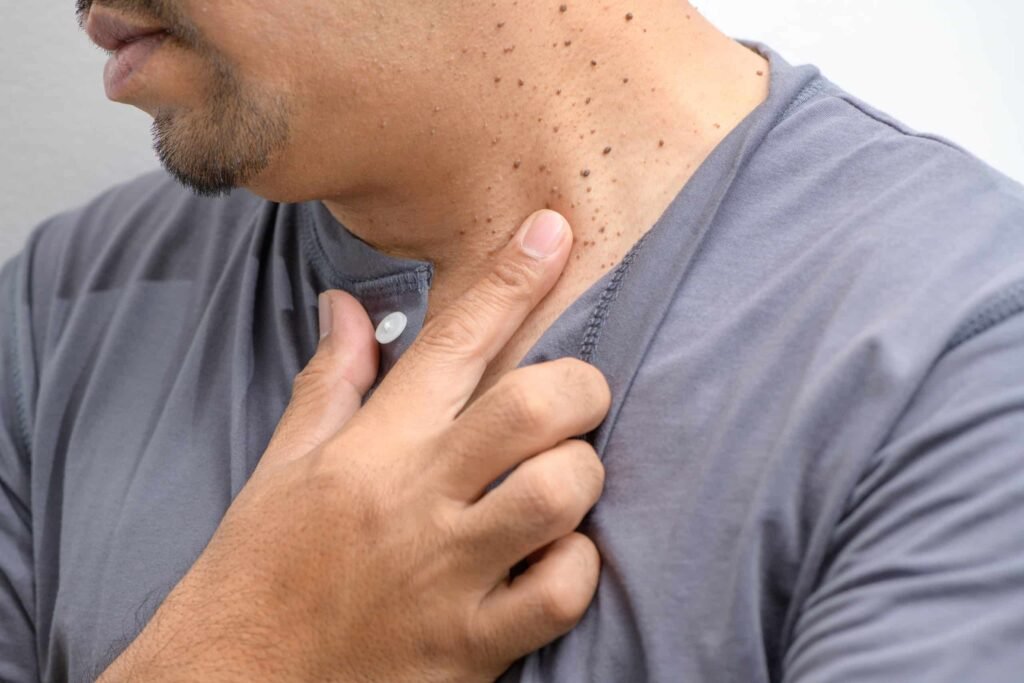
Seborrheic keratosis is a benign skin growth that develops from cells in the outer layer of the skin. It can appear on the face, chest, back, shoulders, abdomen and other parts of the body. The growths vary in size, colour and thickness, and a person may develop a single spot or several over time.
These growths often have a distinctive stuck-on appearance, as though something has been placed on the surface of the skin. Some are smooth, while others feel rough or scaly. Their colour may range from pale tan to dark brown or black.
Seborrheic keratosis is not contagious, and the growths do not spread from one person to another. They are also different from actinic keratosis, which is associated with sun damage and can sometimes develop into skin cancer.
Although seborrheic keratosis itself is harmless, not every dark or raised skin spot is seborrheic keratosis. A changing mole, melanoma, wart or other skin condition can sometimes look similar. For this reason, it is important to have an uncertain or changing growth examined by a qualified healthcare professional before attempting treatment.
What Causes Seborrheic Keratosis?
The exact cause of seborrheic keratosis is not fully understood. However, several factors are associated with its development.
Ageing
Age is one of the strongest associated factors. These growths are more common in middle-aged and older adults, although younger people can develop them too. As the skin changes over time, benign growths may gradually appear.
Family History
Seborrheic keratosis often runs in families. If your parents or other close relatives have multiple growths, you may be more likely to develop them.
Skin Changes Over Time
Changes in skin cells can contribute to the formation of these growths. Researchers continue to study the biological processes involved, including genetic factors that influence how skin cells grow.
Sun Exposure
Seborrheic keratosis can develop on sun-exposed and covered areas of the body. Although sunlight may influence some skin changes, the relationship between sun exposure and seborrheic keratosis is not straightforward. Sun protection remains important for reducing other forms of skin damage and skin cancer risk.
It is worth remembering that seborrheic keratosis is not caused by poor hygiene. Washing more frequently, scrubbing the skin or using stronger cleansers will not prevent or remove these growths.
Seborrheic Keratosis Remedies: What Really Works?
The most suitable treatment depends on whether the diagnosis is confirmed, where the growth appears, whether it causes discomfort and whether you want it removed for cosmetic reasons.
Some people need no treatment at all. Others choose professional removal because a growth catches on clothing, becomes irritated or affects their confidence.
1. Cryotherapy
Cryotherapy is a common medical treatment for selected seborrheic keratoses. A healthcare professional applies liquid nitrogen to freeze the growth, damaging the affected tissue so that it gradually dries and falls away.
The procedure is usually quick and may cause temporary stinging, redness, swelling or blistering. The treated area can change colour while it heals, and a small scar or lighter or darker patch may occasionally remain.
Cryotherapy is often suitable for smaller, relatively thin growths. Thicker lesions may need another approach or additional treatment.
You should not attempt to freeze a skin growth yourself unless a qualified clinician has specifically advised an appropriate product for your confirmed condition. Over-the-counter wart-freezing products are not necessarily suitable for seborrheic keratosis, and using them on an incorrectly identified lesion may delay diagnosis.
2. Curettage
Curettage involves removing a growth with a small surgical instrument called a curette. A clinician may first numb the area with a local anaesthetic to reduce discomfort.
This method can be useful when a growth is raised, thick or repeatedly irritated. Depending on its appearance, the clinician may combine curettage with another procedure.
Removed tissue can sometimes be sent to a laboratory for examination if there is uncertainty about the diagnosis. This is particularly important when a lesion has unusual features.
After treatment, the area may be tender and require simple wound care. Healing time varies according to the size and location of the growth.
3. Electrosurgery
Electrosurgery uses electrical energy to destroy or remove selected skin growths. A clinician may use it alone or alongside curettage.
The procedure can help manage raised lesions, but it may produce temporary redness, a scab or changes in skin pigmentation. Scarring is also possible.
Your clinician can explain whether this method is appropriate for your skin type, the growth’s location and your cosmetic expectations.
4. Laser Treatment
Certain laser procedures can remove selected benign skin growths by targeting the affected tissue. However, laser treatment is not necessary for most cases of seborrheic keratosis and may be more expensive than other options.
The potential benefits and risks depend on the laser used, the lesion and the person’s skin. Pigment changes and scarring can occur, so treatment should be performed by an appropriately trained professional.
Laser treatment should only be considered after a reliable diagnosis. A suspicious lesion should be assessed before any cosmetic procedure is undertaken.
5. Prescription Treatments
There is no single prescription cream that reliably removes every seborrheic keratosis. In some countries, clinicians may prescribe a specific topical treatment, such as hydrogen peroxide 40% solution, for selected raised seborrheic keratoses.
This treatment is intended for professional assessment and appropriate use, not for unsupervised application to any dark skin spot. It may cause local skin reactions, irritation, swelling or pigment changes, and it is not suitable for every lesion or every area of the body.
Do not assume that ordinary household hydrogen peroxide, acids or other strong chemicals are safe substitutes. They can damage healthy skin and cause burns or scars.
6. Observation Without Treatment
Leaving a confirmed seborrheic keratosis alone is a perfectly reasonable option when it does not cause symptoms or concern. Because these growths are benign, treatment is not medically necessary in every case.
You can monitor the area for changes and avoid rubbing or picking at it. If it becomes painful, bleeds without an obvious reason, develops an ulcer or changes rapidly, arrange a medical assessment rather than assuming it is a harmless growth.
For many people, observation is the simplest and safest approach.
Natural Remedies for Seborrheic Keratosis: Do They Help?
Many people prefer gentle skincare and plant-based products when managing skin concerns. However, it is important to distinguish between remedies that soothe the skin and treatments that actually remove a seborrheic keratosis.
At present, there is no strong scientific evidence that natural remedies can reliably eliminate these growths. Some products may improve dryness or reduce discomfort, but they should not replace a professional diagnosis or proven removal methods.
1. Aloe Vera for Skin Comfort
Aloe vera is commonly used in skincare products because it can help moisturise the skin. A simple, fragrance-free moisturiser containing aloe vera may be suitable for some people who experience dryness around a skin growth.
However, aloe vera has not been established as a treatment that removes seborrheic keratosis. Avoid applying it to broken or bleeding skin, and discontinue use if irritation develops.
2. Coconut Oil and Other Moisturisers
Coconut oil and other moisturising products may soften dry skin and reduce friction. If a growth becomes uncomfortable because clothing rubs against it, keeping the surrounding skin moisturised may help improve comfort.
Nevertheless, these products do not have proven keratolytic or growth-removing effects for seborrheic keratosis. Coconut oil can also cause irritation or contribute to blocked pores in some people.
Choose a product that suits your skin and avoid rubbing the growth aggressively during application.
3. Gentle Skin Cleansing
A mild cleanser and lukewarm water can help keep the skin clean without unnecessary irritation. Avoid harsh soaps, abrasive scrubs and strong exfoliating products on a raised or inflamed growth.
Gentle cleansing supports general skin health, but it will not remove the underlying lesion. Trying to scrub away the growth may cause bleeding, pain or infection.
4. Healthy Daily Habits
A balanced diet, adequate hydration, sufficient sleep and regular sun protection can support overall skin health. These habits are beneficial for general wellbeing, although they have not been shown to eliminate existing seborrheic keratoses.
Use broad-spectrum sunscreen with an SPF of at least 30 on exposed skin. Protective clothing and shade can also help reduce sun damage and lower the risk of certain skin cancers.
These measures are part of sensible skincare, not a cure for seborrheic keratosis.
Natural Remedies for Seborrheic Keratosis and Herbal Care Products
People researching Natural Remedies for Seborrheic Keratosis, Herbal Care Products may come across botanical creams, herbal oils, plant extracts and products marketed for clearer-looking skin.
Before choosing any product, check its ingredients, intended use, safety information and supporting evidence. A product described as natural is not automatically safe or effective, particularly when applied to a raised, pigmented or irritated skin lesion.
Herbal Care Products and other skincare brands may offer products intended to support general skin care. However, you should not assume that any particular herbal product can remove seborrheic keratosis unless reliable clinical evidence supports that specific claim.
If you are considering a botanical product, keep these points in mind:
- Check the ingredients: Avoid products containing ingredients that have previously caused an allergic reaction.
- Avoid harsh preparations: Strong acids, caustic substances and concentrated essential oils can burn or irritate the skin.
- Do not delay diagnosis: Have an uncertain or changing growth assessed before applying a treatment.
- Be cautious of cure claims: Promises of guaranteed removal within a few days or permanent results without evidence deserve particular scrutiny.
- Ask a healthcare professional: A pharmacist or dermatologist can help you assess whether a product is appropriate for your skin.
The safest role for a gentle herbal skincare product is to support general skin comfort, not to replace a medically appropriate treatment.
Home Remedies You Should Avoid
Some online sources recommend household substances for removing raised or dark skin growths. These approaches can be harmful, especially when the growth has not been correctly identified.
Apple Cider Vinegar
Apple cider vinegar is sometimes promoted as a natural method for removing skin growths. However, there is no reliable evidence that it safely removes seborrheic keratosis. Its acidity can irritate the skin and cause chemical burns.
Lemon Juice
Lemon juice is not a proven treatment for seborrheic keratosis. It may irritate the skin and increase sensitivity to sunlight, potentially leading to uneven pigmentation.
Garlic and Concentrated Essential Oils
Garlic and concentrated essential oils can cause contact dermatitis, irritation or burns. Applying them directly to a skin growth may make the area more inflamed without addressing the growth itself.
Cutting, Scraping or Picking
Never attempt to cut, shave or scrape off a growth at home. Doing so can cause significant bleeding, infection, scarring and delayed diagnosis of a potentially serious skin condition.
The bottom line is simple: a home remedy that damages the skin is not necessarily an effective treatment. Professional removal offers a safer and more controlled approach when removal is appropriate.
How Is Seborrheic Keratosis Diagnosed?
A healthcare professional will usually examine the growth and ask when it appeared, whether it has changed and whether it causes symptoms.
A dermatologist may use a dermatoscope, a specialised instrument that magnifies the skin and helps reveal features that are not easily visible to the naked eye.
If the appearance is unusual or the diagnosis remains uncertain, the clinician may remove part or all of the lesion for laboratory examination. This can help distinguish seborrheic keratosis from skin cancer and other skin conditions.
Do not rely on online photographs alone to diagnose a dark or raised growth. Similar-looking lesions can require very different treatments.
When Should You See a Dermatologist?
Although seborrheic keratosis is generally harmless, some changes require medical assessment. Arrange an appointment if a growth:
- Appears suddenly or grows rapidly.
- Becomes unusually dark or changes colour.
- Bleeds without an obvious injury.
- Develops an open sore or persistent crust.
- Becomes painful, persistently itchy or inflamed.
- Looks different from your other skin growths.
- Has an uncertain diagnosis or causes repeated irritation from clothing or shaving.
A sudden outbreak of many new growths also deserves medical attention, particularly when accompanied by other symptoms.
Do not wait for a home remedy to work if a lesion is changing or bleeding. Early assessment helps ensure that the correct condition receives the appropriate care.
Can Seborrheic Keratosis Be Prevented?
There is currently no established method that reliably prevents seborrheic keratosis. Genetics and ageing appear to play important roles, and new growths may develop even after existing ones have been removed.
However, several practical habits can help protect your skin:
- Use sunscreen and protective clothing to reduce sun damage.
- Keep your skin moisturised if it becomes dry or irritated.
- Avoid picking, scratching or rubbing existing growths.
- Examine your skin periodically so that you notice unusual changes.
- Seek professional advice about new or suspicious lesions.
These measures support skin health but cannot guarantee that seborrheic keratoses will not develop.
What Happens After Seborrheic Keratosis Removal?
After professional removal, your clinician will explain how to care for the treated area. Depending on the procedure, you may need to keep the area clean, protect it with a dressing and avoid picking at any scab.
Temporary redness, tenderness, blistering or pigment changes can occur. Follow the specific aftercare instructions provided by your healthcare professional, and seek advice if you notice increasing pain, spreading redness, pus or other signs of infection.
An individual growth that has been completely removed may not return in the same form, but new seborrheic keratoses can appear elsewhere. This does not necessarily mean that the original treatment failed.
If a growth returns at the same location or develops unusual features, have it reassessed rather than repeatedly treating it yourself.
Frequently Asked Questions
Can seborrheic keratosis disappear naturally?
Seborrheic keratoses generally persist rather than disappearing on their own. Some may change in appearance or occasionally become irritated and shed surface material, but you should not assume that a growth has resolved without checking it if changes are unusual.
What is the fastest way to remove seborrheic keratosis?
Professional procedures such as cryotherapy or curettage can remove suitable growths. The best option depends on their size, thickness, location and appearance. A clinician should confirm the diagnosis before treatment.
Do natural remedies for seborrheic keratosis really work?
Natural products may help moisturise the surrounding skin, but no home remedy has been established as a reliable way to remove seborrheic keratosis. Avoid acidic or caustic substances and unverified removal products.
Is seborrheic keratosis contagious?
No. Seborrheic keratosis is not contagious and does not spread through skin-to-skin contact. Developing additional growths over time is not the same as catching an infection.
Can creams remove seborrheic keratosis?
Ordinary moisturisers and cosmetic creams generally do not remove these growths. Certain clinician-directed treatments may be suitable for selected lesions, but treatment effectiveness and risks vary. Ask a dermatologist before using a removal product.
Can seborrheic keratosis turn into skin cancer?
A confirmed seborrheic keratosis is a benign growth and does not ordinarily become skin cancer. However, skin cancers can resemble seborrheic keratosis. Any suspicious or changing lesion should therefore be examined by a qualified professional.
Conclusion
Choosing effective Seborrheic Keratosis Remedies begins with recognising that these common skin growths are usually harmless but may resemble more serious conditions. Professional treatments, including cryotherapy and curettage, can remove suitable lesions when they cause discomfort or cosmetic concerns. Leaving a confirmed, symptom-free growth untreated is also a reasonable choice.
Natural skincare products may help soothe dry or irritated skin, but they have not been proven to remove seborrheic keratosis. Whether you are considering aloe vera, moisturisers or Natural Remedies for Seborrheic Keratosis, Herbal Care Products, prioritise safety and evidence over claims of guaranteed results.
Avoid cutting, burning or applying harsh substances to skin growths at home. If a spot is new, changing, bleeding or difficult to identify, seek a professional assessment before attempting treatment. With an accurate diagnosis and an appropriate care plan, you can manage these growths safely and make informed decisions about your skin.