Moving a fifth wheel trailer across the United States can be challenging, especially when it is large, heavy, or difficult to maneuver. Whether you are relocating, purchasing an RV from another state, preparing for seasonal travel, or transporting a recreational vehicle to a new destination, choosing the right fifth wheel transport service can make the process easier.
Fifth wheel trailers offer comfortable living spaces and useful amenities for road trips, camping, and extended travel. However, their size and towing requirements mean that moving them long distances requires careful planning, suitable equipment, and an experienced transportation provider.
Rapid Auto Shipping helps customers explore vehicle and trailer transportation options based on their specific needs. Before arranging a shipment, it is important to understand how fifth wheel transport works, what affects the cost, how to prepare your trailer, and which questions to ask a transport company.
This guide explains everything you need to know about fifth wheel shipping in 2026, including transportation methods, pricing factors, preparation tips, and frequently asked questions.
What Is Fifth Wheel Transport?
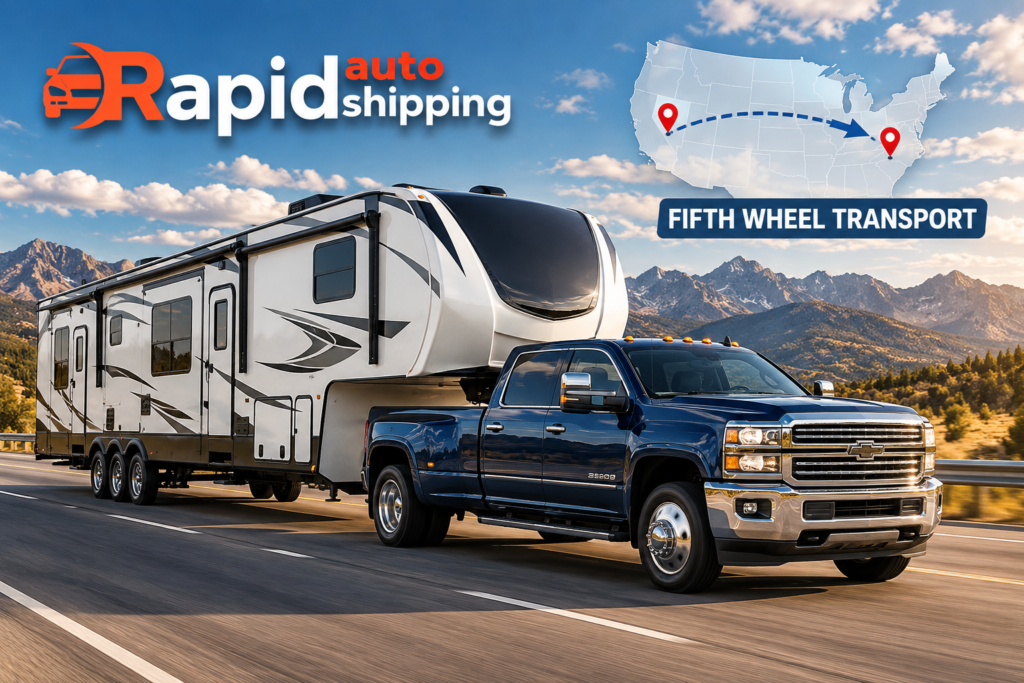
Fifth wheel transport is the process of moving a fifth wheel recreational vehicle from one location to another using suitable towing equipment or specialized transportation arrangements.
Unlike a conventional travel trailer, a fifth wheel connects to a compatible hitch mounted in the bed of a pickup truck. This hitch design supports the trailer near the towing vehicle’s rear axle and allows many fifth wheel RVs to accommodate larger living spaces.
Transporting a fifth wheel requires consideration of its overall dimensions, weight, height, condition, and intended route. The right arrangement depends on whether the trailer is roadworthy, how far it needs to travel, and whether it can be legally towed by the available equipment.
Customers commonly arrange fifth wheel transport for:
- Relocating to another state.
- Buying or selling an RV across state lines.
- Moving a fifth wheel to a seasonal destination.
- Delivering a trailer to a campground or storage facility.
- Transporting an RV to a repair shop or dealership.
- Moving a fifth wheel that cannot be towed normally.
Before choosing a service, confirm that the provider can accommodate your specific trailer and destination.
Why Hire a Professional Fifth Wheel Transport Company?
Transporting a large RV yourself may appear convenient, but it can involve significant planning. You need a compatible tow vehicle, an appropriate hitch, sufficient towing capacity, and knowledge of applicable road restrictions.
A professional transportation provider can help coordinate the equipment and logistics needed for your shipment.
1. Suitable Towing Equipment
Fifth wheel trailers come in different sizes and weights. The tow vehicle and hitch must be appropriate for the trailer’s specifications.
A transport provider can assess the trailer’s dimensions, weight, condition, and towing requirements before arranging a suitable transportation method.
2. Reduced Travel Planning
Long-distance towing involves planning fuel stops, rest breaks, overnight stays, route restrictions, and potential weather disruptions. Using a transportation service can reduce the amount of driving and logistical planning you need to manage personally.
3. Support With Long-Distance Relocation
If you are moving across several states, transporting your fifth wheel separately may make it easier to coordinate your household move and travel arrangements.
4. Options for Different Trailer Conditions
A roadworthy fifth wheel may be transported using suitable towing equipment. A trailer with damaged tires, brake problems, structural concerns, or other mechanical issues may require a different arrangement.
Explain the trailer’s condition before booking so the provider can determine whether it can be moved safely and legally.
5. Better Shipment Coordination
A professional service can help coordinate pickup, route planning, delivery expectations, and communication throughout the shipment. Ask for the specific services included in your agreement rather than assuming every provider offers the same arrangements.
What Factors Affect Fifth Wheel Transport Costs?
The cost of fifth wheel transport depends on several variables. Because recreational trailers vary considerably in size, weight, condition, and configuration, there is no universal price for every shipment.
Understanding these factors helps you request a more accurate estimate.
Distance Between Pickup and Delivery
Distance is one of the main factors affecting transportation costs. A shipment between nearby cities generally requires less driving than a cross-country move.
However, pricing does not always increase in direct proportion to mileage. Carrier availability, route demand, loading requirements, and operating expenses can influence the total.
When requesting a quote, provide the actual pickup and delivery locations rather than relying only on a general state-to-state estimate.
Trailer Size and Weight
The dimensions and weight of your fifth wheel can affect equipment selection, fuel consumption, route planning, and transportation costs.
A smaller fifth wheel may be easier to accommodate than a large luxury model with additional slide-outs or substantial height and length.
Provide accurate measurements and weight information whenever possible. If the trailer has aftermarket modifications, mention those as well.
Trailer Condition
A roadworthy fifth wheel may be easier to transport than one with damaged tires, faulty brakes, broken suspension components, or other mechanical issues.
If the trailer cannot be towed safely, special equipment or an alternative transportation arrangement may be required. This can increase the cost and affect scheduling.
Pickup and Delivery Accessibility
The carrier needs enough room to access the trailer, connect the required equipment, and complete loading or unloading safely.
Narrow residential streets, steep driveways, low overhead clearances, limited turning space, and restricted access may complicate the process.
If your fifth wheel is located at a campground, dealership, storage facility, or private property, tell the provider about any access restrictions.
Route Restrictions
Large trailers may be subject to height, weight, length, and other roadway restrictions. The selected route must account for the trailer’s dimensions and the applicable transportation rules.
Routes involving remote areas, mountain roads, construction, or difficult access may require additional planning.
Seasonal Demand and Weather
Demand for RV transportation may change during the year as people relocate, purchase recreational vehicles, or travel seasonally.
Severe weather, high winds, snow, and road closures may affect safe travel and scheduling. Ask the provider how weather-related delays are handled.
Scheduling Requirements
If you need your fifth wheel picked up within a narrow timeframe, fewer suitable transportation options may be available. Flexible pickup dates can make it easier to compare possible arrangements.
Confirm the estimated pickup window and delivery timeframe before booking.
How Much Does Fifth Wheel Transport Cost in 2026?
Fifth wheel shipping prices vary based on the shipment details. The following ranges are illustrative planning estimates only, not verified market averages, live quotes, or guaranteed prices.
| Shipment type | Illustrative planning range |
|---|---|
| Short-distance transport | $300–$900 |
| Regional transport | $700–$1,800 |
| Long-distance interstate transport | $1,200–$3,000+ |
| Cross-country transport | $2,000–$5,000+ |
Actual costs may fall outside these ranges, especially for oversized trailers, non-roadworthy units, difficult pickup locations, or shipments requiring specialized equipment.
A quote should reflect the trailer’s size, weight, condition, exact route, required service, and timing. Ask whether the price includes all expected charges and whether additional fees may apply.
For a useful estimate from Rapid Auto Shipping, provide complete trailer details and confirm the transportation method that will be used.
Common Fifth Wheel Transport Methods
The right transport method depends on the trailer’s condition, dimensions, and the equipment available for the route.
Towed Fifth Wheel Transport
A roadworthy fifth wheel can sometimes be moved by towing it with a compatible pickup truck and appropriate hitch system.
The tow vehicle must have sufficient towing and payload capacity, and the combination must comply with applicable weight and safety requirements. Tires, brakes, lights, hitch components, and other relevant systems should be inspected before departure.
Professional providers may coordinate a qualified driver and suitable towing equipment, depending on the service offered.
Specialized Trailer Transportation
Some fifth wheels require specialized handling because of their size, weight, configuration, or condition. The provider may need to assess the trailer before deciding how it can be moved.
Do not assume that every fifth wheel can be transported using the same equipment. Confirm the method in advance, particularly if the trailer is oversized or has mechanical problems.
Alternative Transportation Arrangements
A fifth wheel that cannot be safely towed may require specialized equipment or another suitable transport solution.
The availability and feasibility of alternatives depend on the trailer’s condition, dimensions, destination, and local requirements. Ask the provider to explain the proposed method and any related costs before confirming the booking.
How to Choose the Right Fifth Wheel Transport Company
Selecting a transportation provider requires more than comparing prices. The company should understand the requirements of your trailer and clearly explain the proposed service.
Check Relevant Experience
Ask whether the provider has arranged transportation for fifth wheel trailers similar to yours. Large RVs can present different challenges from ordinary passenger vehicles.
Discuss the trailer’s dimensions, weight, condition, and any modifications before requesting a final estimate.
Confirm Carrier and Driver Details
Understand who will physically transport your trailer and whether the provider is acting as a broker, a motor carrier, or another type of transportation intermediary.
Ask for relevant carrier identification and verify applicable registration and authorization through the appropriate official sources.
Review Insurance Coverage
Ask what insurance applies during transportation, who provides it, and what limits, exclusions, and claims procedures apply.
Do not assume that standard vehicle cargo coverage automatically addresses every possible issue involving an RV or its contents. Request written clarification of coverage for the specific trailer.
Compare Written Quotes
A useful quote should clearly identify the shipment, transportation method, expected timing, pricing, payment terms, and any conditions that may affect the cost.
When comparing providers, use the same trailer information and pickup and delivery locations for each estimate.
Understand Scheduling and Communication
Ask how pickup is coordinated, how delivery updates are provided, and what happens if weather or mechanical problems cause delays.
Avoid assuming that an estimated delivery date is guaranteed unless the written agreement specifically establishes that commitment.
Read Reviews and Service Terms
Look for consistent feedback about communication, professionalism, and handling of customer concerns. Review the service agreement carefully, including cancellation terms, deposits, and procedures for reporting damage.
A reliable decision balances price, clear communication, appropriate equipment, and transparent terms.
How to Prepare Your Fifth Wheel for Transport
Preparing your trailer before pickup can help reduce delays and make the handover easier.
1. Confirm the Trailer’s Dimensions and Weight
Record the trailer’s length, width, height, and weight as accurately as possible. Include any modifications that affect its dimensions.
Accurate measurements help the provider evaluate equipment requirements and route restrictions.
2. Inspect Tires and Wheels
Check the condition of the tires and wheels. Report flat tires, visible damage, or other concerns that could affect movement.
Do not assume a trailer with damaged tires can be towed normally.
3. Check Brakes, Lights, and Hitch Components
If the fifth wheel will be towed, relevant braking systems, lights, hitch components, and other safety equipment must be suitable for the transport arrangement.
Report any known defects before the carrier arrives.
4. Secure Slide-Outs and Exterior Accessories
Retract and secure slide-outs, awnings, steps, antennas, and other movable components as instructed. Make sure doors, storage compartments, and exterior fixtures are properly secured.
5. Remove or Secure Personal Belongings
Ask the provider what items may remain inside the trailer during transport. Loose belongings can shift during movement and may cause damage.
Do not assume personal property inside the fifth wheel is covered by the carrier’s insurance.
6. Disconnect Utilities
Disconnect electrical hookups, water lines, sewer connections, and other external utilities before pickup. Follow the manufacturer’s instructions for shutting down appliances and preparing onboard systems.
7. Document the Trailer’s Condition
Take dated photographs of the exterior, wheels, hitch area, roof where safely accessible, and any existing damage.
Review the condition report with the transport representative at pickup and retain a copy.
8. Provide Keys and Access Instructions
Have the necessary keys, access codes, and pickup instructions ready. Explain any special handling requirements or known mechanical issues.
9. Confirm the Pickup Plan
Before pickup day, reconfirm the location, contact information, timing, and any property access restrictions.
Preparation helps the transport team understand the trailer’s condition and can reduce avoidable scheduling problems.
Common Mistakes to Avoid With Fifth Wheel Shipping
A little preparation can help you avoid common transportation issues.
Providing incorrect dimensions. Underestimating height, length, or weight can create equipment and routing problems. Use accurate specifications and disclose modifications.
Booking based only on price. A low estimate may exclude important services or rely on assumptions that do not fit your trailer. Compare complete written terms.
Failing to disclose mechanical problems. Damaged tires, faulty brakes, hitch concerns, or structural damage may change the transport method. Share these details before booking.
Overlooking insurance exclusions. Confirm what coverage applies to the fifth wheel and its contents rather than assuming all damage is covered.
Ignoring access limitations. Make sure the pickup and delivery areas can accommodate the equipment needed for the shipment.
Expecting guaranteed timing without written terms. Weather, road restrictions, and scheduling can affect delivery. Discuss realistic timelines before making dependent travel arrangements.
Leaving loose belongings inside. Unsecured items can shift during movement. Follow the provider’s instructions about cargo and personal property.
Skipping the condition report. Photographs and written documentation can help establish the trailer’s condition before and after transport.
Why Consider Rapid Auto Shipping for Fifth Wheel Transport?
When arranging fifth wheel transport, customers need a clear understanding of their options, transportation requirements, pricing, and expected schedule.
Rapid Auto Shipping can be a starting point for discussing your shipment and requesting an estimate. Providing complete details helps the team evaluate your requirements and determine whether an appropriate transportation arrangement is available.
When contacting Rapid Auto Shipping, be ready to provide:
- Pickup and delivery addresses or ZIP codes.
- Fifth wheel make, model, year, and dimensions.
- Approximate weight and any modifications.
- Whether the trailer is roadworthy.
- Preferred pickup and delivery dates.
- Any special access or handling requirements.
Ask for a written estimate and confirm the transportation method, carrier arrangements, insurance details, payment terms, cancellation policy, and delivery expectations before booking.
Because fifth wheel trailers vary considerably, an individualized estimate is more useful than relying on a general price range.
Is Professional Fifth Wheel Transport Worth It?
Professional transportation may be a practical choice when you need to move an RV over a long distance, do not have a suitable tow vehicle, or prefer not to manage the trip yourself.
The value depends on the cost of the service compared with your own towing expenses, including fuel, lodging, travel time, equipment, and the demands of driving a large trailer.
If you are considering towing the fifth wheel yourself, verify your vehicle’s towing capacity, hitch compatibility, payload limits, braking requirements, and relevant state regulations. Also consider your experience with large trailers and the route you intend to take.
For owners who want to simplify a relocation or vehicle purchase, requesting a professional transport estimate can help clarify the available options.
Conclusion
Fifth wheel transport requires careful coordination, suitable equipment, and accurate information about the trailer. From pickup accessibility and route restrictions to insurance coverage and scheduling, understanding the details before booking can help make the process more predictable.
Start by collecting your fifth wheel’s dimensions, weight, condition, and pickup and delivery locations. Then compare written quotes, confirm the proposed transportation method, and review the service terms before committing.
Whether you are relocating, purchasing an RV from another state, or moving your fifth wheel to a seasonal destination, planning ahead gives you more time to evaluate your options.
Ready to move your fifth wheel? Contact Rapid Auto Shipping to discuss your trailer’s transportation needs and request an estimate for your route.
FAQs About Fifth Wheel Transport
1. What is fifth wheel transport?
Fifth wheel transport is the process of moving a fifth wheel recreational trailer from one location to another using suitable towing equipment or a specialized transportation arrangement. The appropriate method depends on the trailer’s dimensions, weight, condition, and route.
2. How much does it cost to transport a fifth wheel?
The cost depends on distance, trailer size, weight, condition, route accessibility, and scheduling requirements. Shorter shipments may cost several hundred dollars, while long-distance or specialized transport can cost several thousand dollars. Request a quote based on your specific trailer and route.
3. Can I transport a fifth wheel across the country?
Yes, cross-country fifth wheel transportation may be possible when a suitable carrier, driver, and route are available. The provider must consider the trailer’s dimensions, weight, road restrictions, and condition before confirming the arrangement.
4. Can a fifth wheel be transported if it is not roadworthy?
Possibly, but a trailer with damaged tires, brake problems, structural damage, or other mechanical issues may need specialized equipment or an alternative transport method. Disclose the condition before booking and confirm that the provider can accommodate it.
5. How long does fifth wheel transport take?
The timeframe depends on the distance, route, carrier availability, weather, and pickup arrangements. Ask for an estimated pickup window and transit time separately, and confirm how delays are handled under the service agreement.
6. What information do I need for a fifth wheel transport quote?
Provide the pickup and delivery locations, trailer year, make and model, dimensions, approximate weight, operating condition, modifications, and preferred dates. Mention any narrow driveways, restricted access, or special handling requirements.
7. Is fifth wheel transport insured?
Insurance arrangements vary by provider and carrier. Ask for written details about applicable coverage, limits, exclusions, deductibles if any, and the claims process. Confirm that the specific fifth wheel is covered under the proposed arrangement.
8. Can I leave personal belongings inside my fifth wheel during transport?
This depends on the provider’s rules, the transportation method, and applicable weight restrictions. Many providers restrict personal belongings or require special approval. Ask in advance and remember that personal items may not be covered by transportation insurance.
9. Should I prepare my fifth wheel before pickup?
Yes. Confirm the dimensions and condition, secure slide-outs and exterior accessories, disconnect utilities, remove or secure loose belongings, and document existing damage. Follow the provider’s instructions for tires, brakes, hitch components, keys, and other requirements.
10. How do I choose a reliable fifth wheel transport company?
Compare written quotes, relevant experience, carrier arrangements, insurance information, communication, and contract terms. Verify applicable carrier credentials through official sources and confirm the proposed transport method before booking with Rapid Auto Shipping or another provide