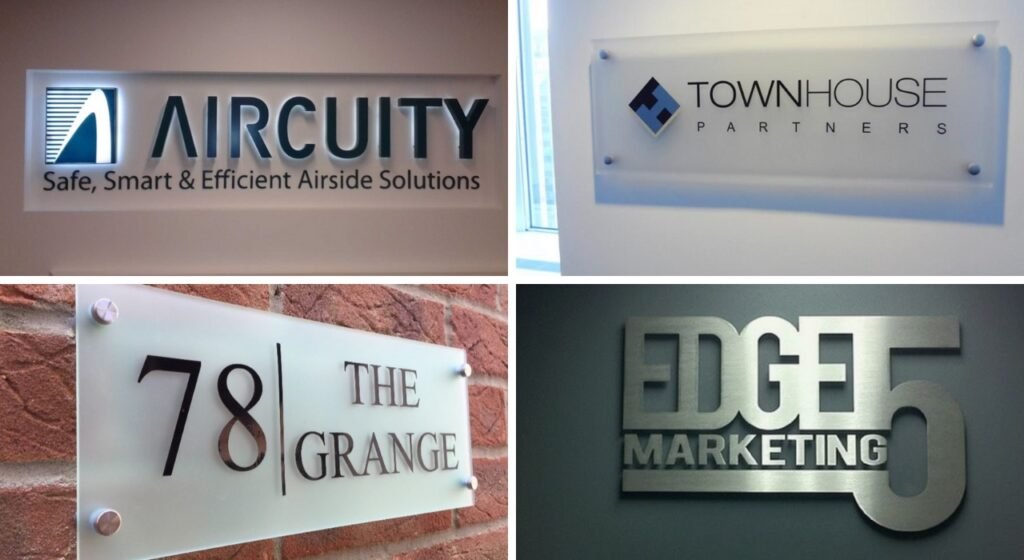
Name board design plays an important role in making offices, meeting rooms, departments, and workspaces easier to identify. A well-planned name board gives people clear information without taking up unnecessary space. It can display a person’s name, job title, department, room number, or company details, depending on where it is installed.
In offices, clear identification can save time for employees and visitors. People entering a large business centre may need to find a particular person or department quickly. A suitable name board can make that process easier while also keeping the workplace organised. The design, material, size, and placement all affect how useful the board will be.
1. Why Name Boards Matter in Office Spaces
Office name boards provide a simple way to identify people and areas within a workplace. Reception desks, private offices, meeting rooms, and departments can all use different forms of identification.
A clear board reduces uncertainty for visitors who may not know where to go. It can also help employees find colleagues and different sections of a building without repeatedly asking for directions.
The amount of information should depend on the purpose. A personal office may only need a name and designation, while a department board may require a department name and additional details.
2. How Name Board Design Affects Readability
Readability should be considered before choosing colours, fonts, and layouts. A name board needs to communicate information quickly, particularly when people are standing or walking past it.
Large and clear lettering is usually easier to read than tightly packed text. The spacing between letters and lines also matters. When too many details are included in a small area, the board can become difficult to understand.
Colour contrast is another important factor. Dark lettering on a light background, or light lettering on a dark background, can make the main information easier to notice.
3. Choosing an Acrylic Name Plate
An acrylic name plate is commonly used for office doors, reception desks, workstations, and meeting rooms. Acrylic can provide a clean and modern appearance while allowing different colours, finishes, and layouts.
The transparent nature of some acrylic designs can create a simple glass-like effect, while opaque acrylic can provide stronger contrast for text and graphics. Different thicknesses and finishes can also change the final appearance.
An acrylic name plate should be sized according to the installation area. A small plate may be suitable for a desk, whereas a larger plate may work better on an office door or wall.
4. Using a Desk Plate With Name Details
A desk plate with name information can make individual workspaces easier to identify. These plates are often placed on reception desks, manager desks, customer service counters, and shared office workstations.
A basic desk plate may contain only a person’s name. A more detailed version can include a position, department, or company logo. The design should remain simple enough that the main information is immediately visible.
The position of the plate also matters. It should be placed where visitors can see it without having to move closer to the desk.
5. Designing Custom Office Door Name Plates
Custom office door name plates are useful when several rooms or offices are located within the same building. They can identify employees, departments, meeting rooms, or specific functions.
A consistent design across multiple doors creates a more organised appearance. The same font style, dimensions, and placement can be used throughout the office while changing only the names and room details.
Businesses can also use colour or small symbols to distinguish different departments. However, these elements should support the information rather than make it harder to read.
6. Matching Name Boards With Office Interiors
The design of an office name board should suit its surroundings. A brightly coloured board may look out of place in a formal corporate interior, while a very plain design may not suit a creative workspace.
Materials, finishes, and colours can be selected according to the interior style. Modern offices may use acrylic, metal, or minimalist designs, while other workplaces may prefer wood-style finishes or more traditional layouts.
Matching the name board with existing furniture, wall finishes, and office branding can create a more consistent environment.
7. Selecting the Right Material
The material affects how a name board looks and how it performs over time. Acrylic is often chosen for its smooth appearance and design flexibility. Metal options can provide a more solid and formal appearance.
Other materials may be suitable for temporary offices, educational spaces, retail environments, or industrial locations. The right choice depends on the surface, expected usage, indoor or outdoor placement, and required appearance.
Zahrat Al Madina Printing produces different types of name boards and office identification products based on factors such as size, material, design, and placement. These details need to be considered together rather than choosing a material without looking at its intended application.
8. Using Logos and Job Titles Effectively
A company logo can be added to a name board to connect the identification display with the business. However, the logo should not compete with the person’s name or the main information.
Job titles can also provide useful context. A visitor may recognise a person’s role immediately when a designation is placed below the name.
The layout should establish a clear order of information. For example, the person’s name can be the most visible element, followed by the job title and any secondary details. This makes the board easier to scan.
9. Planning Name Boards for Different Areas
Different areas of an office may need different types of name boards. Individual rooms can use door plates, while reception areas may need larger displays. Meeting rooms may require simple room names, while departments may benefit from larger wall signs.
A business with several locations may also want the same design system across its offices. Standardising dimensions, fonts, and materials can make future replacements easier.
Before production, it is useful to create a list of all required names, room numbers, departments, and job titles. This reduces the risk of missing information or producing duplicate boards.
10. Checking the Final Design Before Production
A final design check is essential before printing or fabrication begins. Names and job titles should be reviewed carefully because even a small spelling error can make the finished board unusable.
Measurements should also be confirmed against the installation area. A design that looks correct on a computer screen may not fit properly on a narrow door or small desk.
It is also helpful to review the position of logos, text alignment, colours, and material finish. A final proof gives businesses an opportunity to correct mistakes before production.
Final Thought
Name board design is a small part of an office environment, but it can make identification and navigation much easier. Clear lettering, suitable materials, balanced layouts, and proper placement all contribute to a useful name board.
An acrylic name plate can suit modern office interiors, while a desk plate with name details can help identify individual workspaces. Custom office door name plates can provide a consistent system for rooms and departments. When each type is planned according to its purpose, office identification becomes clearer, simpler, and more organised.