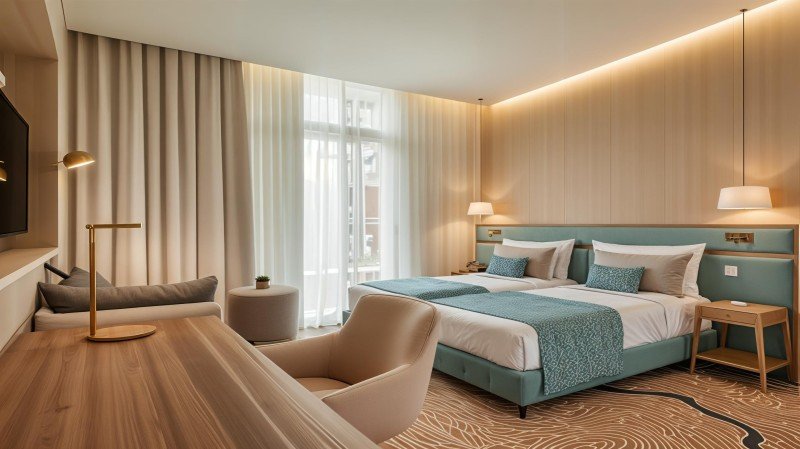
As businesses increasingly require high-quality visuals in marketing, sales and e-commerce, product development and presentations, 3D rendering has become a valuable asset to have at their disposal. Rather than relying entirely on conventional photography, companies can generate photorealistic computer-generated images that give a true-to-life picture of a product’s details, materials, color, and finish.
From a new product release to showcasing multiple iterations, or even visualizing an idea that hasn’t even been produced, Product 3D rendering offers the flexibility to produce professional-looking images at various stages of the product lifecycle.
What Is Product 3D Rendering?
Product 3D rendering involves creating a realistic image of a product by using a 3D model. CAD files, technical drawings, sketches, photographs, measurements (or other product references) can be used to develop the model.
After the digital model, artists can add materials and textures, as they would in real life. Lighting and reflections, camera angles and background are set up to create the desired look.
The final render can look like a professional product image, with a lot more flexibility in creating the visual environment. Without having to book multiple product photoshoots for different angles or poses, businesses can generate studio-style images, lifestyle shots, close-ups, and more.
Why Do Businesses Use Product 3D Rendering?
The greatest benefit of a 3D product rendering is that it is flexible. A single digital model can be used to create numerous visual assets.
For instance, a furniture company can showcase several different fabrics and colours for the same sofa. One appliance company may be able to feature multiple finishes and one electronics company can be able to feature multiple release configurations of its product.
Digital changes can be made without the need for physical re-construction or extra photo shoots. For companies with extensive product lines or regular product changes, this is especially valuable for their brand.
Product Visualization Before Manufacturing
3D rendering can also help in product development, prior to production. Proposed designs and prototypes can be designed and created accurately to simulate the appearance of a product and examine its appearance throughout the development process.
Teams have the opportunity to test colours, finishes, proportions, materials and design elements before going into physical production. If modifications are needed, the digital model can be modified and re-rendered.
This enables stakeholders to see the visual destination of a product before it goes into production and to be able to discuss thoughts and ideas with internal teams, clients, investors or retailers.
Benefits for E-Commerce Businesses
Product imagery is crucial for eCommerce shoppers, and it will make their decision to buy a lot easier. As they do not have the opportunity to physically inspect products before they purchase, a detailed visual can offer useful information regarding appearance.
In the case of product 3D rendering, businesses can have multiple views of the same product, such as front, side, rear, top and close-up view.
Brands can, too, produce constant pictures in their e-catalogs. All the products can be served on the same background, lighting style, composition and image dimensions, giving a more professional look to the website.
CGI also can be used to reveal products that are not easy to photograph, like big furniture, industrial machinery, or products that are still in development.
Creating Realistic Materials and Finishes
Realistic materials are an important part of high-quality product visualization. You can recreate surfaces like metal, glass, wood, leather, fabric, plastic, ceramic, marble or painted finishes professionally.
To create a realistic effect, different properties of the materials can be simulated. Reflections may be necessary on shiny surfaces, and subtle surface details and highlights on matte materials.
Such information enables businesses to better communicate the quality and finish of their products. It can also be used to let customers know the various material or color choices they can make when buying the product.
Product Rendering for Marketing Campaigns
Product 3D rendering is not only used in e-commerce. CGI can be applied in a variety of ways – website, brochures, advertising, social media, presentations, packaging ideas, promotions.
The digital environment can be altered with ease, which means marketers can have various audiences’ different visual styles.
A product may be displayed on a plain background in a catalogue or in a lifestyle scene for the advertising campaign. These can then be met by the same digital model.
Combining Product Rendering With Architectural Visualization
There are products that are specially designed for architectural or interior environments. Furniture, lighting fixtures, kitchen products, bathroom fittings, windows, doors, flooring, appliances and decorative elements often require to be displayed in a realistic environment.
In such situations, product visualization can be integrated with the architectural exterior 3d renderings to show how a product integrates into a finished building.
For instance, a company that sells exterior doors can demonstrate its products in a high-end home’s exterior wall. A lighting company is able to showcase outdoor fixtures in a professionally designed architectural setting.
By using this contextual approach, customers can gain a better understanding of how the product might look in the actual use.
The Role of Exterior 3D Rendering Services
For companies that have products that are used outdoors or in architecture, exterior 3d rendering services can offer further worth.
Realistic building environments can be used with products like windows, doors, façade systems, roofing products, outdoor furniture, landscaping products, construction products, and exterior lighting.
Rather than just displaying the product, brands can showcase how it will fit into the general look of a property.
For instance, a window company may be able to display a variety of window options on the exterior of a contemporary villa. An outdoor product company could show an actual home or business landscape setting for a product or service.
Product Rendering Across Industries
Businesses in many industries can benefit from the use of 3D rendering of products.
Furniture
Furniture manufacturers can develop lifelike visuals of any sofa, table, chair, bed, wardrobe and cabinets in many materials and colors.
Consumer Electronics
Technology brands can showcase product aspects, finishes, buttons, screens, ports and design from multiple perspectives.
Industrial Equipment
Manufacturers have the ability to accurately see the geometry and material properties of their machinery, components, tools and equipment.
Home Products
Designer brands, kitchen and appliance makers, and décor companies can let go of pure physical photography to produce marketing images.
How the Product Rendering Process Works
Typically, product information is gathered first. The rendering team checks your CAD files, drawings, dimensions, photos, materials and other specifications.
The artists then develop or update the digital 3D model. Materials and textures are applied in accordance to the true product’s specification.
Then, the lighting, camera placements, backgrounds and settings are designed for the purpose of the final images. A preliminary render might be created to review.
Adjustments to materials, colors, camera positions, lighting or other details can be requested by the client. Once it is approved, the final images are generated and ready for marketing and/or commercial use in high resolution.
Choosing the Right Rendering Partner
It is crucial to choose a visualization provider who has experience in delivering realistic and accurate images. Look at a portfolio and judge the quality of modelling, material realism, lighting, composition and attention to detail.
Turnaround times, communications, revision policies and the provider’s capacity to manage various forms of visualization are also considered.
A company that requires both product and architectural visuals might want to look for a company that has experience in product rendering, interiors, exteriors and architectural visualization.
Conclusion
The 3D rendering of products is a versatile tool that can be used in a variety of ways for businesses, such as product development, e-commerce, marketing, sales and presentations. It lets brands highlight all of their options, preview them before production, and develop a uniform look on various marketing platforms.
If products must be shown in real-life architectural settings, then integrating CGI with architectural exterior 3d renderings and architectural exterior 3d rendering services can be of great value when it comes to product presentations. Realistic showcasing will give businesses a closer look at how their products will resemble and how useful they will be, when they will be used.
In today’s digital age, images are crucial in marketing, and 3D rendering is a practical solution that enables businesses to showcase their products with a more realistic, flexible, and visually impactful manner. See all your projects in detail and realistically with our 3d architectural rendering melbourne services.