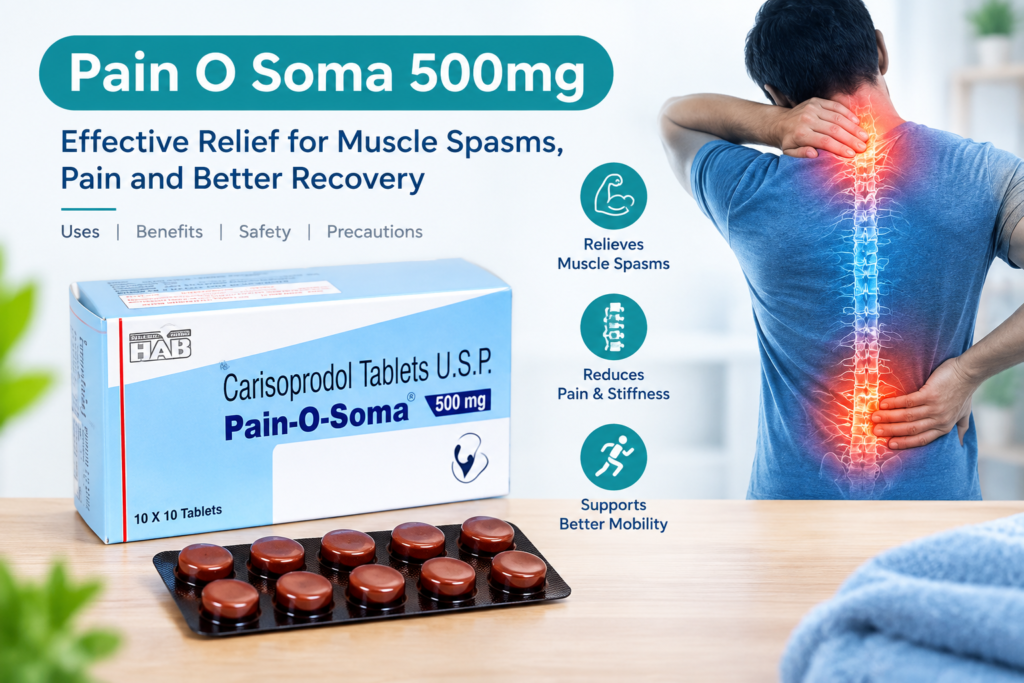
Pain-O-Soma-500mg-Tablet
Multiple sclerosis can cause muscle pain, tightness, cramps and sudden involuntary movements that may interfere with walking, sleep and everyday activities. If you are researching in the UK Pain O Soma Tablet Stop MS muscle spasms, it is important to understand that MS-related spasms are usually linked to spasticity, which means increased muscle tone and resistance when muscles move. MS Society UK explains that spasms and stiffness can affect many people with MS and that treatment needs to be tailored to the individual’s symptoms and daily needs.
Understanding MS Spasticity
MS spasticity happens when muscles become unusually tight or resistant to movement. Some people describe it as stiffness, pulling, jerking or sudden tightening. Others may experience a dull muscle ache or sharper discomfort when a spasm occurs. This can make ms stiff legs, difficulty walking or a constant feeling of muscle tension more noticeable. Spasticity can also affect the arms, back, feet or other muscle groups.
For someone asking what does spasticity feel like, the experience can vary considerably. You may notice muscles that are slow to relax, sudden jerking, difficulty bending a joint or a feeling that the legs are unusually rigid. Ms stiffness may be mild during the day but more troublesome at night. Some people also experience ms twitching or repeated involuntary movements that disturb rest.
Common MS Spasm Triggers
Understanding ms spasticity triggers can be useful when trying to reduce uncomfortable episodes. MS Society UK notes that possible triggers include increased body temperature, infections, bladder or bowel problems, skin irritation, pain, posture problems and emotional stress. Tight clothing or straps can also aggravate symptoms in some people.
Keeping a simple record of when spasms occur may help you and your healthcare professional identify patterns. For example, ms cramps in legs may become more noticeable after activity, while ms and leg cramps at night may interrupt sleep. Some people experience ms leg cramps at night, ms cramps in feet, or repeated ms twitching at night. These symptoms should be discussed with an MS nurse, GP or neurologist when they are persistent or worsening.
Stretching and Gentle Movement
Gentle movement can form an important part of managing MS-related stiffness. Physiotherapy may include stretching, range-of-motion exercises and strengthening activities designed around the individual’s abilities. MS Society UK notes that stretching can help prevent long-term complications, while maintaining movement can support flexibility and function.
This can be particularly useful when someone experiences ms constant need to stretch or stiffness with MS. However, stretching should not be forced through severe pain. A physiotherapist can show you suitable movements and help determine how much activity is appropriate for your particular symptoms.
Night-Time Muscle Cramps
Night-time symptoms can be especially frustrating because repeated movements can interrupt sleep. MS leg cramps may cause the legs to tighten or jerk unexpectedly, while painful ms cramps can leave muscles feeling sore afterwards. Some people may also notice spasms when changing position in bed.
If ms leg cramps at night happen regularly, consider discussing your sleeping position, daily activity, medication and possible triggers with your healthcare team. A physiotherapist may also recommend appropriate positioning, stretching or other strategies. MS Society UK notes that certain prescribed muscle relaxants may be particularly useful for painful night-time spasms in suitable patients.
Medicines for MS Spasms
There is no single muscle relaxant prescription that is suitable for everyone with MS. NHS guidance states that muscle-relaxant medicines can be used to relieve muscle spasms, cramps or stiffness associated with MS.
Depending on the individual situation, UK clinicians may consider medicines such as baclofen or tizanidine. MS Society UK also discusses other specialist options for selected patients. These treatments require professional assessment because medicines can cause side effects and may affect alertness, strength or coordination.
People searching for a muscle relaxer prescription, prescription muscle relaxers, or a muscle relaxant tablet name should therefore avoid choosing a medicine solely from online search results. The appropriate treatment depends on the cause, severity and pattern of the spasms.
Where Does Pain O Soma Fit?
Oral medication Pain O Soma 500mg contains main active ingredient Carisoprodol, a prescription muscle relaxant medication. However, it should not automatically be considered the best muscle relaxer for MS patients. UK MS guidance specifically discusses treatments such as baclofen and tizanidine for MS-related spasticity, alongside physiotherapy and other specialist approaches.
If you are considering Pain O Soma 500 mg for muscle pain or muscle spasms, speak with a qualified healthcare professional first, particularly if the symptoms are related to multiple sclerosis. A clinician can determine whether the symptoms are actually caused by spasticity and whether a particular medicine is appropriate.
Pain O Soma dose 500mg should be used only according to professional medical advice and the product’s prescribing information. It should not be substituted for an MS treatment plan without consultation. Similarly, Pain O Soma 500 mg tablet is not something to select simply because online searches describe it as a muscle relaxation tablet.
Muscle Pain and MS
Muscle pain can accompany stiffness and spasms, but MS can also cause several different types of pain. Identifying the type of pain matters because treatment for nerve-related pain may differ from treatment for muscle tightness. MS Society UK notes that muscle relaxants may be considered when spasms and stiffness are responsible for pain.
When searching for a best muscle relaxant, it is better to focus on the cause of the symptoms rather than a particular product. A medicine that helps one person may not be appropriate for another. Your healthcare professional may consider physiotherapy, prescribed medication, positioning, stretching or other treatments depending on your symptoms.
Other Treatment Options
Physiotherapy is an important part of managing muscle spasms MS symptoms. Treatment may involve range-of-motion exercises, strengthening, stretching, posture work and advice about daily activities. Some people may also benefit from specialist interventions when symptoms are severe or do not respond adequately to initial treatment.
For selected people with moderate to severe MS spasticity, specialist treatment options may include nabiximols, also known as Sativex, where appropriate under UK prescribing criteria. MS Society UK explains that it is used for MS-related spasticity when other treatments have not worked sufficiently.
The term drugs for muscle relaxant can therefore cover several different medicines, but they are not interchangeable. The same applies to searches for muscles relaxing medicine, muscle relaxation tablet, or muscles relax tablet. These phrases should not be treated as instructions to self-medicate.
Pain O Soma More Options
Pills4Cure provides educational information about prescription medicines, including Pain O Soma 500mg, for customers researching options for muscle discomfort. Product information should always be reviewed carefully, and prescription medicines should be used in accordance with qualified medical advice and applicable UK requirements.
For people specifically researching Pain O Soma pills 500mg, it is important to distinguish general muscle-pain information from MS spasticity treatment. Carisoprodol Tab Pain O Soma 500mg may be discussed as a prescription muscle-relaxant product, but MS-related spasticity requires an individual clinical assessment. A different strength or formulation, such as Pain O Soma 350mg, should also never be substituted without appropriate professional advice.
When to Seek Medical Advice
Speak with your MS nurse, GP or neurologist if spasms suddenly become much worse, start occurring frequently, interfere with walking or sleep, or cause significant muscle pain. New or unusually severe symptoms can sometimes be associated with triggers such as infection, bladder problems, constipation, pain or other changes that need attention.
If you are looking for the best muscle relaxants for your symptoms, a healthcare professional can help identify whether you need an anti-spasticity medicine, physiotherapy, pain treatment or another approach. Do not increase, stop or combine prescription medicines without professional advice.
Responsible Medication Use
For UK customers researching Pain O Soma tabs 500mg (Carisoprodol tabs), online information can help explain what a medicine is, but it cannot replace an individual assessment. Pain O Soma 500 mg pill should only be considered within appropriate medical guidance, especially when symptoms are connected with MS. Responsible use also means checking the medicine’s active ingredient, following the prescribed directions and discussing other medicines or health conditions with your clinician.
Ultimately, reducing ms muscle spasms often involves more than one approach. Recognising triggers, maintaining appropriate movement, working with a physiotherapist and using prescribed treatment when clinically appropriate can form part of a personalised management plan. If muscle spasms ms symptoms are persistent, painful or affecting your quality of life, contact your MS healthcare team rather than relying on self-treatment.