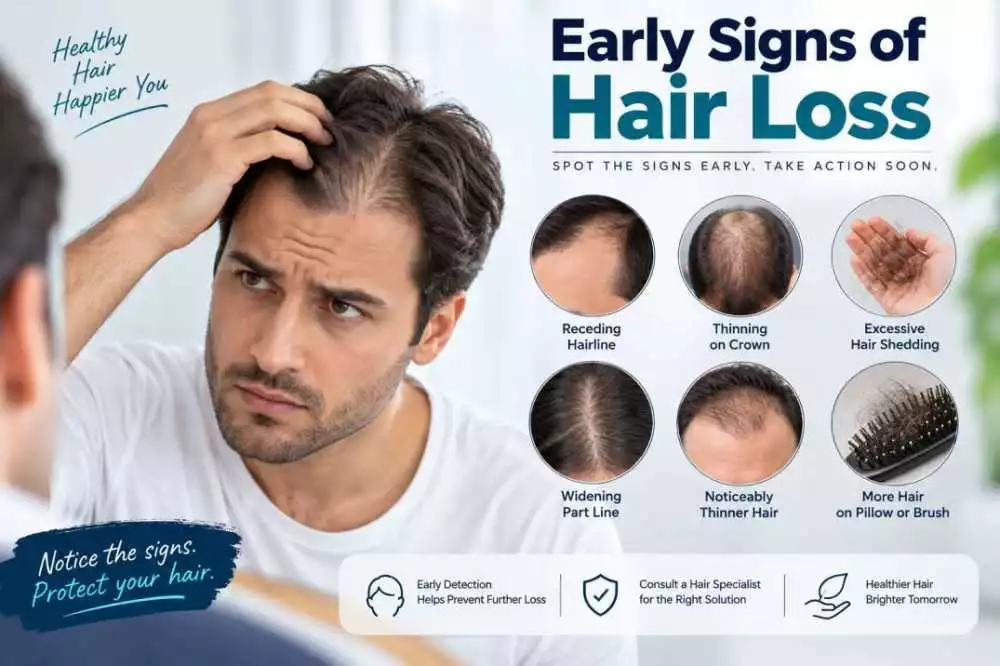
Hair loss can develop gradually, making it difficult to notice the initial changes. While losing some hair every day is normal, noticeable changes in hair density, texture, or the hairline may indicate a developing hair loss problem. Recognizing the Early Signs of Hair Loss can help you understand the possible cause and seek professional advice at the right time.
What Is Hair Loss?
Hair loss occurs when hair sheds faster than it grows back or when new hair becomes progressively thinner. It can affect the scalp, hairline, crown, eyebrows, or other areas of the body. Temporary shedding may result from stress, illness, nutritional deficiencies, or hormonal changes, while some forms of hair loss can be associated with genetics or underlying conditions.
Identifying changes early is important because different types of hair loss may require different approaches.
Early Signs of Hair Loss
1. Increased Hair Shedding
One of the first signs may be more hair than usual on your pillow, clothing, shower drain, or hairbrush. Occasional shedding is normal, but a persistent increase may deserve attention.
2. Widening Hair Part
If your scalp becomes increasingly visible along your usual hair part, it may indicate reduced hair density. A widening part can be particularly noticeable when comparing recent photographs with older ones.
3. Receding Hairline
A gradually receding hairline, especially around the temples, can be an early indication of pattern hair loss. Monitoring changes over time can help identify whether the hairline is continuing to move backward.
4. Thinning at the Crown
Hair loss does not always begin at the front. Some people first notice thinning around the crown or top of the scalp. Increased scalp visibility in this area can be an important warning sign.
5. Finer or Weaker Hair
Hair that appears progressively finer than before may be experiencing miniaturization. Individual strands can become thinner over time, making the overall hair look less dense.
6. Smaller Ponytail or Reduced Hair Volume
If a ponytail or bun appears noticeably thinner than it used to, this may indicate a reduction in overall hair density. Changes in volume are sometimes easier to notice than individual strands falling out.
7. More Scalp Visibility
Greater visibility of the scalp, particularly under bright light or when the hair is wet, can indicate that hair density has decreased. Comparing photographs taken under similar conditions can help you monitor changes.
8. Slow Hair Growth
Some people notice that their hair seems to grow more slowly or does not reach its previous length. Slower growth may occur for several reasons, including changes in the hair growth cycle or damage to the hair.
Read also: Geedup: The Bold Streetwear Brand Redefining Modern Style
What Causes Early Hair Loss?
There are several potential causes of hair loss. Genetics is a common factor, particularly in androgenetic alopecia. Other possible contributors include hormonal changes, nutritional deficiencies, significant stress, certain medications, illness, scalp conditions, and excessive hairstyling or chemical treatments.
Because the cause can vary considerably, persistent or sudden hair loss should be evaluated rather than assuming it is simply hereditary.
When Should You See a Hair Specialist?
Consider seeking professional evaluation if hair shedding continues for several weeks, your hairline is noticeably changing, bald patches appear, or you experience significant scalp symptoms such as itching, redness, scaling, or pain.
Sudden or patchy hair loss can have different causes and may require timely assessment. A specialist can examine the scalp, review your medical and family history, and recommend appropriate tests or treatment when necessary.
How Can Early Hair Loss Be Managed?
Management depends on the underlying cause. A professional may recommend addressing nutritional or hormonal factors, treating an underlying scalp condition, modifying damaging hair-care practices, or considering clinically appropriate hair-loss treatments.
Maintaining a balanced diet with adequate protein and essential nutrients, managing stress, avoiding excessive heat and harsh chemical treatments, and using gentle hair-care practices can also support overall hair health.
Why Early Detection Matters
Recognizing the Early Signs of Hair Loss gives you an opportunity to understand what may be happening before hair thinning becomes more noticeable. Early assessment can help identify the underlying cause and determine whether treatment or monitoring is appropriate.
Rather than relying on a single symptom, look for changes in hair density, shedding, hairline position, crown coverage, and strand thickness over time.
Conclusion
The Early Signs of Hair Loss can include increased shedding, a widening hair part, receding hairline, crown thinning, finer strands, reduced hair volume, and greater scalp visibility. These changes do not always mean permanent hair loss, but persistent or progressive symptoms deserve professional attention.
Recognizing changes early and identifying their underlying cause can help you make informed decisions about your hair and scalp health.