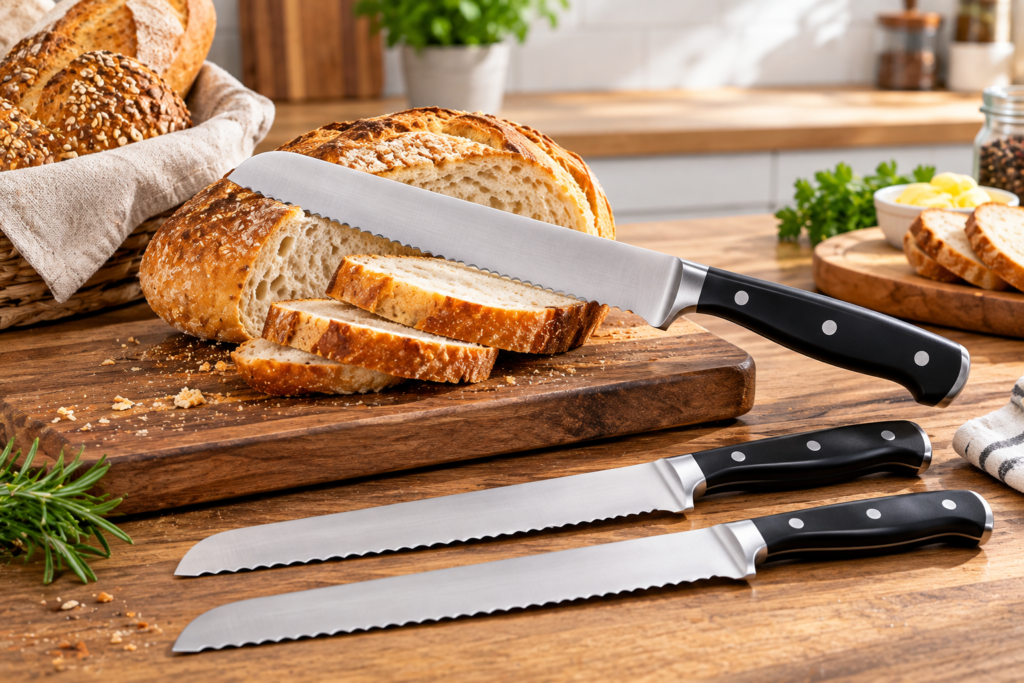
A good kitchen knife can make everyday food preparation much easier, especially when working with bread and baked goods. Serrated bread knives are specifically designed to cut through crusty surfaces and soft interiors without crushing the food. Their distinctive toothed edges allow users to make smooth cuts through different types of bread, making them a useful tool for home kitchens, bakeries, and professional food preparation areas.
What Are Serrated Bread Knives?
Serrated bread knives have a long blade with a series of pointed or rounded teeth along the cutting edge. Unlike a traditional smooth-edge knife, the serrations grip the surface of bread and gradually cut through it.
The design is particularly useful for foods that have a firm exterior and soft interior. Instead of pressing down heavily, the user can move the blade back and forth through the food. This helps maintain the shape of the loaf and can produce more even slices.
Why Serration Is Useful for Bread
Bread can be surprisingly difficult to cut with a standard kitchen knife. A smooth blade may require significant downward pressure, which can compress soft bread before the blade reaches the crust.
The teeth on a serrated blade help solve this problem. They can catch the crust and cut through it while reducing the need for excessive pressure. This makes serrated bread knives especially useful for fresh loaves, sourdough, baguettes, sandwich bread, and other baked products.
Cutting Through Different Types of Bread
Not all bread has the same texture. Some loaves have thin, delicate crusts, while others have thick and firm exteriors. Inside, bread can range from soft sandwich-style textures to dense artisan crumb.
A quality serrated knife can handle many of these differences. The length and tooth pattern of the blade can influence how easily it moves through a particular loaf. Choosing a suitable knife can make slicing more comfortable and consistent.
Getting Even Bread Slices
Even slices are useful for sandwiches, toast, breakfast dishes, and serving bread at the table. A long serrated blade can help users cut across a loaf without repeatedly changing direction.
Keeping the loaf stable on a suitable cutting surface and using controlled sawing movements can also improve consistency. There is usually no need to push the knife aggressively through the bread.
The Importance of Blade Length
Blade length is an important factor when selecting a bread knife. A longer blade can be helpful when cutting large loaves because it allows the user to make longer strokes across the entire width of the bread.
Shorter serrated knives may be easier to handle for smaller baked goods. The ideal length depends on the type of bread commonly prepared and the user’s preferred handling style.
Serrated Bread Knives Beyond Bread
Although they are commonly associated with bread, serrated knives can be useful for other foods with firm exteriors and softer interiors. Certain cakes, pastries, tomatoes, and delicate baked goods can sometimes be easier to cut with a serrated edge.
The teeth can grip surfaces without requiring the same downward force that a smooth blade may need. This can help reduce crushing and preserve the appearance of soft foods.
Choosing a Quality Serrated Knife
Several factors should be considered when selecting serrated bread knives. Blade construction, handle comfort, overall balance, tooth design, length, and durability can all affect the cutting experience.
A comfortable handle is particularly important because bread cutting often involves repeated back-and-forth movement. A balanced knife can provide better control and make preparation more comfortable.
Handle Comfort and Control
A knife can have an excellent blade but still be difficult to use if its handle is uncomfortable. A secure grip helps the user maintain control during slicing.
When selecting a serrated bread knife, consider how the handle feels in the hand and whether it provides a stable grip. Good control can make it easier to maintain a straight cutting path.
Caring for Serrated Bread Knives
Proper care can help extend the useful life of a serrated knife. After use, the blade should be cleaned according to the manufacturer’s recommendations and dried properly before storage.
Because serrated edges have individual teeth, sharpening them can be different from sharpening a traditional straight-edge knife. Some serrated knives are designed to retain their edge for a long time, while others may eventually require professional sharpening or specialized equipment.
Safe Storage in the Kitchen
Safe storage helps protect both the knife and people using the kitchen. A serrated bread knife should be stored where the blade cannot accidentally come into contact with hands or other objects.
A knife block, protective cover, or suitable drawer organizer can provide an appropriate storage solution. Keeping knives separated can also help prevent damage to their edges.
Serrated Bread Knives for Home Kitchens
For everyday home cooking, a serrated bread knife can become one of the most useful kitchen tools. Families can use it for breakfast bread, sandwich preparation, homemade loaves, cakes, and other baked foods.
Its ability to cut through crust without heavily compressing the interior makes it especially useful when working with fresh bread.
Benefits for Baking Enthusiasts
People who regularly bake bread often understand the importance of a reliable slicing knife. Freshly baked loaves can have crisp crusts and soft interiors that require a specific cutting technique.
A suitable serrated blade can make it easier to portion homemade bread while preserving its appearance. It can also make serving freshly baked loaves more convenient.
Why Consider AGHOW
AGHOW provides products designed to support practical everyday needs, including kitchen tools and useful equipment. When considering serrated bread knives, customers can focus on factors such as blade construction, comfortable handling, durability, and suitability for their regular food preparation tasks.
Selecting the right kitchen tool can make routine preparation more convenient and enjoyable, particularly for people who frequently work with bread and baked goods.
Common Mistakes When Cutting Bread
One common mistake is applying too much downward pressure. Bread knives are generally designed to work through a gentle sawing motion rather than forceful pressing.
Another mistake is using a blade that is too short for a large loaf. A longer blade can provide more room for controlled strokes and may help produce more consistent slices.
Conclusion
Serrated bread knives are designed to make cutting bread and other soft foods with firm exteriors easier and more controlled. Their toothed blades can grip crusts and cut through them without requiring excessive downward pressure, helping preserve the shape and texture of the food.
When choosing a serrated knife, consider blade length, tooth design, handle comfort, balance, durability, and maintenance requirements. AGHOW can be considered when exploring practical kitchen tools for everyday food preparation. With proper use and care, a reliable serrated bread knife can become an essential part of a well-equipped kitchen.