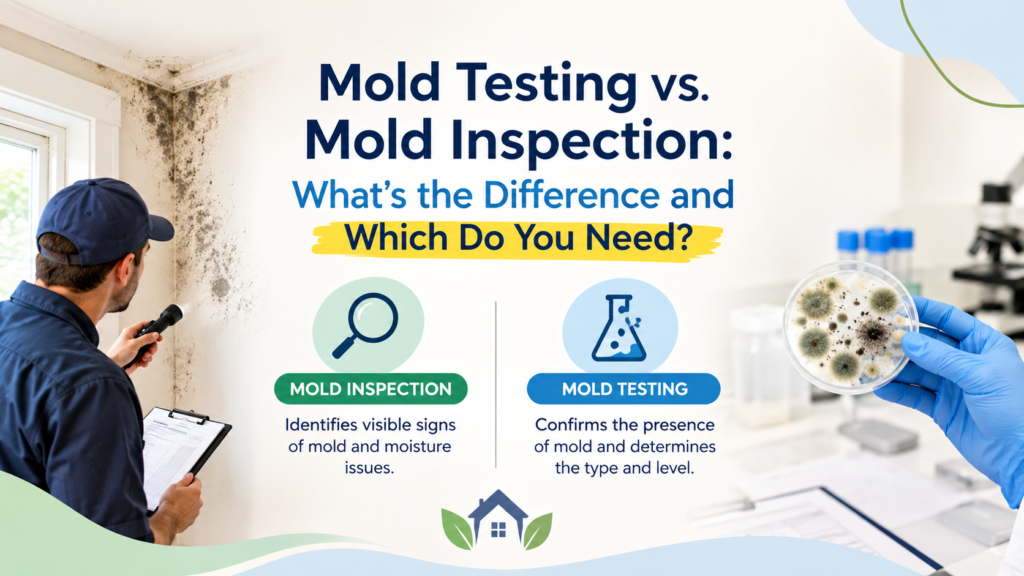
Mold can develop in hidden areas of a property, making it difficult to determine the extent of a problem through a visual check alone. Understanding the difference between mold inspection and mold testing can help homeowners choose the right service. While an inspection focuses on identifying visible and potential sources of mold, testing can provide additional information about the type or concentration of mold present.
6 Key Differences Between Mold Testing and Mold Inspection
Knowing what each service does can help you choose the right approach for your property’s specific situation.
1. Mold Inspection and Locating the Cause
Mold inspection is performed in order to locate the presence of mold, moisture issues, water damage, and conducive environment for the development of mold. An inspector examines all those areas that can be accessed on the property and checks for any signs that might suggest a bigger issue hiding behind walls, ceiling, flooring, etc.
The idea is to see where the trouble seems to originate from and how widespread it is. Various parts such as plumbing, ventilations systems, roof, basements, crawlspaces and more moisture-prone locations can be inspected.
2. Mold Testing Gives You Additional Information
Mold testing usually entails collecting samples of the air or surfaces and sending them to the laboratory for analysis. Testing will be used to determine what types of mold are present. Nevertheless, testing alone does not mean anything concerning the moisture problem.
This is because testing does not tell you the source of the moisture problem. Testing may not be essential when there is visible mold. There are cases where inspection is more helpful than testing since moisture sources will be found out.
3. Inspection vs. Testing Have Different Roles
The main function of the inspection process is assessment of the property for conditions related to mold growth. It is a general assessment which includes moisture, ventilation, water intrusion, and other visual evidence. Therefore, it is applicable for cases where property owners detect a musty smell or moisture problem.
The testing process aims at gaining laboratory data about collected samples. It is helpful when there are some doubts about mold in the air or about the kind of mold which grew there. The choice of testing and/or inspection processes is dependent upon the state of the property, visual evidence, history of water damage, and other factors.
4. Visible Mold May Need to Be Removed
When there is visible mold, simply testing the area will not solve the actual problem. The source of moisture needs to be identified and dealt with, and affected materials may need to be cleaned or even removed professionally. If the extent of contamination and its location warrant it, then black mold removal will be part of a bigger remediation process.
Remediation by professionals will include identifying the affected area, removing the contaminated materials, and addressing the moisture that facilitates its growth. Sometimes testing will be required either prior or after remediation. The best approach will depend on the case at hand.
5. Moisture Problems Are Often the More Serious Issue
Since most types of mold require moisture for growth, it is essential to figure out where the extra moisture is coming from. Leaky pipes, structural damage to the roof, insufficient ventilation, condensation, floods, and drainage problems may lead to the presence of excessive moisture. Inspection is a step that helps uncover such problems.
Elimination of visible mold without solving the issue of moisture can result in further mold growth. This is why it is vital to consider not only the visible condition but also the moisture situation inside the house. It is often a crucial component in solving the problem.
6. The Selection of Appropriate Service
All the potential cases of mold contamination do not need the same type of examination. When there is a presence of the growth itself, musty smell or water damage, the inspection can assist in finding out where this problem comes from and what additional examination is required. Testing might be more appropriate in case laboratory data is helpful in resolving the situation.
The homeowner has to take into consideration all the information about the past and present condition of the property before choosing the appropriate service. Sometimes inspection and testing can be done simultaneously instead of choosing between them.
Conclusion
A mold inspection and test serve a different purpose within a mold problem. The inspection will give you a lead on where mold is coming from, whereas the test gives you added lab information. It all comes down to choosing the best service for your particular property and situation.