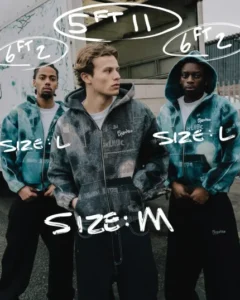
There are fashion logos that announce wealth, others that communicate heritage, and a few that have become so familiar that they hardly need an introduction. Then there is the little heart with two curious eyes belonging to Comme des Garçons PLAY.
At first glance, the logo seems almost too simple to matter. It is not a complicated crest, an elaborate monogram, or a symbol covered in layers of tradition. It is simply a heart with eyes. Yet that small graphic has become one of the most recognizable symbols in contemporary fashion.
The remarkable part is that Comme des Garçons PLAY did not begin as an attempt to create a global streetwear icon. Its origins are connected to one of fashion’s most experimental creative minds, Rei Kawakubo, and to a larger fashion house famous for questioning nearly every accepted rule of design.
PLAY occupies an unusual position inside the Comme des Garçons universe. The main Comme des Garçons collections can be conceptual, architectural, challenging, and sometimes deliberately difficult. PLAY takes a different route. It strips the idea down, works with everyday clothing, and gives those familiar pieces a distinctive personality through a graphic identity.
The result is deceptively simple.
A T-shirt becomes recognizable from across a room. A cardigan can communicate its identity with a tiny embroidered symbol. A pair of sneakers can turn an ordinary streetwear silhouette into something unmistakably connected to the house.
Understanding Comme des Garçons PLAY, however, requires looking beyond the heart itself. Its history is a story about Rei Kawakubo’s creative philosophy, the rise of accessible designer fashion, the imagination of artist Filip Pagowski, and the changing relationship between luxury, streetwear, and popular culture.
Before PLAY: The World of Comme des Garçons
To understand why PLAY became so successful, it helps to understand the world from which it came.
Comme des Garçons was founded in Tokyo by Rei Kawakubo in 1969. Over the following decades, Kawakubo established herself as one of fashion’s most uncompromising designers. Her work challenged traditional assumptions about beauty, femininity, proportion, tailoring, and the human body.
The Comme des Garçons universe developed into a collection of different labels and creative directions rather than one single aesthetic. By the time PLAY appeared, the broader company was already internationally respected for experimental fashion.
But there was an interesting gap.
Not everyone who admired Comme des Garçons could easily participate in its world. The conceptual collections were influential but often expensive, highly directional, and intended for an audience comfortable with avant-garde design.
PLAY offered another possibility.
Instead of asking consumers to wear an entire conceptual philosophy, it could give them one small piece of it.
That difference became extremely important.
The Arrival of PLAY in the Early 2000s
Comme des Garçons PLAY emerged in 2002, with the line described by the label as “a sign, a symbol, a feeling.” A Comme des Garçons information site lists the line as established in 2003, reflecting the slightly different dating sometimes used for its formal establishment, but contemporary accounts identify 2002 as the launch period.
The concept was refreshingly uncomplicated.
PLAY focused on familiar wardrobe pieces rather than highly theatrical runway shapes. T-shirts, sweaters, cardigans, hoodies, and other casual staples became the foundation.
This was a clever contrast with the company’s more experimental collections.
A person did not need to understand deconstruction or avant-garde tailoring to appreciate a PLAY T-shirt.
The clothes were approachable.
The personality came from the logo.
That formula sounds obvious today, but at the time it represented an effective way of bringing the spirit of an intellectually ambitious fashion house into ordinary wardrobes.
Instead of making the clothing complicated, PLAY made the identity memorable.
The Artist Behind the Heart
The heart is perhaps the most important element in the entire PLAY story.
Its creator was Filip Pagowski, a Polish-born artist and illustrator based in New York. His graphic work had developed independently from mainstream fashion, which makes the eventual success of the symbol even more interesting.
According to a retrospective interview with Pagowski, the heart was created separately from the eventual PLAY project and later resurfaced as the graphic identity for the line.
The drawing is deceptively expressive.
A conventional heart already carries an enormous amount of emotional meaning. It can suggest affection, romance, warmth, or human connection.
Pagowski’s decision to give the heart two eyes changed everything.
Suddenly, it was no longer merely a symbol of love.
It became a character.
The eyes give the heart an almost independent personality. It seems curious. It appears to be watching. It can look friendly in one context and slightly strange in another.
That ambiguity suited Comme des Garçons surprisingly well.
Rei Kawakubo’s fashion had always explored unusual interpretations of familiar things. The PLAY heart accomplished something similar through illustration.
Why the Heart Worked So Well
Many fashion logos are designed to project status.
PLAY’s heart communicates something else.
It communicates personality.
That distinction is one of the reasons the symbol became so successful.
A traditional luxury monogram can tell people which brand someone is wearing. The PLAY heart also does that, but it adds an emotional quality. It looks less like a corporate insignia and more like a small creature attached to the garment.
Its simplicity is equally important.
There are no complicated lines to remember.
The shape can be recognized quickly.
The two eyes provide the detail that makes it unmistakable.
On a white T-shirt, the logo stands out. On black knitwear, it becomes a small visual interruption. On a sneaker, it becomes almost conversational.
The symbol does not need a large surface area to work.
That versatility allowed PLAY to use the heart in countless ways while maintaining a consistent identity.
The Genius of Everyday Clothing
The success of PLAY also comes from its relationship with ordinary clothes.
A basic T-shirt is one of the most universal garments in the world. Nearly everyone understands it. There is no mystery about how it should be worn.
A cardigan is equally familiar.
So is a hoodie.
PLAY takes these ordinary objects and gives them a small twist.
The clothes do not need exaggerated silhouettes or extravagant ornamentation. Their appeal comes from the balance between simplicity and recognition.
This is one of the most effective aspects of the PLAY philosophy.
The garments can fit into a person’s existing wardrobe rather than demanding that the wardrobe be rebuilt around them.
Someone can wear a PLAY T-shirt with jeans, trousers, shorts, a tailored jacket, or sneakers. It can function as a small detail within an outfit rather than becoming the entire outfit.
That adaptability helped PLAY move beyond the narrow world of conceptual fashion.
A Softer Expression of Rei Kawakubo
Comme des Garçons has often been associated with intellectual seriousness.
PLAY reveals another side.
There is humor in the heart.
There is friendliness.
There is even a sense of innocence.
That does not mean PLAY abandons Kawakubo’s philosophy. Instead, it expresses it differently.
The main collections can ask complicated questions through unusual construction. PLAY can ask a simpler question:
How much personality can a tiny symbol give to an ordinary garment?
The answer turned out to be: a great deal.
The contrast between PLAY and the mainline collections is actually what makes the former more interesting.
It would be easy to assume that the heart represents a complete departure from Comme des Garçons’ avant-garde identity. In reality, PLAY demonstrates the same willingness to rethink familiar assumptions.
Rather than making a T-shirt complicated, the line made simplicity meaningful.
From Fashion Insiders to a Wider Audience
PLAY gradually developed an audience far beyond traditional high-fashion consumers.
Its accessibility helped.
A person did not need to attend a Paris runway show or understand Japanese avant-garde fashion to recognize the heart.
The design also fitted naturally into the visual language of modern streetwear.
During the 2000s and 2010s, the boundaries between luxury fashion, skate culture, music, sneakers, and everyday clothing became increasingly fluid.
PLAY was perfectly positioned for that transition.
It was associated with an elite fashion house but communicated through casual garments.
That combination made it unusual.
The clothes could feel luxurious without looking formal.
They could look understated without being anonymous.
And the heart made them immediately identifiable without requiring enormous branding.
PLAY and the Rise of Logo Culture
The success of PLAY also says something important about the changing role of logos.
For decades, designer branding was often built around elaborate patterns or repeated monograms. PLAY demonstrated that a logo did not have to cover an entire garment.
A tiny symbol could be enough.
This is especially significant because the heart became recognizable through repetition rather than scale.
A small embroidered emblem on the chest could tell the same story that another brand might communicate through a much larger print.
The restraint gave the logo more character.
It felt like a signature.
The heart was there, but it did not need to dominate.
That subtlety became one of PLAY’s defining visual qualities.
The Converse Chapter
One of the most important moments in PLAY’s wider cultural story came through its collaboration with Converse.
The collaboration brought the PLAY heart to Converse’s classic footwear silhouettes, introducing the graphic to an even broader audience. Converse’s own historical account describes the collaboration as beginning with the iconic heart-and-eyes logo and notes that the relationship produced several releases, including a highly influential 2015 version based on the Chuck 70.
The partnership worked because both brands possessed extraordinarily recognizable identities.
Converse had the canvas sneaker.
PLAY had the heart.
Neither side needed to overwhelm the other.
The familiar sneaker became a new object simply by introducing the graphic.
The heart on the side of a Chuck 70 became a cultural shorthand. For many consumers, it was their first direct encounter with Comme des Garçons beyond clothing.
The collaboration also demonstrated how successfully PLAY could travel between categories.
The logo that started on clothing could work just as naturally on footwear.
Why the Heart Became a Cultural Symbol
At some point, PLAY stopped being simply another fashion label.
The heart became a symbol that people could recognize without necessarily understanding the full history of Comme des Garçons.
That transition is difficult to achieve.
A successful logo must be simple enough to remember but distinctive enough to avoid becoming generic.
PLAY’s heart achieved both.
Its emotional reference makes it instantly accessible, while the eyes create enough individuality to separate it from ordinary heart imagery.
It can appear playful without being childish.
It can look fashionable without appearing overly serious.
It can function as a brand mark while still seeming like an illustration.
That flexibility helped it survive changes in fashion trends.
The Many Faces of the PLAY Heart
Although the original visual identity is strongly associated with the familiar red heart, the symbol has appeared in different treatments and sizes over the years.
The heart can be small and discreet or larger and more visible. It has appeared in different colors and positions depending on the garment or collaboration. Contemporary coverage of PLAY notes variations including different scales and color treatments, as well as the logo’s movement onto Converse footwear.
This flexibility has helped prevent the symbol from becoming static.
It is recognizable without being completely frozen.
The essential ingredients remain:
The heart.
The eyes.
The unmistakable attitude.
Everything around them can change.
PLAY Is More Than a Logo
It would be easy to reduce PLAY to the heart, but doing so misses part of its appeal.
The line’s success comes from the relationship between graphic identity and product.
A logo can attract attention, but it cannot rescue a poor garment indefinitely.
PLAY’s basic pieces have endured because they work as clothing.
The T-shirts are easy to understand. The sweaters are versatile. Cardigans can be layered. Hoodies fit into everyday wardrobes.
The heart adds the signature.
This balance between useful garments and distinctive design is one of the reasons PLAY has remained relevant while fashion trends have constantly changed around it.
The Influence of Japanese Fashion
PLAY may appear simple compared with some of Comme des Garçons’ experimental collections, but its existence is still connected to a broader Japanese approach to design.
Japanese fashion has often demonstrated how minimalism and detail can coexist.
A garment can be visually simple while requiring careful attention to proportion, fabrication, and finishing.
PLAY follows a comparable principle.
The design does not scream for attention through complicated construction.
Instead, it creates recognition through restraint.
The heart is the detail.
The rest of the garment gives it space.
That relationship between simplicity and identity has helped PLAY appeal to audiences across different countries and cultures.
The Tension Between Playfulness and Luxury
The name itself tells us something.
PLAY sounds relaxed.
It sounds curious rather than prestigious.
That is unusual in luxury fashion, where brand names often try to communicate heritage, exclusivity, craftsmanship, or sophistication.
PLAY chooses a different emotional territory.
It suggests fun.
That is precisely why the line feels fresh within the larger Comme des Garçons family.
The heart does not behave like a traditional luxury emblem. It looks alive.
The resulting contradiction is fascinating: premium clothing carrying a symbol that refuses to take itself too seriously.
This combination became central to the identity of the line.
Why Younger Consumers Connected With PLAY
PLAY’s appeal to younger audiences can also be explained through its simplicity.
Younger consumers increasingly wanted fashion that could move between different parts of everyday life.
They were not always interested in separating “luxury clothing” from “casual clothing.”
A designer T-shirt could be worn with sneakers.
A premium cardigan could be combined with denim.
A fashion collaboration could sit naturally beside streetwear.
PLAY fit comfortably into that world.
It brought the credibility of Comme des Garçons into a language that felt easy to wear.
The heart served as the bridge.
It connected an intellectually ambitious Japanese fashion house with a much broader culture of everyday style.
What Makes PLAY Different From Ordinary Streetwear?
At first, a PLAY T-shirt may not appear dramatically different from other graphic streetwear.
The distinction lies in its history.
The heart is not an isolated logo invented for mass appeal. It belongs to an artistic tradition connected to Rei Kawakubo and one of fashion’s most influential independent design houses.
That background gives the simplest piece additional meaning.
Wearing PLAY can therefore operate on two levels.
On the surface, it is a clean, casual garment with an appealing graphic.
At another level, it carries a connection to the larger Comme des Garçons philosophy of experimentation and creative independence.
The clothing does not force the wearer to explain that history.
But the history is there.
The Continuing Legacy of Comme des Garçons PLAY
More than two decades after its launch, PLAY remains an important part of the Comme des Garçons universe.
Its longevity is particularly impressive because contemporary fashion changes quickly.
Logos become fashionable, then disappear.
Streetwear trends move from one aesthetic to another.
Collaborations arrive constantly.
Yet the PLAY heart has remained recognizable.
That durability comes from the fact that the symbol is not heavily dependent on a particular trend.
A heart with eyes does not belong exclusively to one decade.
It can be playful in the 2000s, understated in the 2010s, and still feel relevant years later.
The design has enough personality to remain memorable without becoming tied to one specific cultural moment.
The Real Meaning of the PLAY Heart
So what does the famous heart actually mean?
There is no single answer.
That may be part of its success.
It can represent playfulness. It can suggest affection. It can feel curious, mischievous, friendly, or slightly strange.
Most importantly, it gives Comme des Garçons a human face.
Fashion houses are often represented by abstract symbols. PLAY gives its clothing a character.
The heart appears to look back at the person wearing it.
That tiny relationship creates something unusual for a logo: a sense of personality.
Final Thoughts: Why Comme des Garçons PLAY Still Matters
Comme des Garçons PLAY is a fascinating example of how simplicity can become powerful.
Its history begins within one of fashion’s most experimental houses, but its evolution took a surprisingly accessible direction. Instead of making avant-garde clothing easier to understand through explanation, PLAY translated part of the Comme des Garçons spirit into everyday garments.
Then came the heart.
Filip Pagowski’s unusual character transformed a simple graphic into a recognizable identity. Its eyes gave it life. Its uncomplicated shape made it easy to remember. Its emotional quality made it approachable.
From there, PLAY moved into a much larger cultural conversation.
It became associated with T-shirts, hoodies, knitwear, sneakers, collaborations, streetwear, and contemporary casual style. The Converse partnership helped take the symbol even further into global footwear culture.
Yet the real achievement of PLAY is not simply that its heart became famous.
The achievement is that a tiny drawing managed to preserve the spirit of a complicated fashion house while making that spirit approachable.
Comme des Garçons has always been interested in questioning expectations.
PLAY does the same thing in a quieter way.
It takes an ordinary T-shirt and asks us to notice it.
It takes a familiar heart and gives it eyes.
It takes a luxury fashion name and lets it speak through everyday clothes.
And perhaps that is why the symbol continues to work so well.
The PLAY heart does not need to shout.
It only needs to look back.