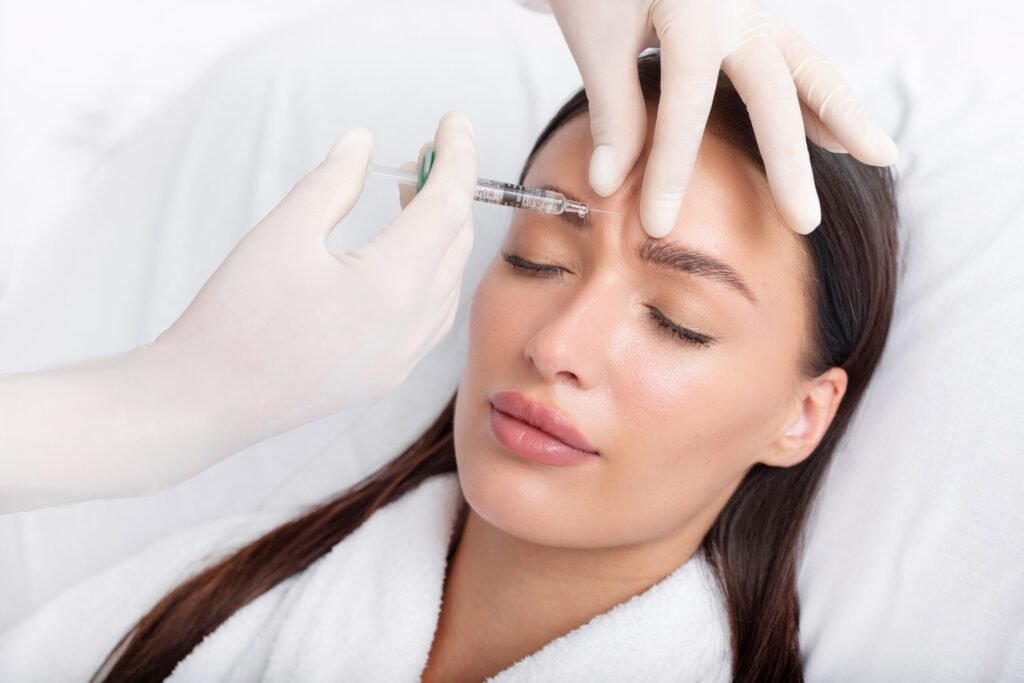
Young woman recieving injection of anti-aging botox filler to forehead from professional cosmetologist in beauty salon
Botox injections have become a widely recognised aesthetic treatment for people who want to soften the appearance of dynamic facial lines and create a refreshed appearance. Although the treatment is often associated with a quick appointment, the process involves careful assessment, planning and precise injection technique.
For people considering Botox Injections In London, understanding how the treatment is performed can make the consultation and appointment easier to understand. The procedure involves identifying the muscles contributing to particular facial expressions, selecting appropriate injection points and administering carefully measured amounts of the treatment.
At a professional clinic, Botox treatment begins with an individual consultation rather than simply injecting predetermined areas. The practitioner considers facial anatomy, movement patterns and the patient’s aesthetic objectives before creating a personalised treatment plan.
What Is Botox?
Botox is a purified form of botulinum toxin type A that is used in aesthetic medicine to temporarily reduce the activity of specific muscles.
When injected into selected muscles, Botox works by interrupting the nerve signals responsible for muscle contraction. Reduced muscle activity can soften the appearance of certain dynamic facial lines.
The treatment is commonly considered for areas such as the forehead, between the eyebrows and around the outer corners of the eyes.
The exact areas treated depend on the patient’s facial movements, concerns and desired outcome.
What Happens During a Botox Consultation?
The consultation is an important first step before Botox in London treatment.
The practitioner discusses your concerns and asks what you would like to improve. They may ask which facial lines you notice most and whether your goal is to achieve a subtle refreshed appearance or address particular expression lines.
The practitioner also examines your face while it is both relaxed and moving. This helps identify which muscles are contributing to the lines being discussed.
Based on this assessment, an individual treatment plan can be developed.
Why Is Facial Movement Assessed?
Facial movement provides important information when planning Botox treatment.
Expression lines develop partly because certain muscles repeatedly contract during facial expressions. People use these muscles differently, meaning injection requirements can vary from one individual to another.
The practitioner may ask you to make different facial expressions during the consultation, such as raising your eyebrows, frowning or smiling.
Observing these movements helps the practitioner identify the relevant muscle groups and determine appropriate injection locations.
Which Areas Can Be Treated With Botox?
Botox can be used in several areas of the face, depending on the individual’s concerns and treatment plan.
Commonly treated areas include:
- Forehead expression lines
- Lines between the eyebrows
- Lines around the outer corners of the eyes
Other applications may also be discussed during a consultation.
The exact areas selected depend on facial anatomy and the patient’s objectives rather than automatically treating every possible area.
How Is the Treatment Area Prepared?
Before injections are performed, the practitioner prepares and assesses the relevant treatment areas.
The skin is examined and the planned injection points are identified. The practitioner may mark or otherwise carefully map the areas depending on the treatment approach.
The face is then prepared according to the clinic’s standard procedure.
This preparation allows the practitioner to follow the personalised treatment plan accurately.
How Are Botox Injections Administered?
The treatment is performed using a fine needle to deliver small amounts of Botox into selected muscles.
The practitioner carefully places the injections at predetermined points based on the patient’s facial anatomy and muscle activity.
The number of injection points varies according to the area being treated and the individual treatment plan.
Because facial muscles differ in size, strength and position, treatment is tailored rather than using exactly the same injection pattern for every patient.
How Long Does Botox Treatment Take?
Botox appointments are generally relatively short.
The exact duration depends on the number of areas being treated and the complexity of the individual treatment plan.
A consultation may take additional time because it involves discussing your goals and assessing facial movement.
Once the injection points have been identified, the actual treatment can usually be completed within a relatively brief appointment.
Your practitioner can provide a more accurate timeframe based on the areas you want treated.
Does the Practitioner Treat Every Facial Line?
Not necessarily.
Botox is primarily used to address dynamic lines associated with muscle movement. The practitioner therefore considers whether a particular line is related to muscular activity before deciding whether Botox is appropriate.
Static lines and other skin changes may have different causes and may require different approaches.
This is one reason why an individual consultation is important before Botox Injections In London.
How Does the Practitioner Decide How Much Botox to Use?
The amount used is determined according to the individual treatment plan.
Factors such as the muscle being treated, its strength, the treatment area and the patient’s desired outcome can all influence the approach.
The objective is to create a treatment plan that is appropriate for the patient’s facial structure and aesthetic goals.
Rather than applying the same amount to everyone, the practitioner can adjust the treatment according to individual requirements.
What Happens After the Injections?
Once the injections have been completed, the practitioner provides aftercare guidance.
Patients can generally leave the clinic after their appointment and continue with their day, subject to the instructions provided by their practitioner.
You will be advised about any activities or products that should be temporarily avoided and when your usual routine can be resumed.
Following the clinic’s specific aftercare instructions is an important part of the treatment process.
When Do Botox Results Develop?
Botox does not generally produce its full effect immediately.
The treated muscles gradually respond to the injections over the following days. As muscle activity becomes reduced, the appearance of expression lines can progressively soften.
The timing of visible changes varies between individuals and treatment areas.
Your practitioner can explain what type of progression you can expect based on your individual treatment plan.
How Long Do Botox Results Last?
Botox results are temporary.
The duration can vary according to factors such as the treatment area, individual muscle activity and how the body responds to the treatment.
Over time, muscle activity gradually returns and the effects of Botox diminish.
Patients who choose to continue treatment can discuss an appropriate maintenance schedule with their practitioner.
What Should You Discuss Before Treatment?
Before having Botox in London, it is useful to discuss your specific concerns and expectations with your practitioner.
You may want to explain which facial lines you notice most, how frequently you have previously received Botox and what type of appearance you would like to maintain.
You should also provide relevant information about previous aesthetic treatments so that the practitioner has a clear understanding of your treatment history.
Open communication helps create a treatment plan that reflects your individual objectives.
How Does a Practitioner Create a Natural-Looking Treatment Plan?
A personalised approach is important when treating facial muscles.
The practitioner assesses how your face moves and considers how the different muscles interact. Treating only one area without considering surrounding muscle activity may not provide the most balanced approach.
For this reason, facial assessment is an important part of professional Botox treatment.
The practitioner can select injection points and treatment levels according to your individual facial movement rather than relying on a standard pattern.
What Makes a Professional Botox Clinic Important?
Choosing an appropriate clinic is an important part of the treatment process.
Patients considering Botox Injections In London should look for a clinic where treatment begins with a detailed consultation and where injections are administered by an appropriately qualified practitioner.
A professional Best Botox Clinic London should provide clear information about the treatment process, personalised planning and appropriate aftercare.
Bodyvie Clinic provides aesthetic treatments in London, including anti-wrinkle treatments. A consultation gives patients the opportunity to discuss their concerns and understand the recommended approach before treatment.
How Should You Prepare for Botox Treatment?
Preparation is generally straightforward, but your practitioner may provide specific instructions before your appointment.
It can be useful to arrive with a clean face and avoid applying unnecessary cosmetic products immediately before treatment unless advised otherwise.
Patients should also make sure they have discussed relevant medical information and previous aesthetic treatments with their practitioner.
Following the clinic’s pre-treatment guidance helps ensure that the appointment can proceed according to the planned treatment approach.
What Should You Expect During Your Appointment?
A typical Botox appointment involves several stages.
First, the practitioner discusses your objectives and reviews the treatment plan. The facial muscles and areas of concern are then assessed.
Next, the selected injection points are identified. Small amounts of Botox are administered into the targeted muscles using a fine needle.
After the injections, the practitioner provides aftercare instructions and explains what to expect as the treatment begins to take effect.
This structured process allows the treatment to be tailored to your facial anatomy rather than following a generic injection pattern.
Conclusion
Understanding how Botox Injections In London are performed can help patients approach treatment with clearer expectations. The process begins with a consultation and facial assessment, followed by careful identification of the muscles and injection points that relate to the patient’s concerns.
The practitioner uses a fine needle to administer carefully selected amounts of Botox into specific muscles. The treatment plan can be adapted according to facial anatomy, muscle activity, treatment areas and individual aesthetic goals.
Results develop gradually as the targeted muscles respond, and the effects are temporary, meaning maintenance appointments may be discussed for patients who wish to continue treatment.
If you are considering Botox in London, consulting a professional Best Botox Clinic London can help you understand the treatment process and determine whether it is appropriate for your individual aesthetic objectives.
FAQs
What happens during a Botox appointment?
A Botox appointment usually begins with a consultation and facial assessment. The practitioner identifies the areas to be treated, plans the injection points and administers Botox using a fine needle.
How does Botox work?
Botox temporarily reduces the activity of selected muscles by interrupting nerve signals responsible for muscle contraction. This can soften the appearance of dynamic facial lines.
How long does a Botox treatment take?
The appointment length depends on the number of areas being treated. Botox injections themselves are generally performed during a relatively short appointment.
Which facial areas can Botox treat?
Common treatment areas include forehead lines, lines between the eyebrows and lines around the outer corners of the eyes. Your practitioner can discuss suitable areas during your consultation.
Does Botox work immediately?
The effects generally develop gradually rather than appearing immediately. The treated muscles respond over the following days, with changes becoming progressively noticeable.
How long do Botox results last?
Results are temporary, and their duration varies between individuals. Muscle activity gradually returns as the effects of the treatment diminish.
How does a practitioner decide where to inject Botox?
The practitioner assesses facial movement, muscle activity, anatomy and the patient’s treatment goals. This information helps determine the appropriate injection points.
Is every Botox treatment the same?
No. Treatment varies according to the individual’s facial anatomy, muscle activity, areas being treated and desired outcome.
What should I discuss during a Botox consultation?
Discuss your main concerns, desired outcome, previous aesthetic treatments and any relevant information about your treatment history. This helps the practitioner develop an appropriate treatment plan.
Can I return to my normal routine after Botox?
Your practitioner will provide specific aftercare instructions and advise you about activities that can be resumed following treatment.
How do I choose the Best Botox Clinic London?
When considering the Best Botox Clinic London, look for a clinic that provides individual consultations, personalised treatment planning, qualified practitioners and clear aftercare guidance.