commercial hydroseeding services
Commercial contractors often have to make landscaping decisions that balance appearance, installation speed, budget, long-term maintenance, and site conditions. Choosing between hydroseeding and sod can have a noticeable effect on both project costs and the finished landscape. While sod provides an immediate green surface, hydroseeding offers a practical alternative for covering larger areas efficiently. Understanding the strengths and limitations of both methods helps contractors make decisions based on the actual needs of each property. The right option ultimately depends on soil conditions, project deadlines, irrigation availability, traffic, and the desired establishment period.
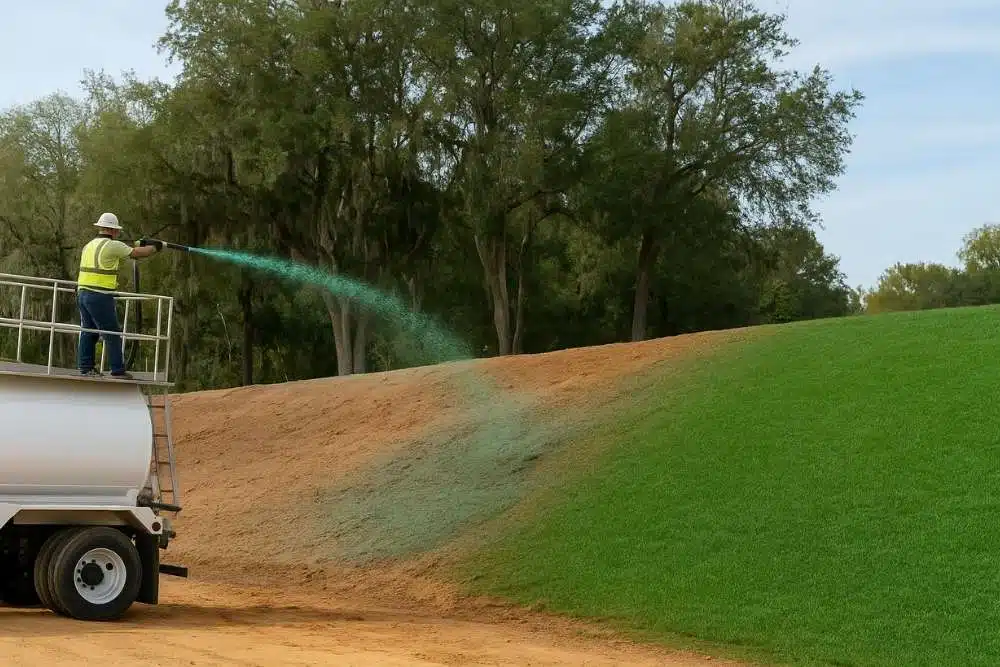
For many large commercial developments, commercial hydroseeding services can provide an economical way to establish turf across expansive areas without the labor and material requirements associated with laying individual rolls of sod. Hydroseeding combines seed, water, mulch, fertilizer, and often a tackifying agent into a slurry that can be sprayed evenly across prepared soil. This approach is particularly useful for uneven terrain, large open spaces, roadside projects, and areas where traditional installation would be labor-intensive. Sod remains valuable where an immediate finished appearance is essential, but its higher initial installation cost may not fit every commercial landscape budget. Contractors should compare the complete lifecycle cost rather than focusing only on the installation price.
Understanding the Difference Between Hydroseeding and Sod
Hydroseeding is a planting method in which a carefully prepared mixture is mechanically sprayed over the soil surface. The slurry generally contains grass seed, water, mulch, and nutrients selected according to the site and turf requirements. The mulch helps retain moisture around the seed while reducing the risk of erosion during early establishment. Once applied, the seed germinates and develops directly in the existing soil rather than being transplanted as mature turf. Because the application can cover large areas quickly, hydroseeding can be particularly efficient for commercial projects with extensive landscaping requirements.
Sod takes a different approach because it consists of already established grass and soil held together by roots or a thin growing medium. Crews roll or place the sod across prepared ground, creating an almost immediate green surface once the installation is complete. This can be a major advantage for retail properties, hospitality developments, model homes, corporate campuses, and other projects where visual presentation matters immediately. However, sod requires careful handling, transportation, preparation, installation, watering, and early maintenance. Poorly installed or improperly watered sod can still develop rooting problems despite its mature appearance.
Initial Cost Comparison for Commercial Projects
Cost is often one of the most important considerations for commercial contractors, especially when landscaping covers several acres. Hydroseeding generally requires fewer labor hours for installation because a spraying system can distribute the seed mixture across large sections of prepared ground efficiently. Contractors may also avoid some of the transportation, handling, and placement requirements associated with large quantities of sod. The final price still varies according to seed selection, site preparation, terrain, access, irrigation, soil amendments, and project size. A lower installation price does not automatically mean lower project value, so contractors should evaluate the entire establishment process.
Sod usually carries a higher upfront cost because the grass has already been grown before it reaches the job site. In addition to purchasing the turf, contractors must account for delivery, unloading, placement, cutting around landscape features, and labor for installation. Large commercial properties can require substantial quantities of material, making transportation and labor important components of the budget. Sod can nevertheless be financially sensible when a project has strict deadlines and the owner cannot wait several weeks for seeded turf to establish. The best cost comparison should therefore consider schedule requirements alongside installation expenses.
Long-Term Value and Maintenance Considerations
Hydroseeding can provide strong long-term value because grass grows and develops its root system in the soil where it will remain. When the seed mixture is properly selected for the region and site conditions, the resulting turf can become well adapted to its environment. This can support healthy establishment when the property receives appropriate irrigation, mowing, fertilization, and weed management. Contractors should remember that hydroseeding is not a maintenance-free solution, particularly during the germination period. Consistent moisture and appropriate aftercare are essential for transforming the initial application into a dense, durable lawn.
Sod also requires maintenance after installation, even though it offers a mature appearance from the beginning. Newly installed sod needs adequate watering to prevent drying and encourage roots to connect with the underlying soil. As rooting progresses, mowing and fertilization must be managed according to the grass variety and growing conditions. Commercial properties may also experience heavy pedestrian traffic, equipment movement, parking pressure, and other stresses that affect turf performance. A maintenance plan should therefore be included in the project budget regardless of whether the contractor chooses hydroseeding or sod.
Project Speed, Appearance, and Establishment
One of sod’s biggest advantages is speed of appearance. A freshly sodded area can look substantially finished immediately after installation, making it attractive for projects approaching completion or opening day. This visual advantage can be especially important for commercial developments where landscaping forms part of the property’s first impression. However, the grass still needs time to establish roots before it can tolerate significant traffic or stressful conditions. Contractors should not assume that an instantly green lawn is automatically ready for unrestricted use.
Hydroseeding takes longer to produce a finished appearance because the seed must germinate and develop into established turf. The timeline varies according to grass species, temperature, moisture, soil conditions, and ongoing maintenance. In return, hydroseeding can provide more flexibility for covering broad areas and difficult contours. Contractors working on projects with flexible landscaping schedules may find this trade-off worthwhile. Planning the application during a suitable growing period can improve establishment and reduce the risk of delays caused by unfavorable environmental conditions.
Where Hydroseeding Offers a Commercial Advantage
Large commercial landscapes are often where hydroseeding demonstrates its greatest practical value. Roadside slopes, industrial properties, business parks, recreational areas, municipal spaces, drainage zones, and expansive open lawns can require substantial turf coverage. Spraying the seed mixture can reduce the amount of manual placement required compared with installing thousands of individual sod pieces. Hydroseeding can also work effectively across sloped or irregular terrain where handling and positioning sod may be more complicated. Proper soil preparation remains critical because neither hydroseeding nor sod can compensate for severely unsuitable growing conditions.
Another advantage is the ability to tailor the seed mixture to the property’s conditions and intended use. Different grass species and blends can be selected based on factors such as sunlight exposure, expected traffic, drainage, climate, and maintenance expectations. A knowledgeable contractor or hydroseeding professional can assess these variables before recommending an appropriate mixture. This site-specific approach can help avoid the common mistake of choosing turf solely for its appearance. When commercial landscaping is expected to remain attractive for years, selecting grass based on performance is just as important as selecting it for initial visual appeal.
When Sod May Be the Better Investment
Despite the advantages of hydroseeding, sod remains an excellent choice for many commercial applications. Properties that need an immediate polished appearance may justify the higher upfront investment. Hotels, restaurants, retail centers, office buildings, luxury developments, and public-facing properties often benefit from having established-looking turf during the final stages of construction. Sod can also be useful for smaller areas where the efficiency advantage of spraying seed is less significant. Contractors should evaluate the project’s priorities rather than treating one installation method as universally superior.
Sod can also make sense when the project schedule leaves little room for natural turf establishment. If a property must be presented to clients, tenants, buyers, or the public shortly after landscaping, waiting for seed to germinate may not be practical. However, accelerated installation does not eliminate the need for proper soil preparation and watering. The underlying grade, drainage, soil quality, and irrigation strategy still influence whether the turf performs successfully. A contractor who considers these factors before installation is more likely to achieve the desired result and avoid expensive corrective work.
Choosing the Right Method for the Job
The best choice between hydroseeding and sod should begin with a detailed assessment of the site and project requirements. Contractors should consider total area, soil condition, terrain, irrigation access, expected traffic, grass type, construction schedule, maintenance capabilities, and the owner’s expectations for appearance. A property with several acres of open ground and a flexible establishment schedule may be well suited to hydroseeding. A high-visibility entrance that must look finished immediately may justify sod despite its higher initial cost. Comparing these variables creates a more realistic cost-benefit analysis than simply comparing prices per square foot.
For contractors researching residential hydroseeding near me options for smaller adjoining properties or residential components of a larger development, the same principles apply. Local conditions can influence seed selection, application timing, watering requirements, and expected establishment rates. Working with an experienced provider can help ensure that the application is matched to the soil and environmental conditions rather than treated as a one-size-fits-all service. Contractors should also ask about preparation requirements, seed mixtures, warranties or guarantees where applicable, and recommended post-installation care. Clear expectations before work begins can prevent misunderstandings and improve the overall project outcome.
Final Cost-Benefit Verdict for Contractors
Hydroseeding and sod both have legitimate roles in commercial landscaping, but their value depends heavily on the circumstances of the project. Hydroseeding can offer an attractive balance of coverage, flexibility, and installation efficiency for large areas where immediate mature turf is not required. Sod provides speed and instant visual impact, making it particularly useful for high-profile properties with demanding completion schedules. Instead of choosing based solely on the lowest upfront quotation, contractors should calculate installation, watering, maintenance, replacement risk, labor, transportation, and schedule implications. This broader view gives property owners a more accurate picture of the investment.
Ultimately, commercial hydroseeding services can be a strong choice when contractors need efficient turf establishment across expansive or challenging areas while maintaining control over seed selection and long-term landscape performance. Sod remains valuable when presentation and immediate coverage take priority over installation cost. The most successful projects begin with proper grading, healthy soil, suitable turf selection, reliable irrigation, and realistic maintenance planning. By evaluating both short-term expenses and long-term performance, commercial contractors can select the method that delivers the strongest return for the property. A thoughtful decision at the landscaping stage can improve appearance, reduce avoidable costs, and contribute to a healthier and more durable commercial landscape.