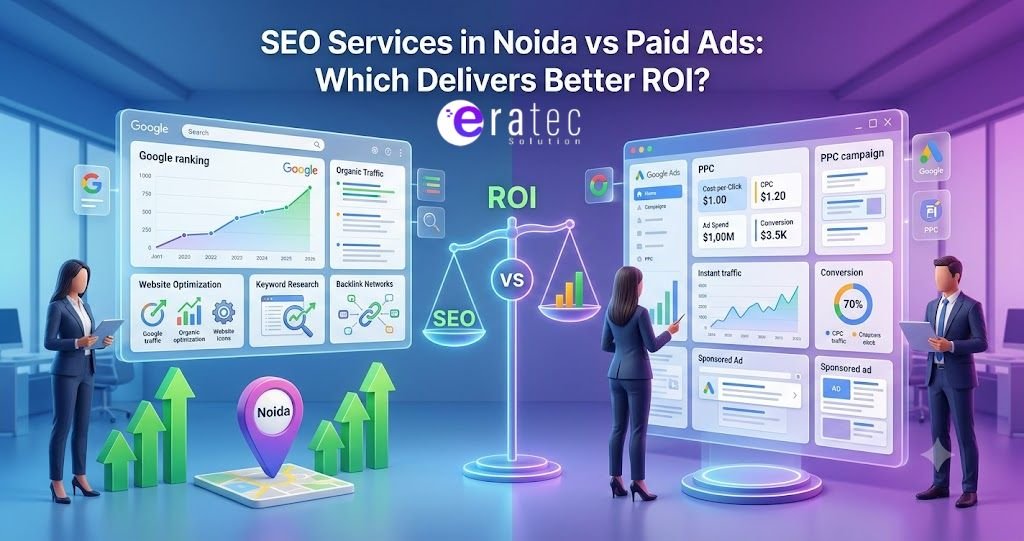
In real estate digital marketing, running Google Ads feels like a necessary evil. Pay-Per-Click (PPC) campaigns deliver instant visibility, but bid prices for high-intent property keywords—such as “luxury 3 BHK in Noida Expressway” or “ready-to-move flats in Sector 150”—continue to soar. High Pay-Per-Click costs mean developers spend millions monthly just to capture leads, many of which turn out to be casual clickers or competitor brokers.
When your ad campaign ends, your lead engine stops cold.
The alternative is predictable and cost-effective: organic search engine optimization (SEO) tailored to high-intent buyer queries. Developers can consistently rank on Page 1 for transactional and commercial search queries without relying solely on paid ads.
1. Map Content to the Hyper-Local Micro-Market
Broad keywords like “flats for sale” or “real estate developer” attract high traffic, but they carry weak intent and intense competition. Real estate buyers rarely purchase off generic searches; they search with exact locations, budgets, and project statuses in mind.
To capture high-intent buyers, structure your website around micro-market landing pages. Instead of bundling all inventory into a single generic page, build dedicated URL structures targeting specific sectors and corridors:
-
[domain.com/projects/sector-150-noida/](https://domain.com/projects/sector-150-noida/) -
[domain.com/properties/noida-expressway-3bhk/](https://domain.com/properties/noida-expressway-3bhk/)
Sector-First Architecture
Real estate searchers think in terms of micro-locations. For example, in competitive hubs like Noida, buyers search for specific infrastructure catalysts like the Noida International Airport (Jewar) or sector-specific amenities.
Integrating local parameters—such as metro connectivity, nearby commercial hubs, and RERA registration details—signals to Google that your page directly addresses local intent. Partnering with local experts specializing in SEO services in Noida ensures your technical site architecture correctly mirrors these regional search patterns without cannibalizing internal keywords.
2. Capture “Trust Verification” Search Terms
Before a prospective buyer books a site visit or fills out a form, they run background checks on Google. They type in terms like:
-
“[Developer Name] past project delivery history”
-
“[Project Name] RERA approval number status”
-
“[Project Name] construction status updates 2026”
If your official website does not rank #1 for these trust-verification queries, third-party forums, review portals, or competitor brokers will claim that search traffic—and shape the narrative.
5. Prioritize Mobile Speed & Direct Conversion Flows
Real estate buyers perform initial searches on mobile devices. A page that takes more than three seconds to load will lose prospective buyers to competitors, regardless of search ranking.
Key Performance Indicators for Mobile Conversion:
Largest Contentful Paint (LCP): Under 2.5 seconds.
First Input Delay (FID): Under 100 milliseconds.
Click-to-CTA Accessibility: Floating “Schedule Site Visit” or “WhatsApp Inquiry” sticky buttons visible without scrolling.
Replacing heavy image files with compressed .webp formats and using lazy loading for interactive floor plans ensures fast loading times across mobile networks.
Stop Renting Traffic—Build Organic Equity
Relying exclusively on Google Ads means paying for every customer touchpoint indefinitely. By shifting budget toward hyper-local optimization, trust-verification content, and clear technical schema, developers can own Page 1 search results permanently.
Building organic search visibility establishes brand trust, lowers Cost Per Acquisition (CPA), and creates a predictable pipeline of qualified property buyers.
Professional SEO services in Noida routinely use this internal linking strategy to help local developers outrank national aggregators without needing thousands of spammy backlinks.