Few things feel quite as good as taking a brand-new Wig Human Hair unit out of the box. It’s silky, bouncy, full of life, and instantly pulls your look together. But fast forward a few months of continuous wear, and that same favorite unit can start looking rough around the edges. Daily heat styling, humidity, product buildup, and simple friction from your clothes can turn a stunning Hair Wig into a dry, tangled mess.
Before you give up and toss your investment in the trash—or drop hundreds on a replacement—take a breath. Human hair extensions don’t have a scalp to feed them natural oils, so when they lose moisture, they get stiff and frizzy. The good news? You can completely bring them back to life right at home.
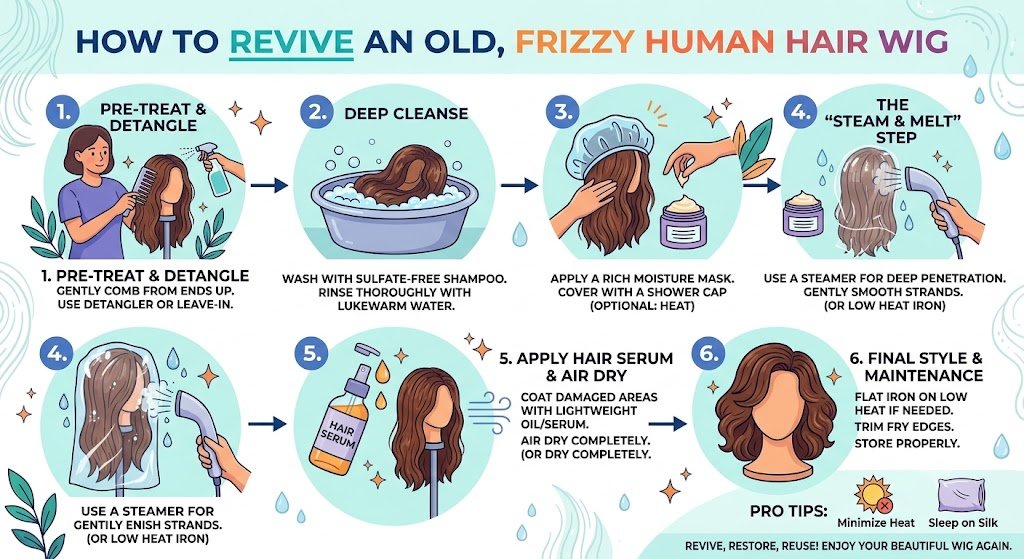
Here is a step-by-step restoration routine to fix frizzy Wigs Human Hair, bring back that original softness, and double the life of your favorite units.

Why Do Human Hair Wigs Get So Dry and Frizzy?
To fix the issue, it helps to understand what’s actually happening to the hair. Unlike the hair growing from your head, Hair Wigs get zero natural sebum from a scalp. That means once moisture escapes, the strands can’t rehydrate on their own.
A few main culprits usually cause the damage:
- Product Buildup: Gels, hairsprays, and heavy silicone serums leave a film over the strands that blocks fresh moisture from getting in.
- Heat Damage: Cranking up flat irons or curling wands without a solid heat protectant breaks down the hair’s structure over time.
- Friction: Rubbing against wool coats, high collars, or cotton pillowcases creates static, split ends, and matting—especially right at the nape of the neck.
- Hard Water and Weather: Harsh sunlight, dry winter air, and mineral-heavy tap water strip away the hair’s protective outer layer.
Whether you’re rocking bone-straight bundles, deep wave textures, or human hair afro wigs, missing moisture is almost always the real reason behind the frizz.
Step-by-Step Guide: Bringing Your Wig Back to Life

Restoring a tired Hair Wig takes a little patience, but the process itself is straightforward. Follow these steps to restore its original shine and slip.
Step 1: Detangle Before Anything Else
Never submerge a tangled wig in water. Wetting matted hair tightens the knots and causes severe shedding when you try to comb it out later.
- Pin your wig securely to a mannequin head, or hold the base firmly with one hand.
- Spritz the hair with a lightweight leave-in conditioner or detangling spray.
- Grab a wide-tooth comb or paddle brush and start gently at the very ends.
- Slowly work your way up toward the roots in small sections. Always hold the hair near the lace or tracks while combing so you don’t yank on the knots.
Step 2: Clarify to Strip Away Buildup
You can’t hydrate hair that is coated in old styling products. You need a clean slate first.
- Fill the basin or a sink with lukewarm water.
- Mix in a small amount of gentle, sulfate-free clarifying shampoo.
- Submerge your Wig Human Hair unit and swish it smoothly through the water. Avoid rubbing or scrubbing the hair together, as that creates instant matting.
- Rinse thoroughly with lukewarm water until the soap runs completely clear.
Step 3: Deep Condition with the “Hot Bag” Method
This is where the real transformation happens. Deep conditioning forces moisture back into the hair shaft.
- Coat the hair generously with a rich deep conditioner or hair mask, focusing from the mid-lengths down to the ends. Keep heavy products away from the lace cap, as oils can cause the hand-tied knots to unravel.
- Gently comb the conditioner through to make sure every strand is covered.
- Place the damp wig inside a clean plastic bag or shower cap to seal in the humidity.
- Pro Tip: Let it sit in the sealed bag for 30 to 45 minutes. For deeply damaged hair, submerge the sealed bag in a bowl of warm water. The ambient heat opens up the hair cuticles, allowing the conditioner to soak in deep.
Step 4: Try an Apple Cider Vinegar Rinse
If the hair still feels a little rough after conditioning, the cuticle layer is likely sitting open. An Apple Cider Vinegar (ACV) rinse balances the hair’s pH level, flattening the cuticle to seal in moisture and add natural shine.
- Mix 1 part raw apple cider vinegar with 4 parts cool water.
- Pour it over the hair after rinsing out your deep conditioner.
- Let it sit for 2 to 3 minutes, then give it a final rinse with cold water.
Step 5: Air Dry the Right Way
How you dry the hair makes or breaks your results.
- Gently press the hair with a microfiber towel or an old t-shirt to soak it up excess water. Never wring, twist, or rub the hair.
- Place the unit on a collapsible wig stand. Avoid solid foam heads while the cap is wet, as they can stretch out the base.
- Smooth a tiny drop of lightweight hair serum through the ends.
- Let it air dry completely in a well-ventilated space away from direct heat or from harsh sunlight.

Special Care for Textured and Afro Hair
Restoring natural texture units like human hair afro wigs, kinky curls, or deep wave patterns requires a softer touch:
- Begin by finger detangling: Before using a wide-tooth comb, it is important to use your fingers to gently separate curled sections of hair.
- Try co-washing: Due to the dry nature of textured hair, it is recommended to skip shampooing altogether if you can and try co-washing.
- Define Curls While Soaking Wet: Apply a curl cream or leave-in conditioner to wet hair, scrunch upward from the ends, and leave it alone to air dry without touching it.
Pros, Cons & Helpful FAQs
Restoring your hair at home works wonders, but it helps to keep realistic expectations.
Pros & Cons of Restoring Old Wigs
Pros:
- Saves you a ton of money compared to buying brand-new Wigs Human Hair.
- Adds months (or even years) of extra wear to your favourite units.
- Brings back natural movement, softness, and luster.
- Keeps quality hair from going to waste prematurely.
Cons:
- Severely heat-damaged or chemically fried hair can’t be completely fixed.
- The process takes time and requires proper, sulfate-free products.
- Applying heavy conditioners near the cap can loosen lace knots over time.
Frequently Asked Questions
Q: How often should I wash and deep condition my human hair wig?
A: Unless you wear your Hair Wig every single day or use heavy gels, washing it every 10 to 15 wears is plenty. Washing too often strips away essential moisture.
Q: Is the boiling water method safe for human hair wigs?
A: You might see people boiling wigs online, but it comes with real risks. While extremely hot water can melt conditioning treatments into dry hair for temporary softness, it can easily ruin delicate lace or stretch out the cap. Sticking to lukewarm water with the hot-bag method is much safer for the hair long-term.
Q: Why does my wig keep tangling right at the nape of my neck?
A: Friction is the main reason. The hair at the nape continuously rubs against your skin, collars, and jackets. Rubbing a tiny drop of lightweight hair oil into that area before heading out cuts down on static and friction.

The Bottom Line
An old, frizzy Wig Human Hair piece doesn’t belong in the trash bin just yet. With careful detangling, a good deep conditioning treatment, and proper drying techniques, you can turn a dry, dull unit back into a soft, beautiful crown you love wearing. With a little routine care and less direct heat, your favorite wigs will stay looking fresh for a long time to come.