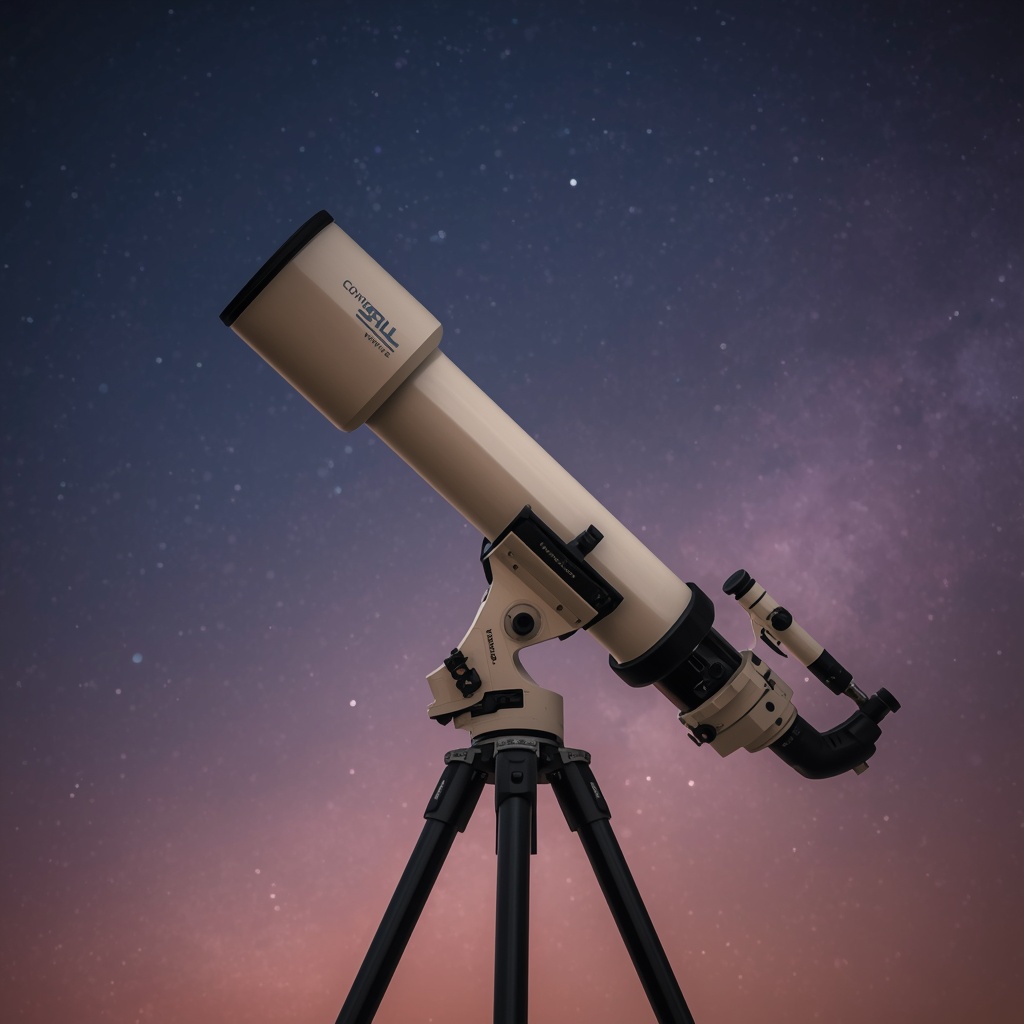
There’s a particular moment every astrophotographer eventually reaches: stars that used to look sharp in the center of the frame suddenly look stretched and smeared toward the edges, no matter how carefully the focus is dialed in. That’s a field flatness problem, not a focus problem, and it’s exactly why so many imagers eventually go looking for a proper astrograph instead of a general-purpose refractor. Sky Deep built its Askar collection around solving precisely this issue, with a small but genuinely capable lineup of quintuplet APO astrographs designed from scratch for imaging, not visual compromise.
What Makes an Astrograph Different From a Regular Refractor
A standard apochromatic refractor is built to deliver a sharp, color-corrected view mainly around the center of the field, which works fine for visual observing but starts to show its limits once you stack wide-field exposures. An astrograph, on the other hand, is engineered specifically to keep stars round and sharp corner to corner, using multiple lens elements arranged to correct both chromatic aberration and field curvature simultaneously. Askar’s FRA series takes this a step further with quintuplet designs, meaning five optical elements working together instead of the usual three or four, which is a big part of why these telescopes have developed such a strong following among serious imagers.
Why It Actually Matters Who You Buy From
This is where things get genuinely important for buyers in Pakistan. Sky Deep is the only authorized dealer of Askar telescopes for this collection anywhere in the country. That distinction isn’t a technicality — it directly affects whether the optical elements inside your astrograph are correctly aligned, correctly coated, and actually match the published specifications for chromatic correction and field flatness.
Sky Deep also does not deal in Chinese clone or unauthorized duplicate units at all. Every Askar telescope sold comes with full manufacturer warranty backing, which matters enormously here because a misaligned lens element or a coating defect in a premium astrograph isn’t something you can fix yourself. You need a manufacturer standing behind the product, not a reseller who disappears after the sale.
Comparing the FRA400, FRA500, and FRA600
Picking between the three main astrographs in this lineup mostly comes down to focal length, aperture, and how much resolution you’re chasing on your targets.
The Askar FRA400 Quintuplet APO Astrograph is the most compact and accessible option of the three, offering a shorter focal length that’s ideal for capturing larger nebulae and wide star fields in a single frame. It’s also the easiest of the three to mount on lighter equatorial setups, making it a sensible entry point for imagers stepping up from a standard refractor into serious wide-field astrophotography.
The Askar FRA500 Quintuplet APO Astrograph sits comfortably in the middle, with a longer focal length that pulls in slightly more detail on medium-sized targets while still keeping a genuinely wide field of view. For imagers who want more reach than the FRA400 offers without jumping straight to a longer, heavier tube, this is usually where they land.
The Askar FRA600 4.3″ 108mm F/5.6 Quintuplet Petzval Flat Field Astrograph is the largest aperture option in the lineup, built on a Petzval design that pushes both light-gathering capability and flat-field correction further than the other two. This is generally the choice for imagers targeting smaller, dimmer deep-sky objects where extra aperture and focal length genuinely change the amount of detail you can pull out of a stacked exposure.
Matching Focal Length to Your Actual Targets
A mistake a lot of buyers make is picking the biggest aperture available assuming bigger automatically means better. It doesn’t, not for every target. Wide nebulae and large star clusters actually look better through shorter focal lengths like the FRA400, since a longer focal length would crop the frame too tightly to capture the full structure. Smaller, more distant targets like faint galaxies benefit from the extra reach of something like the FRA600. Before choosing between them, it’s worth thinking honestly about what you actually photograph most, rather than defaulting to whichever telescope has the biggest number attached to it.
Camera Compatibility Isn’t an Afterthought
Getting an astrograph mounted correctly to your camera matters just as much as the optical design itself, since even a millimeter of incorrect back focus distance can reintroduce the exact field curvature these telescopes are built to eliminate. For imagers running a Nikon Z mirrorless setup, the Askar M54/M48 Camera Adapter for Nikon Z solves the thread compatibility issue cleanly, letting the camera sit at the correct back focus distance without introducing unwanted tilt or spacing errors that would otherwise undo the telescope’s flat-field correction.
Pairing an Askar Astrograph With the Rest of Your Rig
An astrograph this precise deserves a mount that can track just as precisely. If you’re building a full imaging setup around one of these telescopes, it’s worth thinking about the mount’s payload capacity and tracking accuracy just as carefully as you thought about the optical tube itself, since even the sharpest astrograph will produce elongated stars on a mount that can’t hold guiding accuracy through a full exposure sequence.
A Note on Patience With Premium Optics
Astrographs like these reward patience more than any other kind of telescope. Getting the spacing exactly right between the optical tube and your camera sensor, dialing in collimation precisely, and giving the tube time to reach ambient temperature before a session all matter more here than with a basic doublet refractor. Skipping these steps is usually why a genuinely excellent telescope produces disappointing first results, and it’s rarely the optics themselves that are at fault.
Ready to Build Your Wide-Field Imaging Setup?
Choosing between the FRA400, FRA500, and FRA600 comes down to specifics that are hard to judge from spec sheets alone, like your camera’s sensor size, your typical imaging targets, and the mount you’re planning to pair it with. Rather than guessing, get in touch with the Sky Deep team directly and walk them through your setup. They can help you land on the right astrograph the first time, instead of discovering a mismatch after the purchase.
For imagers who already own an Askar astrograph and are now shopping for the camera to pair with it, Sky Deep’s ZWO camera collection is a natural next stop, since sensor size and pixel scale both need to complement your telescope’s focal length for genuinely sharp results.
Frequently Asked Questions
Is Sky Deep the only authorized Askar dealer in Pakistan?
Yes, Sky Deep is the sole authorized dealer for this Askar collection across Pakistan, meaning every astrograph comes with genuine specifications and manufacturer warranty support.
Does Sky Deep sell Chinese clone versions of Askar telescopes?
No, Sky Deep does not stock any Chinese clone or duplicate Askar products. Every unit sold is authentic and backed by proper warranty coverage.
What’s the difference between the FRA400, FRA500, and FRA600?
They differ mainly in aperture and focal length, with the FRA400 suited to wide-field targets, the FRA500 offering a balance of reach and field width, and the FRA600 providing the most aperture for smaller, dimmer deep-sky objects.
Can these astrographs be used for visual observing, not just imaging?
Yes, but they’re optimized specifically for flat-field imaging performance, so visual observers may find a standard apochromatic refractor better suited to eyepiece use.
Do I need a specific camera adapter for these telescopes?
Yes, correct back focus distance is critical for maintaining field flatness, so using the properly matched adapter for your camera system is essential rather than optional.