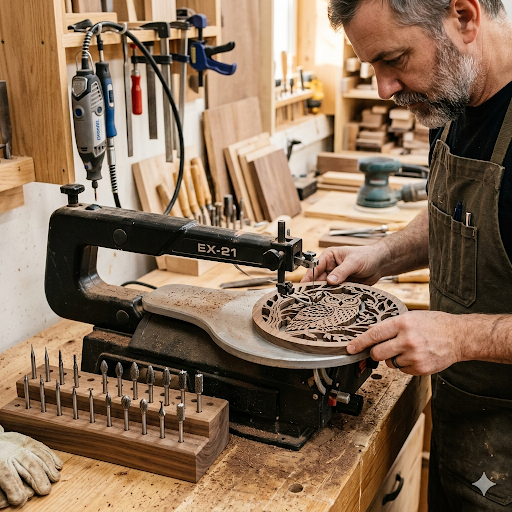
Woodworking has evolved over centuries, with artisans constantly discovering new methods to shape and design timber into functional and decorative pieces. Among the many techniques that have gained popularity in recent years, scroll saw carving stands out as one of the most precise and rewarding forms of wood art. Whether you are a beginner stepping into the craft or an experienced woodworker looking to refine your skills, understanding the fundamentals of this technique can significantly improve the quality of your work and open up a wide range of creative possibilities.
What Is Scroll Saw Carving and How Does It Work
At its core, scroll saw carving involves using a fine-toothed reciprocating blade mounted on a specialized saw to cut intricate curves, patterns, and shapes into wood. Unlike band saws or jigsaws, scroll saws operate with a vertically moving blade that allows for extremely tight turns and delicate detailing. This makes the technique ideal for creating decorative panels, ornamental pieces, puzzles, and even jewelry. The blade moves in an up-and-down motion at variable speeds, giving the craftsperson a high level of control over each cut.
Choosing the Right Wood for the Job
Not all wood types perform equally well in this kind of work. Softer woods like basswood, pine, and cedar are widely favored by beginners because they are easier to cut and less likely to splinter. Hardwoods such as oak, walnut, and maple offer greater detail retention and durability, making them a preferred choice for professional-level projects. Plywood is another popular option, particularly for layered or segmented designs. The thickness of the wood also plays a critical role. Most practitioners work with boards ranging from 3mm to 19mm, depending on the complexity and purpose of the piece.
Blade Selection and Its Impact on Precision
One of the most important factors in achieving clean and accurate cuts is selecting the appropriate blade. Blades vary significantly in tooth count, width, and material composition. Fine-toothed blades with a higher tooth count per inch are best suited for detailed work and sharp curves, while coarser blades handle straight cuts and thicker materials more efficiently. Spiral blades, which have teeth running in all directions, allow for multi-directional cutting without rotating the workpiece. Regularly replacing blades is essential, as dull blades increase the risk of tear-out, overheating, and imprecise lines.
Techniques That Improve Your Cutting Accuracy
Developing good cutting habits takes time and practice, but a few core techniques can accelerate the learning process. First, always transfer your pattern onto the wood using transfer paper or a light adhesive spray to ensure clean, removable markings. Second, drill entry holes for any interior cuts before threading the blade through. This prevents unnecessary breakage and allows cleaner entry points. Third, maintain a consistent feed rate, as pushing the wood too fast through the blade leads to rough edges, while going too slowly can cause burning.
Safety Practices Every Woodworker Should Follow
Safety should never be an afterthought in any woodworking discipline. Always wear safety glasses to protect against flying chips and fine dust particles. Keep fingers at a safe distance from the blade path at all times, and never reach underneath the workpiece while the machine is running. Secure loose clothing and tie back hair to avoid entanglement. Proper ventilation or a dust mask is strongly recommended, as fine wood particles can pose respiratory risks with prolonged exposure.
Conclusion
It is a highly versatile and deeply satisfying woodworking technique that rewards patience, precision, and practice. From choosing the right timber to mastering blade control, every element of the process contributes to the final outcome. Investing in quality power carving tools for wood ensures that your craft reaches its full potential, whether you are working on decorative art pieces or intricate functional designs.