INTRODUCTION
Modern healthcare infrastructure has evolved significantly to meet the increasing demand for sterile, technologically advanced, and efficient surgical environments. Among the most important innovations in eye care facilities are Modular Ophthalmic OT Setup Services, which provide highly controlled operation theatres specifically designed for delicate ophthalmic procedures.
Ophthalmic surgeries such as cataract surgery, LASIK, retinal procedures, glaucoma treatment, and corneal transplants require extremely precise environmental control. To achieve this, modular ophthalmic operation theatres are constructed using specialized materials that support infection control, cleanroom performance, durability, hygiene, and long-term operational efficiency.
The choice of materials plays a crucial role in maintaining sterile conditions, minimizing contamination, improving airflow efficiency, and ensuring compliance with healthcare standards. Every component—from wall panels and ceilings to flooring and HVAC systems—is carefully selected to meet the demanding requirements of ophthalmic surgical environments.
Understanding Modular Ophthalmic Operation Theatres
A modular ophthalmic OT is a prefabricated cleanroom-based surgical facility designed specifically for eye surgeries.
Main Features Include:
- Sterile cleanroom environment
- Laminar airflow systems
- HEPA filtration
- Positive pressure ventilation
- Seamless modular construction
- Advanced HVAC integration
These operation theatres are engineered to maintain controlled surgical environments.
Importance of Material Selection in Ophthalmic OTs
The materials used in modular ophthalmic OTs directly affect:
- Infection control
- Air quality
- Cleanroom performance
- Durability
- Maintenance efficiency
- Long-term operational safety
Improper material selection can increase contamination risks and reduce OT efficiency.
Key Requirements for OT Construction Materials
Materials used in ophthalmic operation theatres must possess specific characteristics.
Important Properties Include:
- Anti-bacterial surfaces
- Smooth seamless finishes
- Chemical resistance
- Moisture resistance
- Easy cleaning capability
- Fire resistance
- Durability
These properties support sterile surgical conditions.
Materials Used in Modular Wall Panels
Wall panels are among the most important components in Modular Ophthalmic OT Setup Services.
Common Wall Panel Materials Include:
- PPGI panels (Pre-Painted Galvanized Iron)
- Stainless steel panels
- HPL (High Pressure Laminate) panels
- Powder-coated GI panels
These materials provide smooth and contamination-resistant surfaces.
Why PPGI Panels Are Popular
PPGI panels are widely used because they offer:
- Corrosion resistance
- Smooth surfaces
- Durability
- Easy maintenance
- Long service life
They are suitable for cleanroom-based healthcare environments.
Stainless Steel in Ophthalmic OTs
Stainless steel is commonly used in critical sterile areas.
Advantages Include:
- High corrosion resistance
- Anti-microbial properties
- Easy sterilization
- Long-term durability
Stainless steel supports strict infection control requirements.
High Pressure Laminate (HPL) Panels
HPL panels are frequently used in modular healthcare construction.
Benefits Include:
- Scratch resistance
- Chemical resistance
- Smooth finish
- Easy cleaning
These panels improve hygiene management.
Importance of Seamless Wall Construction
Seamless wall systems prevent dust and microbial accumulation.
Benefits Include:
- Easier sanitation
- Reduced contamination risks
- Improved cleanroom efficiency
Smooth surfaces are essential in ophthalmic surgical environments.
Ceiling Materials Used in Modular OTs
Modular ceiling systems support airflow management and utility integration.
Common Ceiling Materials Include:
- Powder-coated GI ceilings
- Aluminum ceiling systems
- Stainless steel ceiling panels
These materials support cleanroom airflow performance.
Features of OT Ceiling Materials
Ceiling materials must provide:
- Smooth surfaces
- Corrosion resistance
- Air leakage prevention
- Compatibility with HVAC systems
Proper ceiling construction improves airflow control.
Flooring Materials Used in Ophthalmic OTs
Flooring is another critical part of Modular Ophthalmic OT Setup Services.
Common Flooring Materials Include:
- Conductive vinyl flooring
- Epoxy flooring
- Seamless PVC flooring
These materials improve hygiene and safety.
Why Conductive Flooring Is Important
Conductive flooring helps:
- Prevent static electricity buildup
- Protect sensitive equipment
- Improve electrical safety
Electrical safety is important in modern operation theatres.
Advantages of Seamless Flooring
Seamless flooring systems offer:
- Easy cleaning
- Reduced dust accumulation
- Better contamination control
- Moisture resistance
They support infection prevention protocols.
Epoxy Flooring in Modular OTs
Epoxy flooring is used because of its:
- Chemical resistance
- Smooth finish
- High durability
- Anti-bacterial properties
Epoxy systems improve cleanroom performance.
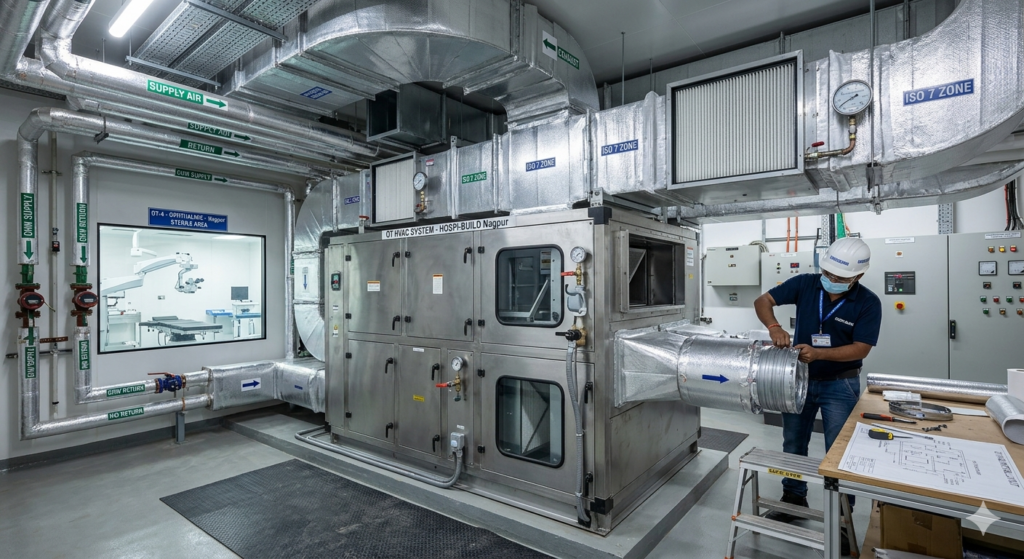
Materials Used in HVAC Systems
HVAC systems are essential in ophthalmic operation theatres.
HVAC Materials Include:
- GI ducting
- Aluminum ducts
- Insulated air handling systems
- Stainless steel air diffusers
These materials support efficient air circulation and contamination control.
Importance of Insulated HVAC Ducting
Insulated ducts help:
- Maintain stable temperatures
- Prevent condensation
- Improve energy efficiency
Proper insulation improves environmental stability.
HEPA Filter Housing Materials
HEPA filtration systems use specialized housing materials.
Common Materials Include:
- Aluminum frames
- Stainless steel housings
- Powder-coated metal casings
These materials support clean air delivery.
Laminar Airflow Diffuser Materials
Laminar airflow systems require durable diffuser materials.
Common Materials Include:
- Aluminum diffusers
- Stainless steel diffusers
These materials ensure consistent airflow performance.
Materials Used in Doors and Windows
OT doors and windows must support cleanroom integrity.
Common Materials Include:
- Hermetically sealed doors
- Stainless steel doors
- Toughened glass viewing panels
These systems maintain air pressure stability.
Importance of Hermetically Sealed Doors
Hermetic doors help:
- Prevent air leakage
- Maintain positive pressure
- Improve contamination control
They are essential in cleanroom operation theatres.
Glass Materials Used in OTs
Specialized glass is used for visibility and safety.
Common Glass Types Include:
- Toughened glass
- Double-glazed glass
- Flush-mounted viewing panels
These materials improve safety and cleanroom efficiency.
Materials Used in Medical Gas Systems
Medical gas systems support anesthesia and surgical functions.
Common Materials Include:
- Copper piping
- Stainless steel connectors
- Medical-grade valves
These materials ensure safe gas delivery.
Importance of Copper Piping
Copper is widely used because it offers:
- Corrosion resistance
- Long service life
- Safe medical gas transport
Reliable gas infrastructure supports surgical operations.
Electrical Materials Used in Modular OTs
Electrical systems require healthcare-grade materials.
Common Electrical Materials Include:
- Fire-resistant cables
- Copper wiring
- Medical-grade switches
- Anti-static electrical systems
These materials improve operational safety.
Importance of Fire-Resistant Materials
Fire-resistant materials improve:
- Patient safety
- Equipment protection
- Regulatory compliance
Healthcare facilities require enhanced fire safety systems.
Anti-Bacterial Coatings in Modular OTs
Anti-bacterial coatings help reduce microbial growth.
Benefits Include:
- Better hygiene
- Reduced infection risks
- Easier sanitation
These coatings improve cleanroom safety.
Importance of Chemical-Resistant Materials
Ophthalmic OTs are frequently exposed to disinfectants and cleaning chemicals.
Chemical-Resistant Materials Help:
- Prevent surface damage
- Improve durability
- Support long-term maintenance
Durable materials reduce operational costs.
Materials Used for Cleanroom Furniture
Specialized furniture supports contamination control.
Common Materials Include:
- Stainless steel furniture
- Powder-coated metal systems
- Anti-microbial surfaces
These materials improve hygiene and durability.
Environmental Sustainability in OT Materials
Modern Modular Ophthalmic OT Setup Services increasingly use sustainable materials.
Sustainable Features Include:
- Energy-efficient insulation
- Low-VOC materials
- Recyclable construction components
Sustainable materials improve environmental performance.
Importance of Low-VOC Materials
Low-VOC materials help maintain better air quality.
VOC Sources Include:
- Paints
- Adhesives
- Sealants
- Flooring materials
Reducing VOC emissions improves OT air purity.
Validation and Material Quality Testing
All materials used in ophthalmic OTs undergo strict testing.
Common Testing Includes:
- Surface smoothness testing
- Chemical resistance testing
- Fire safety testing
- Cleanroom compatibility testing
Testing ensures long-term operational reliability.
Regulatory Standards for OT Materials
Healthcare facilities must follow strict standards.
Common Standards Include:
- NABH guidelines
- ISO cleanroom standards
- Fire safety regulations
- Infection control protocols
Compliance improves patient safety and healthcare quality.
Benefits of Using Specialized OT Materials
Major Benefits Include:
- Better infection control
- Improved cleanroom performance
- Long-term durability
- Easier maintenance
- Enhanced patient safety
Specialized materials improve overall OT efficiency.
Why Material Quality Matters in Ophthalmic Surgeries
Eye surgeries require highly stable and sterile environments.
High-Quality Materials Help:
- Minimize contamination
- Improve environmental control
- Support precise surgical outcomes
Material quality directly affects OT performance.
Future Trends in OT Construction Materials
Future modular OT materials may include:
- Smart anti-microbial coatings
- Self-cleaning surfaces
- Advanced nano-materials
- Energy-efficient insulation systems
Innovation continues improving healthcare infrastructure.
Importance of Choosing the Right OT Setup Provider
An experienced provider ensures:
- Proper material selection
- Regulatory compliance
- Cleanroom compatibility
- Long-term durability
- Efficient maintenance support
Expertise is essential for reliable OT performance.
Conclusion
The materials used in Modular Ophthalmic OT Setup Services play a critical role in maintaining sterile conditions, supporting cleanroom performance, improving infection control, and ensuring long-term operational efficiency. From modular wall panels and seamless flooring to HVAC ducting, HEPA filtration systems, stainless steel components, and anti-bacterial coatings, every material is carefully selected to meet the demanding requirements of ophthalmic surgical environments.
Modern eye care facilities require highly advanced operation theatres capable of supporting precision surgeries while maintaining strict environmental control and patient safety. With expertise in healthcare cleanroom engineering and modular OT infrastructure, Altus Airflow delivers high-performance ophthalmic operation theatre solutions designed to meet the evolving needs of modern healthcare facilities.
Frequently Asked Questions (FAQs)
1. What materials are commonly used in Modular Ophthalmic OT Setup Services?
Modular Ophthalmic OT Setup Services commonly use PPGI panels, stainless steel, HPL panels, conductive flooring, epoxy flooring, and insulated HVAC materials.
2. Why is stainless steel used in ophthalmic OTs?
Stainless steel used in Modular Ophthalmic OT Setup Services offers corrosion resistance, easy sterilization, and anti-microbial properties.
3. What type of flooring is used in modular ophthalmic OTs?
Modular Ophthalmic OT Setup Services often use conductive vinyl flooring, seamless PVC flooring, and epoxy flooring for hygiene and safety.
4. Why are low-VOC materials important in ophthalmic OTs?
Low-VOC materials used in Modular Ophthalmic OT Setup Services help improve air quality and reduce contamination risks.
5. What role do HVAC materials play in modular ophthalmic OTs?
HVAC materials used in Modular Ophthalmic OT Setup Services help maintain airflow, temperature stability, humidity control, and cleanroom performance.